Picture a backyard in early June: a bowl of just-picked strawberries sits on the porch rail, and a terrier mix is already standing on her hind legs trying to reach it. Her owner hesitates with a berry halfway to the dog’s mouth, caught between two things she’s heard: that strawberries are a vet-approved treat, and that fruit is basically sugar in a prettier shape. That hesitation is the whole question this article is built to answer, and it’s a fair one to sit with for a second before you toss the next berry down.
The short answer is yes, most dogs can eat strawberries, and the American Kennel Club lists them among the fruits that are safe in moderation. But “safe in moderation” is doing real work in that sentence, and the owners who get tripped up are usually the ones who skip the moderation part entirely.
How much strawberry actually belongs in the bowl
Treats, fruit included, should generally stay under about 10% of a dog’s daily calories, per AKC guidance. For a 15-pound dog that’s a sliver of one berry, not a small pile of them. For a 60-pound dog it stretches to a small handful, still cut into pieces rather than lobbed in whole. I think in terms of a dose-response curve here the same way I would with any supplement: a little strawberry, offered occasionally, sits in a very different risk category than a daily bowlful. PetMD notes the fruit’s natural sugar and modest fiber content as the two variables that actually matter for most dogs, and that framing holds up.
Compare that to how we already reason about other produce on a dog’s plate. Our piece on sweet potato draws a similar line between a genuine, if modest, nutritional benefit and a ceiling past which the upside stops scaling. Strawberries follow the same shape. A few pieces bring vitamin C and fiber along with the sugar. A large serving just brings sugar, and often a loose stool the next morning.
Now picture a different dog: a middle-aged Labrador who’s carrying a few extra pounds and whose owner free-feeds strawberries as a low-calorie substitute for biscuits. That’s a reasonable instinct gone slightly sideways. Strawberries are lower-calorie than a biscuit, true, but they aren’t calorie-free, and a dog eating six or eight of them a day is still adding a meaningful sugar load on top of a body that’s already working harder than it should. This is where I’d rather see the owner weigh the fruit the way she’d weigh a training treat: count it, don’t free-pour it.
The strongest counterargument I hear is that any added sugar, however natural, has no real place in a dog’s diet, and that owners should just skip fruit and stick to protein and vegetables. I take that argument seriously, especially for a dog already managing diabetes or significant weight, and it’s a defensible default for those specific patients. But for the average healthy dog, a few pieces of strawberry a few times a week isn’t meaningfully different from other treats already in the rotation, and cutting it out entirely trades a small, manageable variable for very little actual benefit. This is the same instinct that has me reach for both the imaging study and the acupuncture needle in the exam room: I want the data point, not the blanket rule, and the data here says moderate fruit is fine for most dogs.
Prep matters more than the fruit itself
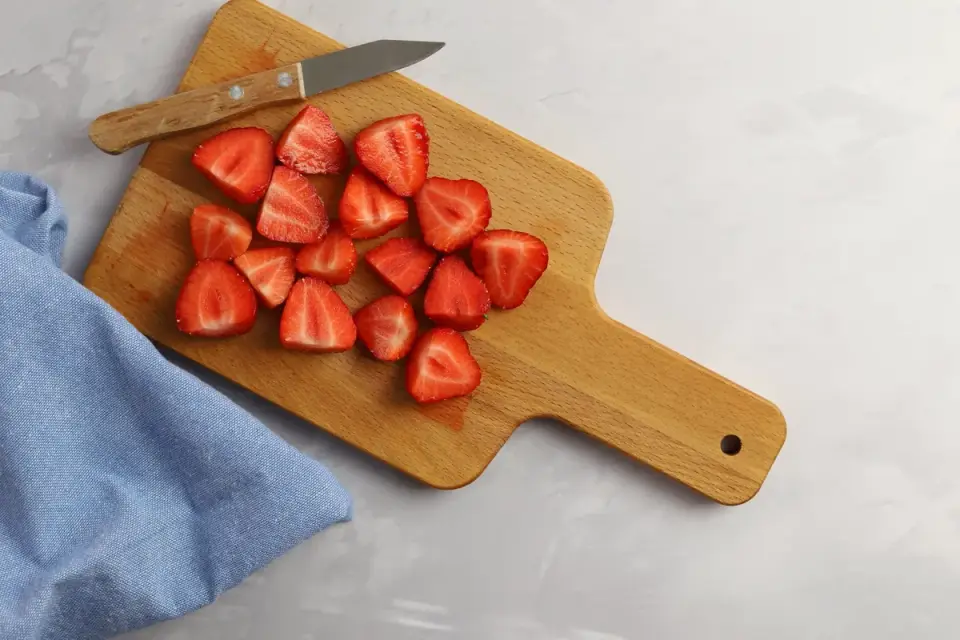
Cap and slice before anything else. The green top isn’t a toxin, but it’s fibrous, it doesn’t digest cleanly, and it adds bulk that a dog swallowing in a hurry doesn’t need. Cut the berry into pieces sized for your dog, not for a human snack plate. That single habit, more than any debate about sugar content, is what actually prevents an ER visit over a choking incident.
Skip anything processed. Canned strawberries, strawberries in syrup, and flavored yogurts frequently carry added sugar and sometimes xylitol, which is genuinely dangerous for dogs even in small amounts. Purina flags this same distinction between fresh fruit and its processed cousins, and it’s worth reading twice if you’re tempted to share a strawberry smoothie or dessert.
This same logic, of separating a genuinely useful ingredient from a processed version that carries hidden risk, shows up across kitchen-table questions we get from owners. It’s the reasoning behind our garlic piece, and it’s the same caution I’d extend to any senior dog going through a diet change, which we cover in more detail in our guide to switching a senior dog to a new food. A gut that’s already adjusting to something new doesn’t need a novel fruit added on top of it.
Where this actually lands
For most healthy dogs, a few pieces of fresh strawberry, a couple of times a week, cut small and capped, is a reasonable treat with a real if modest nutritional upside. For a dog managing diabetes, obesity, or a sensitive gut, the same fruit calls for a smaller portion and a conversation with your vet before it becomes a habit. Either way, the fruit itself was never really the risk. How much of it, and how it’s prepped, always was.
Frequently asked questions
How many strawberries can a dog eat?
Most guidance from the American Kennel Club points to keeping any fruit treat, strawberries included, under about 10% of daily calories. In practice that's often one small strawberry for a small dog and a small handful for a large one, cut into pieces rather than fed whole.
Are the green tops and leaves safe?
Skip them. The stem and leafy cap aren't a toxic ingredient in the way onion or grapes are, but they're fibrous and can irritate the stomach or add unnecessary choking risk, so cap and slice before you offer any.
Can a diabetic or overweight dog have strawberries?
Ask your vet first. Strawberries carry natural sugar and calories, and while they sit lower on the glycemic scale than many treats, a dog already managing blood sugar or weight needs a smaller, more deliberate portion than a healthy, active dog would.
Can puppies eat strawberries?
In small, well-chopped pieces, generally yes, once a puppy is eating solid food. Start with a sliver rather than a whole berry, since a puppy's smaller airway and enthusiasm for gulping food raise the choking stakes.
Sources
- Can Dogs Eat Strawberries? — American Kennel Club
- Can Dogs Eat Strawberries? Benefits and Risks — PetMD
- Can Dogs Eat Strawberries? A Guide to Safety — Purina