On this page
Here’s the fork most owners never actually reach, because they stop at “is corn bad for dogs” and never get to the question that matters: what’s on the popcorn, and what shape is it in when it goes down. Plain, air-popped kernels with nothing added are a reasonable occasional snack for most healthy adult dogs. Buttered, salted, caramelized, or kettle-corn versions are a different food entirely, and the distinction is where I want you to spend your attention, not on corn as an ingredient. According to the American Kennel Club, plain popcorn in small amounts isn’t inherently dangerous — the danger shows up in what people pour on top of it.
A client once described her golden retriever’s Friday-night ritual: he’d sit at the edge of the couch during the movie, catching one or two stray pieces that fell from the bowl, ignored otherwise until the credits rolled and the bottom of the bowl — thick with butter, salt crystals, and unpopped kernels — got set on the floor as a “treat.” That last handful is the part I’d redirect. Not because a dog can’t process a kernel of corn — he can. It’s because the bottom of a popcorn bowl concentrates exactly the two things worth avoiding: the fat-and-sodium residue and the hard, unpopped pieces most likely to crack a molar or lodge somewhere they shouldn’t. The scene isn’t dramatic. It’s ordinary, repeated weekly, and that repetition is what turns a low-risk snack into a real one.
What the Hull Actually Does Once It’s Swallowed
The hull — the tough, papery shell around the kernel — is the physical hazard, and it doesn’t discriminate between popped and unpopped pieces. A fully popped kernel can still carry a hard fragment; an unpopped one is essentially a small stone. Both can wedge between teeth or in the gumline, and both are firm enough to fracture a tooth on contact. Swallowed whole, an unpopped kernel can also become a lower-GI obstruction risk in a small dog, which is a surgical problem, not a dietary one. If your dog paws at his mouth, drools excessively, or refuses food after crunching down on popcorn, that’s a same-day call to your vet, not a wait-and-see.
Butter, Salt, and the Toppings That Do the Real Damage
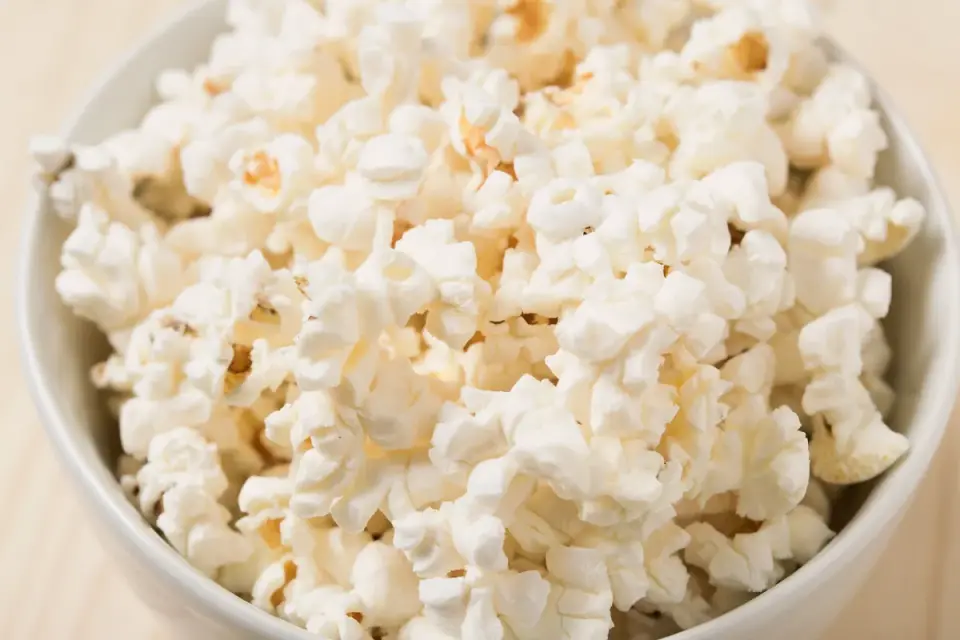
This is where I land firmly, and where I’ll defend the position against the more relaxed “a little butter never hurt anyone” crowd: the additive load, not the corn, is what actually sends dogs to urgent care. Butter and cooking oils are concentrated fat that a dog’s gut isn’t built to process in a lump-sum dose, and repeated exposure nudges a dog toward obesity and, in predisposed individuals, pancreatitis. Salted popcorn pushes sodium intake up quickly for a body that size, which can mean excess thirst and, in larger quantities, real toxicity. And sugar-free kettle corn is the one I’d flag hardest: some recipes use xylitol as a sweetener, and xylitol is genuinely dangerous to dogs, capable of dropping blood sugar and damaging the liver within a short window of ingestion. According to PetMD, buttered or flavored popcorn can upset a dog’s stomach and contribute to weight gain even when the corn itself is fine. None of that comes from the corn. All of it comes from what’s layered on top, which is exactly why “can dogs eat popcorn” needs a topping-by-topping answer, not a yes-or-no one.
When a Normal Snack Meets an Abnormal Gut
I think about this differently for dogs whose digestive systems already run close to the edge. In dogs with exocrine pancreatic insufficiency, treatment centers on “pancreatic enzyme replacement therapy, nutritional management (low-residue diets with moderate fat content), and supplementation of cobalamin,” according to a review published in JAVMA — a regimen built specifically to avoid unnecessary fat and fiber variables, which makes even lightly buttered popcorn a poor fit. The same review notes that “future studies are needed to further understand the causes of persistent dysbiosis in animals with EPI following initiation of pancreatic enzyme replacement therapy,” which tells me the margin for extra dietary noise is thinner than owners assume. And for dogs already on a probiotic regimen for a sensitive gut, research published in Frontiers in Veterinary Science found that “diversity metrics did not distinguish non-responders from responders” — meaning you can’t assume a healthy-looking gut will absorb a novel snack without incident just because it looks balanced on paper. None of this means popcorn is forbidden. It means a dog with a known digestive history isn’t the one to test it on.
I’ll admit the acupuncturist in me looks at these cases the way I look at a dog coming off a rough GI flare after a diet change, the kind covered in our guide to switching a senior dog to new food: the goal isn’t zero risk, it’s removing unforced errors. Popcorn is an unforced error for a dog whose gut is already working hard.
The Portion Rule I Actually Use
Keep it plain, keep it sorted, and keep it small — a few pieces for a small dog, closer to a half-dozen for a large one, and never the kernels from the bottom of the bowl. If you’re weighing popcorn against other occasional treats, it sits in roughly the same category as the fiber-forward extras covered in our sweet potato guide — fine in moderation, not a nutritional necessity. And if a dog’s usual “safe” snack list already includes something borderline, like the seasoning question addressed in is garlic safe for dogs in small amounts, that’s a signal to simplify the whole treat rotation rather than add one more variable.
The Bottom Line
Plain, air-popped, unsalted popcorn in small quantities is a reasonable snack for most healthy dogs. The hull is the hazard worth sorting out by hand, the toppings are the hazard worth skipping entirely, and a dog with a known digestive or pancreatic history is better off without the experiment altogether. Reach for the plain bowl, skip the butter, and you’ve solved most of the actual risk.
Frequently asked questions
Is plain popcorn actually bad for dogs?
Plain, air-popped popcorn without butter, salt, or oil is not toxic to dogs, and small amounts are generally tolerated. The bigger concerns are the hard hulls and unpopped kernels, which pose a choking and dental-fracture risk regardless of seasoning.
Can popcorn cause diarrhea in dogs?
It can, especially popcorn made with butter or oil, which is harder for a dog's gut to process in a single sitting. A dog with an already sensitive digestive tract is more likely to react.
Is kettle corn or flavored popcorn ever okay?
No. Sugar-free kettle corn and some flavored varieties can contain xylitol, which is toxic to dogs even in small amounts, and caramel, cheese, and heavily salted coatings add fat and sodium a dog doesn't need.
Sources
- Can Dogs Eat Popcorn? — American Kennel Club
- Can Dogs Eat Popcorn? — PetMD
- Exocrine pancreatic insufficiency in dogs and cats — JAVMA
- Probiotic response and gut microbiome diversity in dogs — Frontiers in Veterinary Science