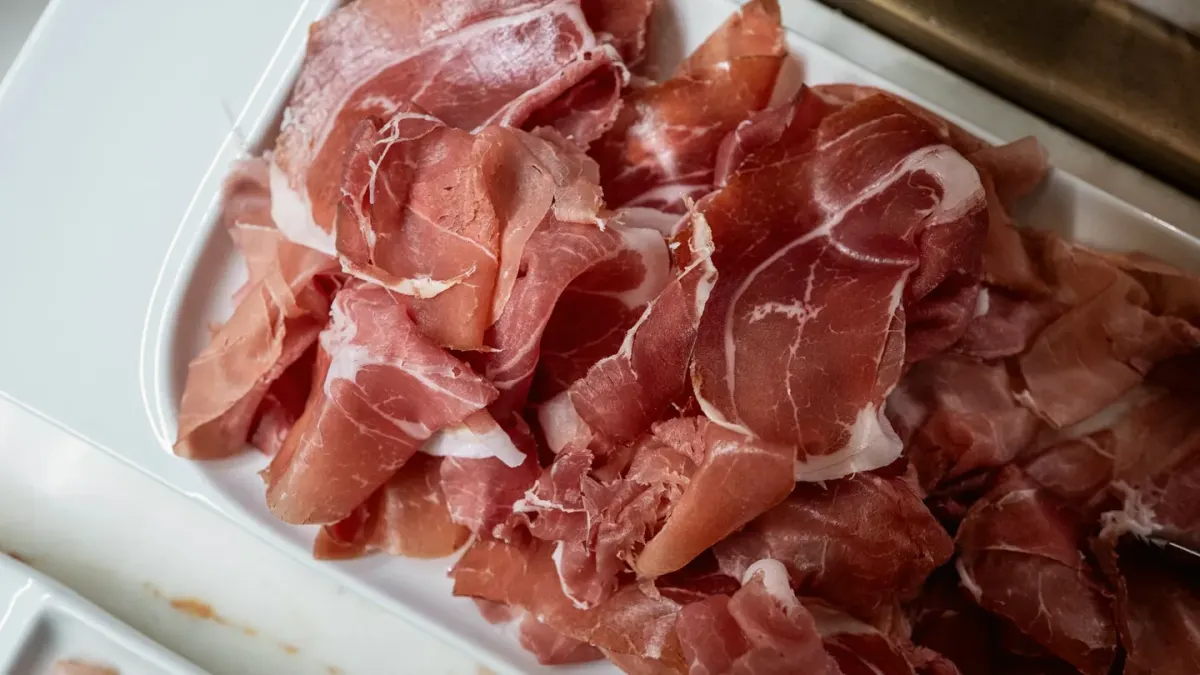
Picture the scene at almost any family gathering: a spiral-cut ham cooling on the counter, a dog stationed underneath the table with the particular stillness that means she’s calculating odds. Someone’s uncle slips her a piece of the fatty edge trim “just this once,” and nothing happens. That single anecdote is exactly why so many owners assume ham is fine. It usually is, in that narrow dose. The question worth asking isn’t whether one bite will hurt a dog — it’s what happens when that bite becomes a habit, or when the piece includes the fat cap, the glaze, or the bone.
Ham itself is just cooked pork, and pork muscle meat is a reasonably digestible protein source. The trouble is that almost no dog encounters ham in that plain form. What lands on the counter or the plate is typically cured, brined, salted, sometimes smoked, and often coated in a sugar or honey glaze. The American Kennel Club doesn’t recommend giving dogs ham, pointing to the sodium load and the nitrate- and nitrite-based preservatives used in store-bought versions, on top of a fat content that runs higher than most other cuts of meat dogs are fed.
Sodium is where the math gets uncomfortable fast. A few slices of deli or holiday ham can carry several hundred milligrams of sodium apiece, and that adds up quickly against a dog’s body weight rather than a person’s. Veterinary toxicology references list clinical salt toxicosis as a real, if less common, outcome of excessive sodium chloride ingestion in animals, with the Merck Veterinary Manual’s entry on Merck Veterinary Manual describing the vomiting, thirst, and neurologic signs that follow when intake climbs into a toxic range. Most dogs stealing a slice off a plate never get anywhere near that threshold. A small dog working through leftover ham sandwiches over several days, or a dog with kidney or heart disease that’s already sodium-sensitive, is a different story.
Fat is the quieter risk, and in my clinical experience it’s the one owners underestimate more than salt. Consider a middle-aged dog with no history of digestive trouble who spends an evening working the edges of a buffet table — a piece of ham fat here, a spoonful of gravy there, nothing that looks alarming in isolation. By the next morning she’s hunched, refusing breakfast, vomiting on an empty stomach. That pattern, a sudden high-fat load triggering acute pancreatic inflammation, is one of the more common reasons dogs end up in an emergency clinic the day after a holiday meal. It isn’t a guaranteed outcome of a fatty treat, but it’s common enough that I weigh it heavily before recommending any fatty cut of meat as a regular add-in, ham included.
Dogs recovering from or managing a pancreatic condition carry a version of this risk that never really goes away. Exocrine pancreatic insufficiency, a chronic condition distinct from acute pancreatitis but related in the organ it affects, is managed in part through nutritional management with low-residue diets that keep fat content moderate, alongside enzyme replacement and cobalamin support, according to a review published in JAVMA. That’s a specific diagnosis, not a general dog, but it illustrates the underlying principle: for a subset of dogs, fat intake isn’t just a comfort issue, it’s a management variable their vet is actively tracking. Ham, with its higher fat content than most everyday proteins, isn’t the food you want to introduce into that picture without asking first. If your dog is older and already navigating a diet transition for other reasons, our guide on switching a senior dog to a new food covers how to avoid stacking a new digestive stressor on top of that process.

What does a defensible “yes” actually look like, then? A small piece of plain, unseasoned, fully cooked pork, with visible fat trimmed away and no glaze, seasoning, or bone attached, is a reasonable occasional addition for a healthy adult dog with no history of pancreatitis, kidney disease, or heart disease. That’s a narrow window. It excludes deli ham, honey-baked ham, prosciutto, and anything cured for shelf stability, all of which concentrate the sodium problem the AKC flags. It also excludes the bone. Cooked ham bones splinter under a dog’s bite force in a way raw bones generally don’t, and that splintering is an intestinal and choking risk that has nothing to do with sodium or fat at all.
Owners looking for a lower-risk way to share people food with a dog have better options than ham. Plain cooked sweet potato, in the modest portions covered in our piece on Can Dogs Eat Sweet Potato?, offers fiber without the sodium spike. And if the goal is simply variety at the table, it’s worth knowing which aromatics to keep away entirely — our explainer on whether garlic is safe for dogs in small amounts is a useful companion read for anyone assembling a mental list of what’s actually fine to share.
So where does that leave the dog under the table this holiday season? Probably fine, if the piece she gets is small, plain, and rare. The harder question is whether that one piece stays one piece, or whether it becomes the first of several over an evening — and whether her particular history, age, and health status make that gamble one worth taking at all.
Frequently asked questions
Is a small piece of ham going to make my dog sick?
A single small bite is unlikely to cause more than a possible loose stool in a healthy adult dog, but repeated servings or a large piece raise the sodium and fat exposure quickly, which is where the real risk sits.
What about ham bones?
Cooked ham bones splinter easily and are a genuine choking and intestinal injury risk separate from the sodium and fat question, so they're best kept off the menu entirely.
Sources
- Can Dogs Eat Ham? — American Kennel Club
- Salt Toxicosis in Animals — Merck Veterinary Manual
- Exocrine pancreatic insufficiency in dogs and cats — JAVMA