On this page
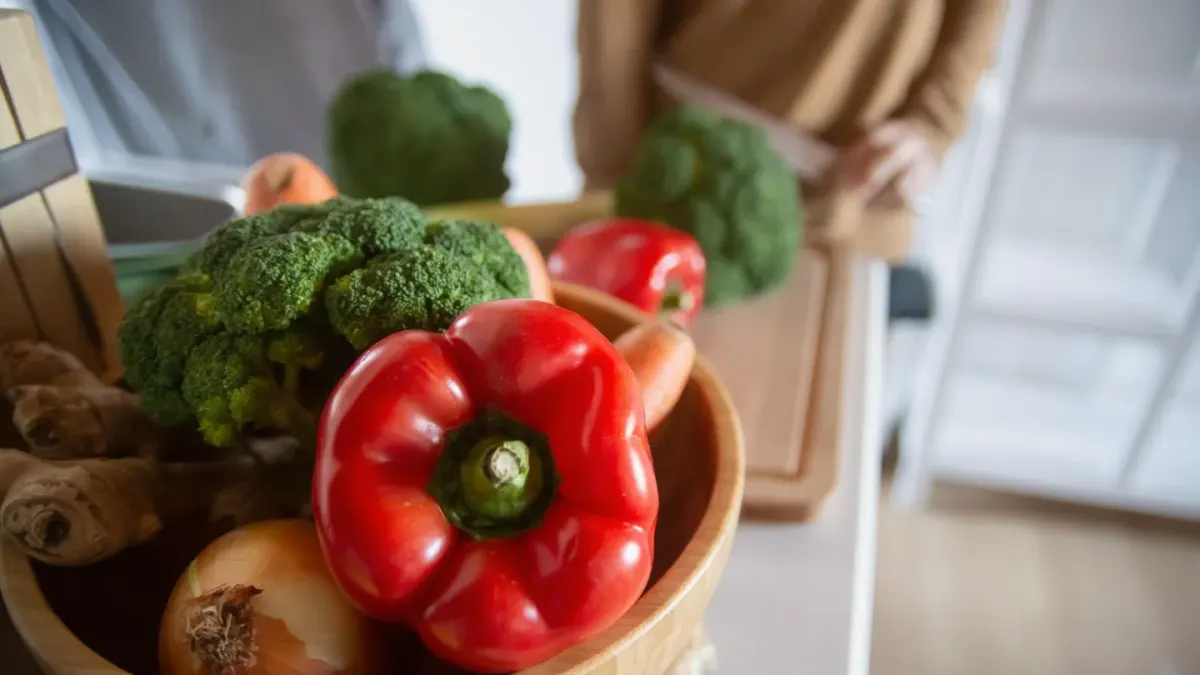
Imagine a kitchen island mid dinner-prep: a head of broccoli half-chopped, a dog sitting close enough to make his interest obvious, and an owner pausing knife-in-hand because a well-meaning relative once said cruciferous vegetables are “bad for dogs.” That pause is the whole article in miniature. The real question isn’t whether broccoli belongs on a banned list — it doesn’t — it’s which part of the plant, how much, and prepared how. Get that fork right and broccoli is a reasonable, low-calorie add-in. Get it wrong and you’ve traded a vegetable for a vet visit.
The fork: floret or stalk, cooked or raw
The floret is the crown, the tightly packed green top most people picture when they say “broccoli.” It’s the low-risk part. The stalk is the thick, fibrous stem underneath, and it’s where I’d actually direct caution. Cut into large or raw chunks, the stalk is dense enough to pose a genuine choking and esophageal obstruction risk, especially in small or brachycephalic dogs. According to the American Kennel Club (AKC), broccoli stalks can cause esophageal obstruction, particularly in small dogs, which is why I tell owners to trim the stalk away or dice it small rather than avoid the plant altogether. Cooked or raw florets, plain, no oil, no garlic, no seasoning — either form is fine on its own merits.
What isothiocyanates actually do in a dog’s gut
The florets contain isothiocyanates, plant compounds that give cruciferous vegetables their bitter edge and their reputation. At modest intake they’re a non-issue for most dogs. Push the volume up and they can irritate the gastrointestinal lining, producing gas, loose stool, or outright vomiting in a dog that’s sensitive or simply overfed on them. PetMD frames the working guideline the way most veterinary nutrition sources do: treats and extras, broccoli included, should stay near 10% of a dog’s overall diet. I hold that same number in my own recommendations, and I don’t treat it as a suggestion — it’s the line between a fiber-rich garnish and a gut irritant.
Here’s where I part ways with the more cautious corner of the internet. Some owners avoid all cruciferous vegetables outright because of goitrogen concerns — compounds in the brassica family that can interfere with thyroid hormone synthesis in some species at high, sustained intake. It’s a legitimate mechanism to know about, not a reason to strike broccoli from a healthy adult dog’s bowl. The exposure level required to meaningfully affect thyroid function in a dog eating a floret or two, occasionally, isn’t the exposure level we’re discussing here. I stay anchored to how the compound is thought to act at the dose actually being fed, not to the worst-case extrapolation.
Consider a mid-sized mixed breed on a calorie-restricted plan because her hips do better at a lower body weight. Her owner wants a crunchy, low-calorie substitute for the biscuits she used to get. A few steamed broccoli florets, cooled and cut small, fill that role without the caloric cost of a commercial treat. The trade being made here isn’t safety for convenience — it’s finding a genuinely lower-calorie option that still gives the dog something to work at. That’s a reasonable use of the vegetable, and it’s the kind of practical substitution I’d rather see than a dog getting an extra half-cup of kibble because there was nothing else to offer.
When fiber becomes the problem, not the plus
Broccoli’s fiber is generally a benefit — it’s part of why it shows up in weight-management conversations at all. But fiber load isn’t neutral for every gut. A dog managing a known digestive condition needs a different calculation than a healthy adult grazing on the occasional floret. In dogs with exocrine pancreatic insufficiency, for instance, management already centers on nutritional adjustments; JAVMA notes that EPI is treated by pancreatic enzyme replacement therapy, nutritional management with low-residue diets of moderate fat content, and cobalamin supplementation — a regimen where adding a fiber-dense vegetable isn’t a small decision, it’s one to route through the dog’s actual treatment plan. Gut response to dietary changes also isn’t uniform even among dogs without a diagnosed condition: research in Frontiers in Veterinary Science found that diversity metrics did not distinguish probiotic responders from non-responders, a reminder that two dogs on paper-identical diets can process the same addition differently.
My rule for the bowl
Where I land: florets, plain, cooked or raw, cut to a size that matches the dog’s mouth, capped near a tenth of the day’s intake. Skip the stalk unless it’s diced fine. Skip the whole vegetable if the dog has a diagnosed digestive condition until it’s cleared with the managing vet, because a EPI or IBD case is not the place to test a new fiber source informally. For puppies, I’d rather wait — a developing gut doesn’t need the extra variable, a point worth weighing the same way you’d approach switching a senior dog to a new food carefully rather than abruptly. And for owners already navigating other kitchen-staple questions, the same dose-and-prep logic shows up in pieces on sweet potato and on garlic in small amounts — different plants, same underlying arithmetic of amount versus tolerance.
So is broccoli safe for your dog? For most adult dogs, yes, within the floret-and-portion boundaries above. The harder question, and the one I’d actually sit with, is whether the next vegetable you’re tempted to hand over deserves the same careful math — or whether you’ve been applying a blanket rule where the dose was always the real variable?
Frequently asked questions
Should puppies eat broccoli?
I'd hold off. A puppy's gut is still calibrating to solid food, and broccoli's fiber load is more likely to produce loose stool or gas in a young digestive system than in an adult's.
Is raw or cooked broccoli safer for a dog?
Either can work for the florets. Cooking (plain, no oil or seasoning) softens the fiber and may ease digestion for a dog that's new to it; raw is fine too as long as pieces are small enough not to be a choking hazard.
Sources
- Is Broccoli Safe for Dogs? What Owners Need to Know — American Kennel Club (AKC)
- Can Dogs Eat Broccoli? — PetMD
- Exocrine Pancreatic Insufficiency in Dogs: Diagnosis and Management — JAVMA
- Probiotic Response and Gut Microbiome Diversity in Dogs — Frontiers in Veterinary Science