On this page
Imagine a Saturday kitchen: avocado toast on the counter, a dog parked at your feet with the specific patience only bacon and avocado seem to earn. You break off a plain, unsalted corner and hand it down. The dog inhales it in half a second and looks up for more. Nothing happens — no vomiting, no drama, no emergency vet call. That’s the honest, unglamorous truth about avocado flesh and dogs most of the time. It’s also exactly why so many owners assume the whole fruit, pit included, must be equally harmless. That assumption is where I part ways with the reassuring version of this story.
The short answer: flesh yes, pit and skin no
Start with what to actually do. Offer plain, unsalted avocado flesh in small amounts if you want to share it — a teaspoon or two for a small dog, a tablespoon or so for a large one, offered occasionally rather than as a daily habit. Skip the pit, skin, and stem entirely. Skip guacamole, chip dip, and anything with garlic or onion mixed in. That’s the whole practical decision tree, and it holds up whether your dog is a food-motivated Labrador or a dog who’s never shown interest in produce.
Why persin barely registers in dogs
Avocado leaves, bark, pit, and skin contain persin, a fungicidal toxin that’s genuinely dangerous to birds, rabbits, horses, and ruminants like goats and cattle. According to ASPCA, avocado can affect a range of animals, though sensitivity varies widely by species. That variability matters here: dogs sit near the resistant end of that spectrum. Pet Poison Helpline lists avocado as non-toxic to dogs and cats at typical exposure levels, noting that persin’s real targets are birds and livestock, not household carnivores. The Merck Veterinary Manual frames persin toxicosis in animals as a documented but species-dependent phenomenon — the compound is real, but the dose and the species both have to line up for it to matter clinically. For a dog eating a spoonful of ripe flesh, they rarely do.
The real hazard is the pit, not the fruit
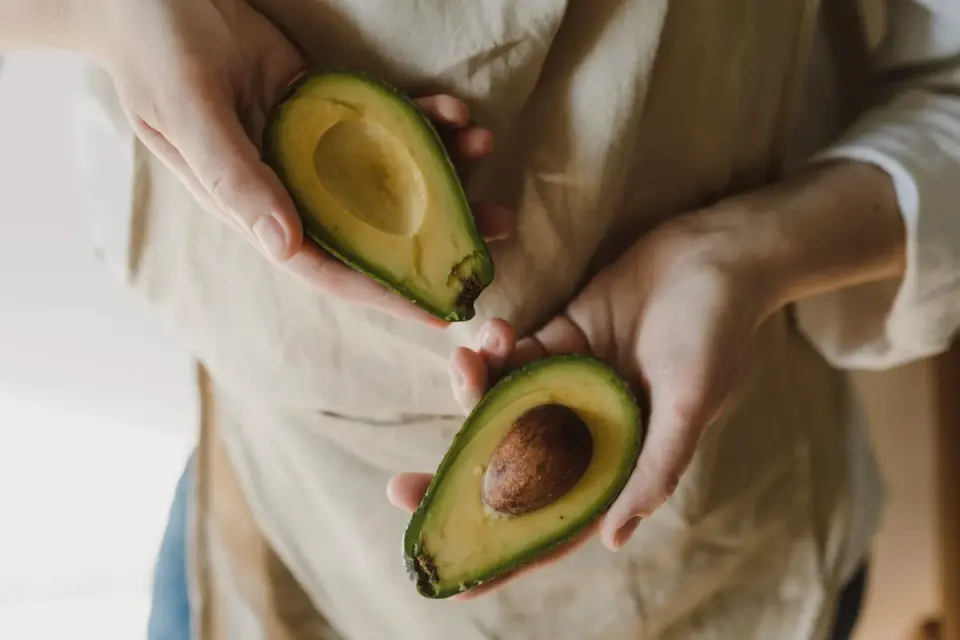
Here’s where I stop being reassuring. The pit is the size of a golf ball, hard, and just round enough to slide partway down before it stops moving. Consider a dog left alone with a countertop avocado for ten unsupervised minutes — plenty of dogs will eat the whole thing, pit included, without hesitation. If the pit lodges in the esophagus, that’s an immediate emergency. If it clears the throat and reaches the stomach or intestine, it can still cause a blockage that shows up hours or days later as vomiting, lethargy, or a refusal to eat, and by then it usually needs endoscopy or surgery to resolve. This is the scenario that actually lands dogs in the emergency room over avocado — not the flesh, and rarely the persin. If you know or suspect a dog swallowed a pit, don’t wait for symptoms before calling your vet.
Fat, portion size, and the pancreatitis math
Avocado flesh is calorically dense and high in fat compared to most produce dogs get offered as a treat. For a healthy, normal-weight dog, a small occasional portion isn’t a meaningful fat load. For a dog with a history of pancreatitis, a fat-sensitive breed like a Miniature Schnauzer, or a dog who’s already carrying extra weight, the math changes — a generous serving of avocado stacked on top of a regular diet can be enough fat to trigger a flare. I weigh this the same way I’d weigh any calorie-dense add-in to a working diet plan: the ingredient itself isn’t the risk, the total daily load is. If you’re managing a dog with prior pancreatitis, this is one I’d skip rather than portion carefully, because the margin for error is thin and the downside is a hospital stay.
That same portion-first logic applies broadly across dog nutrition — it’s worth reading how it plays out with a starchier staple like sweet potato, where the ceiling on benefit is also lower than marketing suggests, or with a pungent ingredient like garlic, where small amounts get debated constantly and the honest answer is more nuanced than a flat yes or no.
Guacamole, avocado oil, and other kitchen traps
Plain avocado is one thing; what it’s usually served with is another. Guacamole typically carries onion, garlic, lime, jalapeño, and salt — several of those are their own separate hazards, independent of the avocado. Avocado oil itself is fine in the small amounts used in some commercial dog foods, but a splash of dressing straight off your salad, salted and seasoned, isn’t the same product. If you’re introducing any new food item, including avocado, do it the way you’d introduce any dietary change — slowly, in isolation, watching stool and appetite for a day or two, which is the same discipline worth applying when switching a senior dog’s food rather than just watching for reactions to one ingredient.
Where I land
I don’t think avocado deserves the blanket “toxic to dogs” label it still carries in casual conversation, and I also don’t think it deserves a free pass as a wholesome treat. The flesh, in small unseasoned amounts, is a low-risk offering for most healthy dogs. The pit is the part that actually sends dogs to surgery, and no amount of persin folklore changes that. My practical rule going forward: keep the fruit away from the pit and skin entirely, keep portions small and occasional, and skip it altogether for any dog with a fat-sensitive gut. That’s a narrower recommendation than “avocado is fine” or “avocado is dangerous,” but it’s the one the evidence actually supports.
Frequently asked questions
Is a small bite of avocado toast dangerous for a dog?
A small bite of plain avocado flesh is unlikely to cause more than mild stomach upset in most dogs. The bigger risk in avocado toast is added salt, garlic, or onion in the spread, not the avocado itself.
What should I do if my dog swallows an avocado pit?
Call your veterinarian right away, even if your dog seems fine. The pit is large, hard, and smooth enough to lodge in the throat or intestines, and obstruction can require surgery.
Are dogs as sensitive to persin as birds or horses?
No. According to the Merck Veterinary Manual, sensitivity to persin varies widely by species, and dogs tolerate it far better than birds, rabbits, or livestock.
Sources
- The Scoop on Avocado and Your Pets — ASPCA
- Avocado Is Toxic To Dogs — Pet Poison Helpline
- Avocado (Persea spp) Toxicosis in Animals — Merck Veterinary Manual