On this page
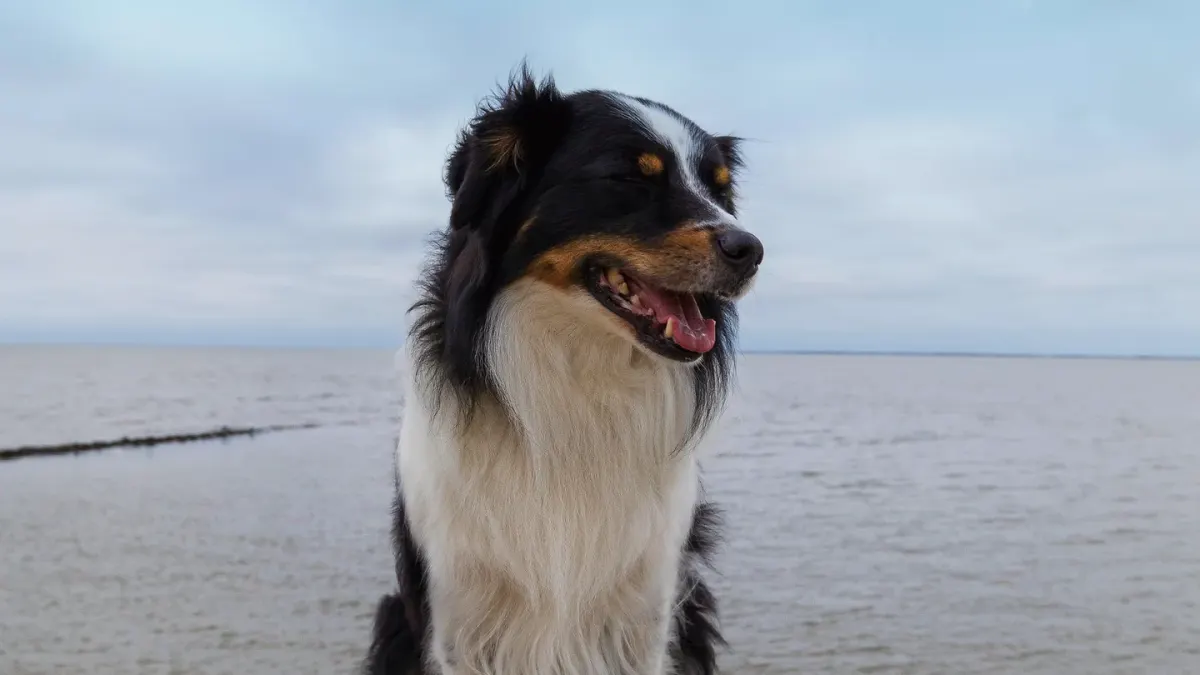
Border Collies need roughly 90 to 120 minutes of vigorous physical and mental work a day, and Australian Shepherds land in almost exactly the same range, per the Official Standard of the Border Collie and general breed guidance from the Official Standard of the Australian Shepherd. That number alone tells you neither dog belongs with a family that wants a jogging partner three times a week. The differences that actually matter show up in how that energy is expressed, what health issues you’re screening for, and how each breed ages.
The Decision Checklist
Before the coat color or the eyes decide it for you, run through this:
- Work style: Border Collies fixate on a task with laser focus; Australian Shepherds tend to divide attention between the job and the people around them.
- Household fit: Aussies generally read as more people-oriented day to day; Border Collies can be more selectively bonded and reserved with strangers.
- Coat maintenance: both are double-coated and shed seasonally; the Aussie’s coat is typically a bit longer and needs more brushing to prevent matting.
- Genetic screening: Border Collies need eye testing for collie eye anomaly; Australian Shepherds need MDR1 drug-sensitivity testing before starting flea, tick, or heartworm medication.
- Hip and elbow health: both breeds are screened through OFA or PennHIP, and neither is exempt from dysplasia despite their athleticism.
- Space and structure: a fenced yard helps, but neither breed’s needs are met by yard access alone — both require directed activity, not just room to move.
I ask new owners to sit with that list before they meet a single puppy, because the emotional pull of a face is strong and the daily-life math is what actually determines whether the placement holds.
Puppyhood: Two Different Kinds of Intense
I still remember a family who came in with an eight-week-old Border Collie puppy named Scout, about six pounds, from working lines rather than a show breeder. They lived in a two-bedroom townhouse with a small patio, and within the first week the puppy had started stalking the family’s toddler across the living room floor, dropping into that classic herding crouch. The parents were exhausted and a little rattled, not because the dog was aggressive, but because nobody had told them that herding behavior shows up that early or that intensely. We spent the next few months redirecting that instinct into flirt-pole games and short, structured training sessions instead of letting it default onto the kids. By four months, the stalking had mostly shifted onto tennis balls, which is about as good an outcome as I could have asked for.
Puppy Border Collies and Australian Shepherds both arrive with more drive than most first-time owners expect, and both benefit from a settled routine from the first night home — a consistent crate setup, as covered in our guide to setting up a crate for a puppy’s first night, does a lot of work in those early weeks to give an intense puppy somewhere to decompress. Training that starts early and stays short — five to ten minutes, several times a day — tends to go further than one long session, and the right treats matter more than owners expect; our training treats buyer’s guide covers what size and value actually work for a puppy that’s food-motivated from the start.
Adolescence and the Work Ethic Problem
Somewhere between six and eighteen months, both breeds hit a stretch where their intelligence starts working against their owners rather than for them. This is when I see the most calls about destructive digging, obsessive shadow or light chasing, and reactivity toward joggers, cyclists, or other dogs. According to the Official Standard of the Border Collie, the breed is described as an intense worker with keen alertness — traits that are wonderful on a farm and genuinely difficult in an apartment without an outlet. The Official Standard of the Australian Shepherd similarly describes an active, intelligent dog with an even disposition, but “even disposition” assumes the dog’s activity needs are already being met.
This is the stretch where I steer owners toward structured dog sports — agility, herding trials if accessible, nose work, or flyball — rather than simply adding more unstructured exercise. A tired body without a used mind still finds trouble. Cooling matters here too, especially for double-coated adolescents pushed hard in warmer months; see our notes on cooling options for a thick-coated breed and, for lower-impact hot-weather play, our backyard sprinkler and splash games roundup, which works for both breeds when a long run isn’t safe or practical.
Adulthood: Coat, Health Screening, and the MDR1 Question
By full maturity, most of the temperament differences have settled into something predictable. According to the Is the Border Collie the Right Breed for Your Lifestyle? guide, the breed can be affectionate with familiar people while staying sensibly reserved with strangers — a pattern I see reflected in exam rooms, where Border Collies often watch me carefully before deciding to relax. Australian Shepherds, per PetMD, tend toward a more universally social temperament, though individual variation is real in both breeds.
Two screening priorities diverge here. Border Collies should be tested for collie eye anomaly, an inherited condition affecting retinal development that can range from a minor finding to significant visual impairment, according to the Border Collie Health & Education Foundation. Australian Shepherds carry a meaningfully higher rate of the MDR1 gene mutation, which affects how the body clears certain medications, including some flea, tick, and heartworm preventives, per PetMD. I recommend MDR1 DNA testing for every Aussie before their first round of parasite prevention, because the standard dose that’s fine for most dogs can cause a serious reaction in a carrier.
Neither breed is spared from hip or elbow dysplasia despite their athletic build. A study on the effects of long-term selection in PMC found evidence that decades of working-line breeding pressure in Border Collies has reduced — though not eliminated — the prevalence of hip and elbow dysplasia compared to some other purebred populations, underscoring why OFA or PennHIP screening still belongs on every pre-breeding checklist rather than being assumed unnecessary because a dog “looks athletic.”
The Senior Years: Slowing Down, Reluctantly
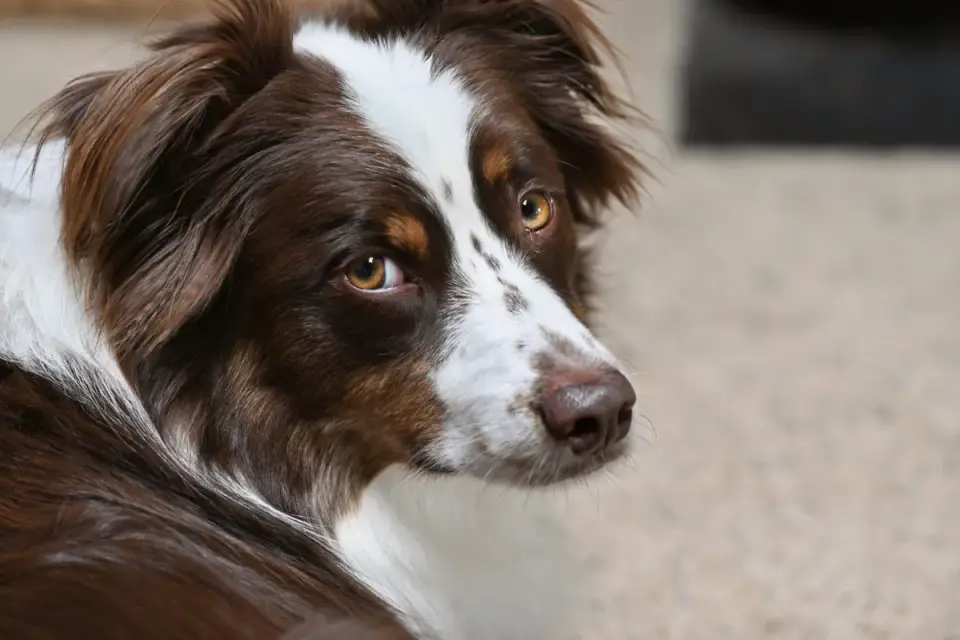
Neither breed slows down gracefully, and that’s not a compliment. I had an eleven-year-old Australian Shepherd in for a wellness visit last spring — sixty-two pounds, still trying to herd the cat — whose owner hadn’t noticed anything wrong until she mentioned, almost in passing, that he’d stopped meeting her at the top of the stairs the way he used to. On exam, his hips were sore on extension, and his gait was subtly shortened after rest, the kind of change that’s easy to miss in a dog who still sprints for the ball. We adjusted his exercise to shorter, more frequent sessions instead of one long hike, added joint support, and had him back to greeting her at the stairs within about six weeks. Both breeds tend to mask discomfort behind sheer motivation, which means owners of aging Border Collies and Aussies need to watch for the quiet signs — reluctance on stairs, a shortened stride, slower recovery after play — rather than waiting for obvious limping.
My Recommendation
If I’m being direct with a family weighing these two: I lean toward the Australian Shepherd for households with young kids and a lot of foot traffic, because the breed’s more outward, people-focused temperament tends to tolerate chaos with a bit more patience. I lean toward the Border Collie for a single owner or couple who wants a true working partner and can commit to serious daily structure — agility, herding, or an equivalent outlet — because that intensity, left undirected, becomes the dog’s biggest liability rather than its best trait. Neither answer is universal, and I’ve watched plenty of exceptions prove both rules. What I won’t recommend is either breed for a home that’s hoping a big yard will substitute for actual training and daily engagement — that’s the single most common regret I hear about a year in.
If you’re still undecided, spend time with adult dogs of both breeds from working or performance lines before you commit to a puppy, and ask any breeder directly for MDR1 and eye-testing results rather than assuming a clean bill of health.
Frequently asked questions
Are Border Collies or Australian Shepherds better with children?
Both can do well with kids when properly socialized and exercised, but Australian Shepherds tend to be more consistently people-focused day to day, while Border Collies can be more selectively bonded and may need more guidance around herding behavior directed at running children.
Do Australian Shepherds really need MDR1 testing?
Yes. A meaningful share of Australian Shepherds carry the MDR1 gene mutation, which affects how their bodies process certain medications, including some parasite preventives. A simple DNA test before starting any new medication is worth the cost.
Which breed is easier for a first-time dog owner?
Neither breed is a good match for a first-time owner who wants a low-maintenance dog. Both demand daily structured exercise and mental work; without it, both are prone to destructive or anxious behavior.
Sources
- Official Standard of the Border Collie — American Kennel Club
- Official Standard of the Australian Shepherd — American Kennel Club
- Is the Border Collie the Right Breed for Your Lifestyle? — American Kennel Club
- Australian Shepherd Dog Breed Health and Care — PetMD
- Effects of Long-Term Selection in the Border Collie Dog Breed: Inbreeding Purge of Canine Hip and Elbow Dysplasia — PMC
- Genetic Diseases — Border Collie Health & Education Foundation