On this page
- Why the Same Behavior Reads Two Different Ways
- What Barrier Frustration Actually Looks Like
- What True Leash Aggression Actually Looks Like
- The Five-Second Read Before You React
- Where Structure and Support Genuinely Fit
- Where Gear Fits, and Where It Doesn’t
- When It’s Neither, or Both
- Bringing It Back to the Fork
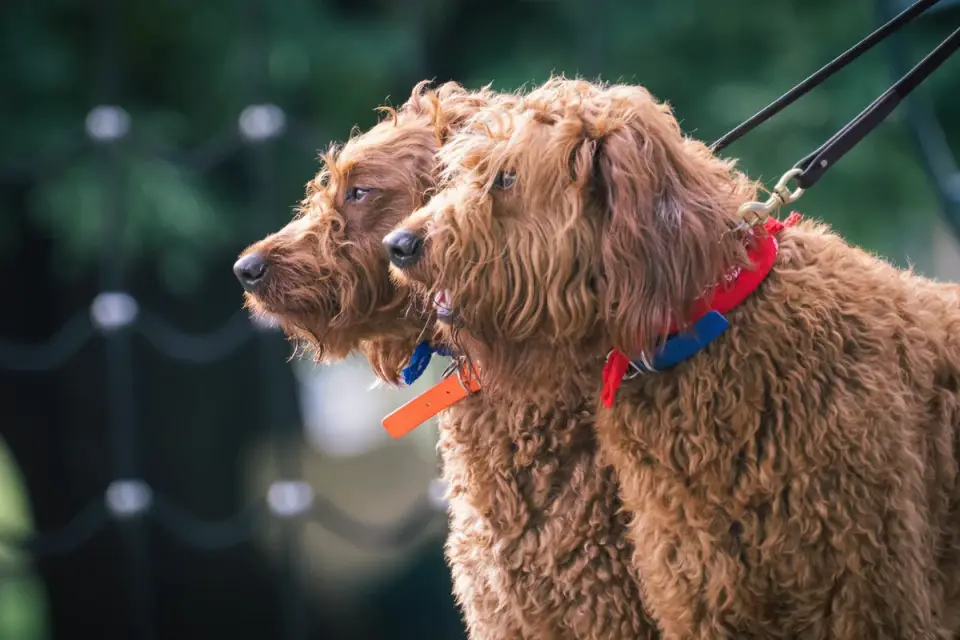
A client once stood in my exam room holding a leash with both hands, describing her two-year-old goldendoodle, Baxter, as if he were two different dogs. At the dog park, off leash, he was a social butterfly who greeted every dog with a loose, wiggly body. On leash, the same dog would see another dog half a block away, stiffen, and explode into barking and lunging so hard she’d nearly lose her footing. She was convinced he’d suddenly become aggressive. He hadn’t. He was frustrated, and the leash was the whole problem.
That distinction, frustration versus aggression, is the fork every owner standing where she was needs to work through before choosing a training plan, a piece of gear, or a professional.
Why the Same Behavior Reads Two Different Ways
Barking, lunging, and pulling toward another dog can come from opposite emotional states. A frustrated dog wants to get closer and is blocked. An aggressive dog wants distance and is trying to create it. From six feet away, both can look loud, fast, and scary. The leash itself is often the variable that flips a friendly dog into a display that looks like aggression, because it removes the option dogs would normally use to manage a greeting on their own terms.
What Barrier Frustration Actually Looks Like
Barrier frustration, sometimes called leash reactivity, tends to show a specific pattern. The dog’s body stays loose through the greeting attempt, tail often up and moving, ears forward, and the intensity spikes the moment another dog gets close, then drops fast once the leash is off or the other dog is gone. Off leash, at a dog park or in an unrestricted meet-and-greet, that same dog is frequently fine or even overly social. The behavior is really an impulse-control problem layered on top of excitement or a strong desire to greet, and it’s one of the more common presentations I see in adolescent and young adult dogs who never got much structured leash socialization.
What True Leash Aggression Actually Looks Like
True aggression driven by fear or defensiveness reads differently once you know what to watch for. The body tends to go stiff rather than loose, weight shifts backward even while the head and mouth move forward, the tail may be low or tucked, and the dog is trying to increase distance, not close it. These dogs are often fine or neutral around other dogs off leash in open space where they can control their own proximity, but on leash, unable to retreat, they escalate faster. Some dogs are also worse in tight spaces like hallways, doorways, or narrow sidewalks, which is a barrier problem of a different kind, one built on feeling trapped rather than blocked from a greeting.
In my practice, I’ve watched this play out with a three-year-old shepherd mix named Ranger, brought in at 62 pounds by an owner who’d adopted him from a shelter eight months earlier. He’d been fine on walks for the first few months, then started stiffening and barking at dogs across the street, always in the late afternoon on the same two-block stretch near a busy intersection. The owner had first noticed it gradually getting worse over about six weeks, not appearing all at once. What stood out on exam and history wasn’t the barking itself, it was that Ranger’s tail dropped and his weight shifted backward the instant a dog came into view, even from thirty feet away, well before any leash tension built up. That’s a fear signature, not a greeting-frustrated one, and it changed the entire training recommendation, from teaching polite leash manners to building distance and reducing exposure to trigger-dense routes first.
The Five-Second Read Before You React
Before assuming the worst, watch the body for a few seconds longer than feels natural in the moment. Is the tail up, loose, and moving, or low and still? Is the weight forward toward the other dog, or backward and away even as the bark continues? Does the dog calm within seconds once distance opens up or the other dog moves on, or does the arousal stay high for minutes afterward? Frustration tends to resolve quickly. Fear-based aggression lingers.
This single read doesn’t replace a full behavioral assessment, but it’s usually enough to decide whether you’re managing an impulse-control gap or a genuine fear response, and those two problems get worked on very differently.
Where Structure and Support Genuinely Fit
Neither frustration nor fear-based leash reactivity is solved by a supplement or a single tool alone, but calming support can be a reasonable piece of a broader plan for a dog whose baseline arousal or anxiety is high enough that learning new leash skills is hard. Chamomile and valerian root have been used in traditional herbal care to support relaxation, though for chamomile specifically, a review in Biomedicines notes that “for the remaining species, evidence is derived mainly from preclinical studies or traditional use,” meaning it should be treated as a mild, supportive option rather than a fix on its own. Ashwagandha has more clinical backing in general stress research; a systematic review in Cureus “analyzed multiple RCTs and concluded that ashwagandha has a moderate positive impact on stress reduction and cognitive performance.” L-theanine has also been studied for calming effects, and one review notes an effect in human anxiety research at “400 mg/day for 8 weeks,” a dose specific to that human trial and not something to extrapolate onto a dog’s regimen, per the review in Molecular Psychiatry. These ingredients are worth discussing with your vet as an adjunct for a genuinely anxious dog, but they don’t replace teaching a frustrated dog how to greet politely, or teaching a fearful dog that distance is safe.
Where Gear Fits, and Where It Doesn’t
A well-fitted front-clip harness can help with a frustrated puller by reducing the leverage of a full-body lunge, and for dogs who benefit from more structured control during retraining, tools like a double-ended leash give you two points of contact instead of one, which matters more for frustration-driven dogs than fearful ones. For a fearful dog, the priority isn’t a stronger tool, it’s more distance and less exposure while the dog’s threshold slowly changes. Gear can support a training plan; it can’t substitute for reading the dog correctly first.
When It’s Neither, or Both
Some dogs blend the two. A dog who started purely frustrated can develop real fear over time if greetings keep going poorly or if he’s had a bad experience with another dog, and a naturally anxious dog can also carry some genuine desire to interact that reads as frustration underneath the fear. If a dog’s tail position, weight shift, and recovery time don’t line up cleanly with one pattern, or if the behavior is getting worse rather than better, that’s a signal to bring in a certified applied animal behaviorist or a veterinary behaviorist rather than guessing longer. This is also worth flagging early if there’s any history that resembles what’s described in guides on reading a growl as a warning, since escalating warning signals deserve the same careful read as leash behavior does.
By the time I saw Baxter again for a recheck, his owner had spent six weeks working controlled leash greetings at a distance, rewarding calm attention instead of letting him strain toward every dog he saw. The change wasn’t dramatic day to day. It was steady. His recovery time after seeing a dog dropped from what she described as “a full minute of panting and pulling” down to a few seconds by week five, and she’d stopped dreading the two blocks near the elementary school where dogs were common in the afternoon. That’s the shape frustration-driven cases usually take when the plan matches the problem: gradual, boring in the best way, not a single breakthrough moment.
Bringing It Back to the Fork
If your dog’s body stays loose, the intensity is about wanting to get to another dog rather than away from one, and recovery is quick, you’re likely managing frustration, and structured leash work plus impulse control training is the right lane. If the body goes stiff, weight shifts backward, and the dog seems to want space rather than contact, treat it as fear-based until a professional tells you otherwise, and prioritize distance and decompression over closer exposure. Getting this read right early saves months of training a dog in the wrong direction. If you’re also managing a dog who’s independently anxious around other triggers, our guide to independence training for a velcro dog and our piece on why some dogs panic at the garbage truck cover related patterns worth ruling in or out.
Frequently asked questions
Can a dog be frustrated and aggressive at the same time?
Yes. A dog that starts out purely frustrated by the leash can develop genuine fear over time, especially after repeated bad experiences on walks, so the pattern can blend the longer it goes unaddressed.
Is leash reactivity the same as aggression?
Not usually. Most leash reactivity is barrier frustration, an impulse-control problem rooted in wanting to get closer to another dog, while true aggression is typically driven by fear or a desire to increase distance.
Should I use calming supplements for a reactive dog?
They can be a reasonable supporting piece for a genuinely anxious dog, but ingredients like chamomile, ashwagandha, and L-theanine support relaxation rather than replace the training work of teaching a specific skill.
Sources
- Chamomile and Valerian in Companion Animal Anxiety: A Review — Biomedicines
- Ashwagandha for Stress and Anxiety: A Systematic Review — Cureus
- L-Theanine and Anxiety: A Systematic Review — Molecular Psychiatry