Bark dog toys delight calm players but can hype vocal dogs, so choose sound for temperament and tolerance.

On this page
Noise does not create a barker out of a quiet dog by itself, but the right squeak at the wrong moment can raise arousal enough that barking follows. For bark dog toys, the practical answer depends on temperament, learning history, and how much sound your household can live with.
What bark and squeak toys actually do
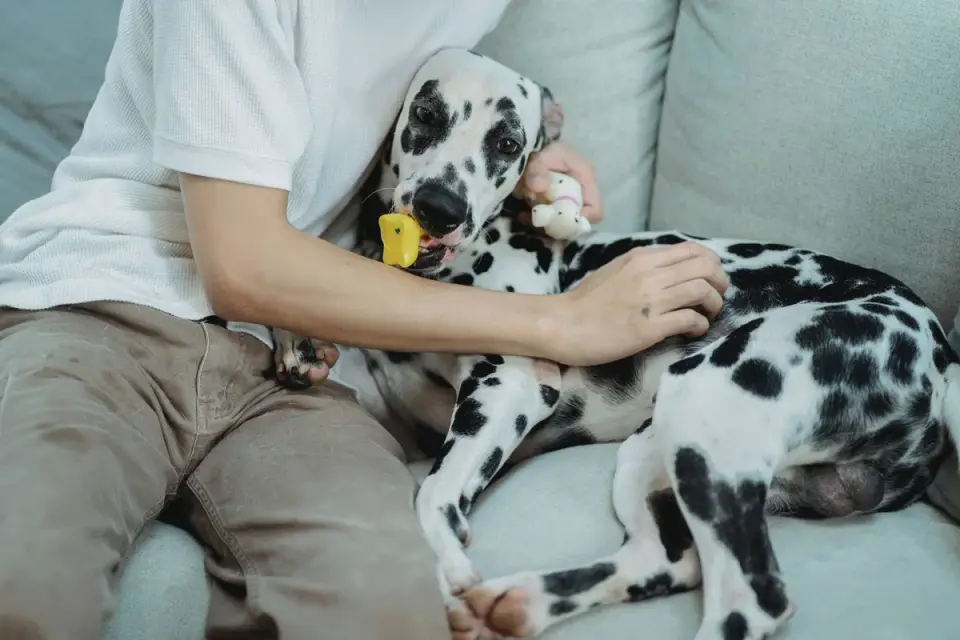
Most toys labeled as barking, giggling, squeaking, or talking share the same mechanism. Bite pressure or motion triggers a short, high-pitched sound that stops when play stops. That on-off pattern functions as immediate feedback for mouthing, shaking, and chasing.
Dogs hear higher frequencies well and orient quickly to novel sounds. The sound can therefore support normal play and enrichment for dogs that chew and disengage easily. The Merck Veterinary Manual describes barking as normal canine communication that increases with excitement, attention seeking, territorial behavior, anxiety, and learned reinforcement.
In practice, the toy is rarely the sole cause. It adds excitement to a dog already primed to vocalize by breed tendency, under-exercise, boredom, or a history of getting attention for barking.

Which dogs get louder and which settle
Comparison of responses helps predict the outcome before buying another noisy toy. Sound-sensitive herding breeds, terriers selected to vocalize on quarry, and adolescent dogs with low impulse control are more likely to chain squeak, shake, and bark together. Dogs with noise anxiety may startle, pace, or avoid the toy rather than bark.
Calm adult chewers often show the opposite pattern. They mouth a squeaker a few times, then settle into rhythmic chewing without vocalizing. Jared in San Francisco noticed this split with Eros, his 7-year-old neutered male Jack Russell Terrier mix. Eros stays quiet with a food puzzle, but a bark-activated plush raises his pacing and triggers sharp barks at windows and hallway sounds. Removing the sound toy during evening hours lowered the total barking without removing play altogether.
Context matters as much as temperament. Toys used for short, structured play followed by rest are less likely to support prolonged barking than toys left out all day for self-reinforcing squeak-bark cycles. For help sorting play by purpose, see Interactive Toys vs. Chew Toys: When to Use Each and How to Exercise a Dog Indoors With Toys During Bad Weather.
How to match sound to temperament and home
Start with a two-day trial rather than a permanent toy-box addition. Offer the bark or squeak toy for five to ten minutes while you are present. Watch for dilated pupils, stiff tail carriage, fixating, inability to drop, or barking that continues after the sound stops. Those signs point toward overarousal rather than satisfied play.
For dogs that escalate, choose a quieter format. Low-volume squeakers, crinkle without a voice box, rubber chew toys used with food, or snuffle play provide mouth occupation with less acoustic trigger. The American Veterinary Society of Animal Behavior supports teaching quiet, settled behavior with reinforcement rather than punishment-based correction for barking, which makes calm toy swaps more useful than scolding or e-collars.
For dogs that remain relaxed, sound toys can stay in rotation with limits. Use them during daytime active play, then trade for a chew and put the noisy toy away. Keep sessions short, cue drop and settle, and reward disengagement.
When to go quiet or retire the toy
Remove bark toys for a period if barking increases in frequency or intensity, if the dog guards the toy, if play turns frantic and the dog cannot redirect, or if neighbors or infants make sound tolerance low. Dogs on restricted activity need a different plan altogether, as outlined in Quiet Toys for a Dog on Post-Surgery Crate Rest.
Maintenance also influences safety and noise level. A damaged voice box can lodge, squeak continuously, or expose stuffing and plastic edges. Inspect seams, test the sound mechanism, and wash according to material guidance in How to Clean and Disinfect Dog Toys. Retire toys with torn fabric, cracked squeakers, or loose batteries in sound modules.
Bark dog toys neither guarantee silence nor guarantee more barking. They amplify what the dog brings to play. Owners who select lower sound for vocal, easily aroused dogs and reserve louder toys for brief, supervised sessions with settled chewers get enrichment without encouraging extra noise.
Frequently asked questions
Do squeak or bark toys teach a dog to bark more?
They can increase arousal and give barking more opportunities to be reinforced in vocal or easily excited dogs, but they do not by themselves create a barking problem in a calm dog with adequate exercise and training.
Should I take sound toys away if my dog barks at them?
Pause them for one to two weeks and switch to quiet chews or food puzzles. If barking drops, reintroduce sound toys only for short supervised sessions or keep the quieter rotation.
Are bark toys bad for puppies?
Not necessarily. Use low-volume toys in brief sessions, teach trade and drop with treats, and remove the toy if the puppy becomes mouthy, frantic, or unable to settle afterward.
Sources
- Behavioral Problems of Dogs — Merck Veterinary Manual
- Position Statements — American Veterinary Society of Animal Behavior