An automatic ball thrower for dogs works indoors only with soft balls, short tosses, and non-slip flooring.
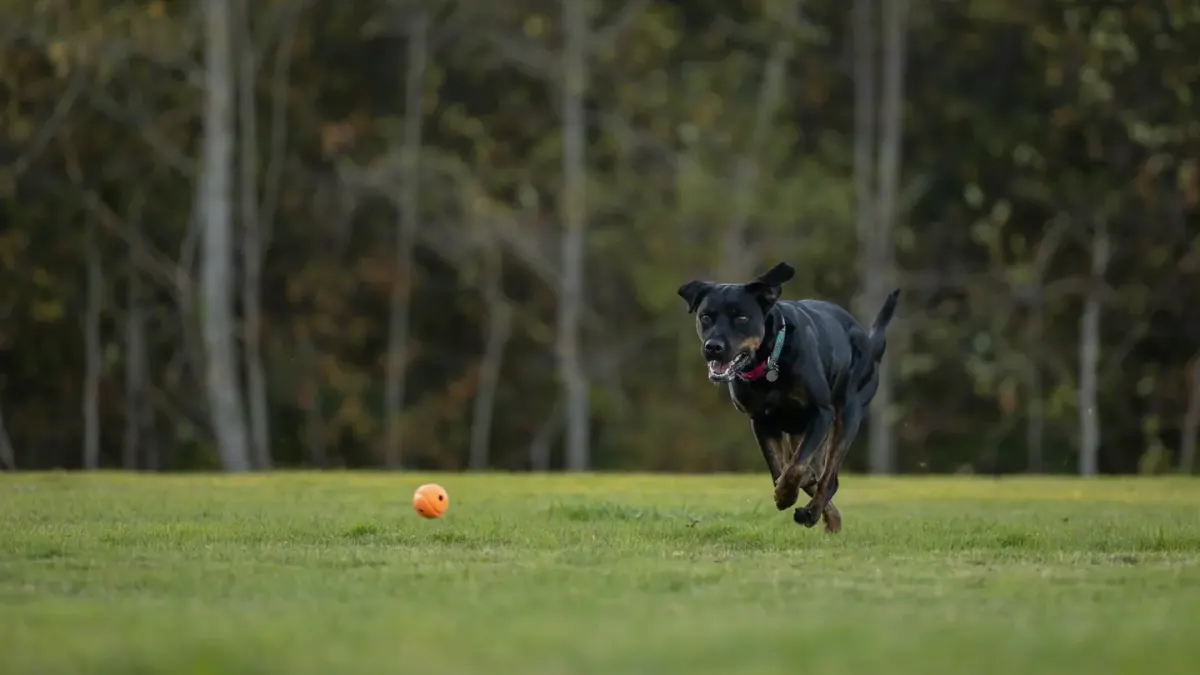
An automatic ball thrower for dogs works indoors only with soft balls, short tosses, and non-slip flooring. On bare hardwood or tile, the sprint-stop-turn cycle loads knees and hips faster than muscle can stabilize them.
Keep it inside or wait for dry grass?
Maurice weighs this with Winifred, his 6-year-old spayed Boston Terrier mix in Thousand Oaks, California. She spins up in a 12-foot hallway, slides past the rug edge, and scrambles to brake. He wants winter fetch without that crash.
Vets often see that hallway pattern end in limping. Rapid acceleration followed by a hard stop on a slick surface increases shear across the cranial cruciate ligament, a mechanism described by American College of Veterinary Surgeons in its overview of ligament rupture in dogs. Small, chondrodystrophic mixes do not escape it; torque concentrates where paw meets floor.
That physiology decides the fork. If you can offer carpet, large interlocking foam mats, or a rug runway with no bare gaps, plus a low launch setting, indoor machine fetch may help support activity on bad-weather days. If the only lane is hardwood, tile, or laminate, park the machine.
Why hard balls and slick floors collide
A launcher adds two risks that hand-toss avoids: fixed trajectory and fixed repetition. Dogs learn the landing spot and drive harder into the same braking zone, rep after rep.
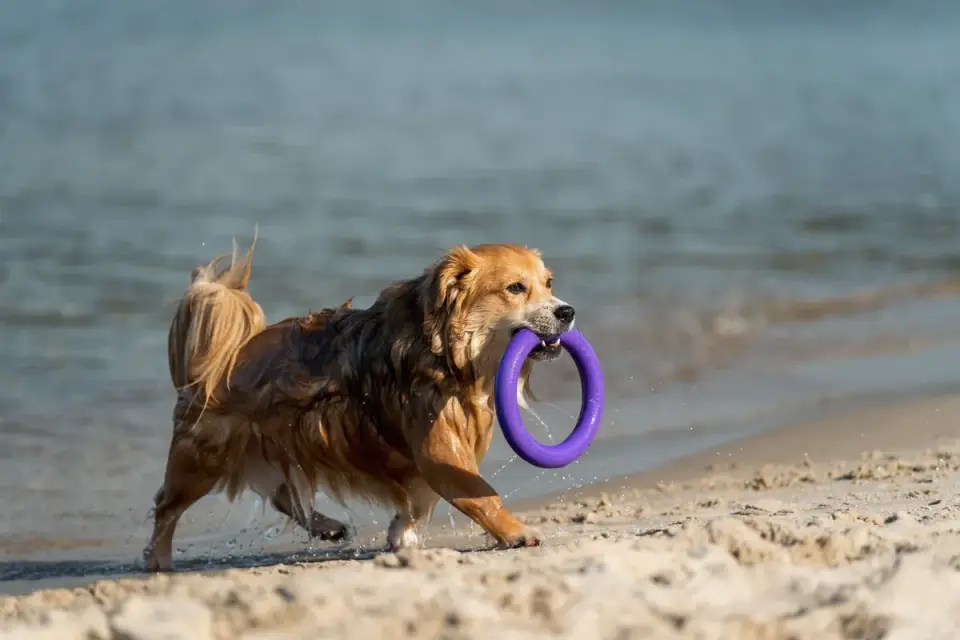
Hard rubber balls bounce higher, roll farther, and transfer more force to teeth, walls, and baseboards. Felt tennis material sheds fibers and can trap grit that scuffs floors. For indoor use, low-bounce foam or fabric-covered foam balls reduce ricochet and wall damage, and they slow the chase enough to keep strides short.
Distance matters more than motor power. Most living rooms allow only 8 to 15 feet of safe flight. Set the machine to its shortest arc, aim down a carpeted straightaway, and block side exits so the dog cannot cut hard around furniture. That layout also matches safer ideas for keeping a dog active indoors during bad weather.
Friction is treatment. Washable runners with latex backing beat scattered throw rugs that slide. Leave three to four feet of stopping mat beyond the pickup zone.
A safer indoor setup that still tires dogs out
Run short sessions. Five launches, then a settle, nose-work break, or chew pause, keeps arousal and joint load lower than 20 straight reps.
Supervise every cycle. Unplug between sets, inspect foam balls for tears, and rotate to interactive toys vs. chew toys when to use each so the dog does not chew launcher balls into pieces.
Clean what gets mouthed. Saliva plus dust turns foam slick and gritty. A regular wash routine like the one for how to clean and disinfect dog toys extends ball life and keeps grip consistent.
Skip indoor machine fetch for dogs with known cruciate disease, luxating patella with frequent skipping, advanced arthritis, or post-surgical restriction. It also fits poorly for puppies under skeletal maturity that cannot yet brake cleanly, and for dogs that resource-guard the machine.
The floor decides. Soft balls, short tosses, and true non-slip footing make an indoor thrower workable. Without those three, choose scent games, training reps, or a leashed outdoor outing instead.
Frequently asked questions
Can I use an automatic ball thrower on hardwood floors?
It is not advisable. Dogs cannot brake safely on slick wood or tile, which raises slip and knee injury risk. Use carpet, wall-to-wall mats, or move the game outside.
What balls are best for indoor launchers?
Use the softest low-bounce foam balls sized for your model and too large to swallow. Inspect them each session and discard torn foam.
How long should an indoor fetch session last?
Keep it to a few short sets of about five tosses with rest, training, or sniff breaks between. Stop for panting that does not settle, limping, or frantic cornering.
Sources
- Cranial Cruciate Ligament Disease — American College of Veterinary Surgeons