On this page
The decision fork: is your dog drinking enough, or is cleaning the problem?
Before you shop, separate the two questions that actually drive this decision:
- Does my dog drink enough water day to day? If you’re chasing a picky drinker, a fountain is worth trying.
- Am I actually able to keep the water clean? If bowls sit for days between washes, that’s a hygiene problem no fountain fixes on its own.
- Does my dog have a medical reason to track water intake closely? Kidney disease, diabetes, and bladder stone history change the calculus.
- What’s my cleaning tolerance? Fountains need filter changes and pump disassembly; bowls need a daily scrub and nothing else.
- Where does the bowl or fountain live? Multi-dog households, hard water, and travel all shift the answer.
If you’re mainly solving for a dog who under-drinks, a fountain earns its space. If you’re solving for cleanliness and simplicity, a stainless bowl washed daily can outperform a poorly maintained fountain.
What a bowl is actually up against
A plain bowl looks simple, and that’s the trap. It only takes hours for a film of saliva, food debris, and dissolved minerals to start building on the inside surface, even when the water looked clean when you poured it. A study of pet food bowls published in Scientific Reports found that bowl material and cleaning method both meaningfully changed how much bacterial contamination accumulated — plastic and ceramic bowls behaved differently from stainless steel, and bowls washed only by rinsing carried far more bacteria than those cleaned with soap or a dishwasher. None of this means a bowl is unsafe. It means a bowl is only as clean as your last wash.
I’ve had owners tell me their dog “just doesn’t drink much,” and the first thing I ask is when the bowl was last scrubbed, not rinsed. Standing water left in a bowl for a day or two picks up a film you can sometimes feel with your fingertip before you can see it. Dogs notice that before we do. A bowl washed once a day with soap and hot water resets the problem every 24 hours; a bowl that only gets a splash of fresh water on top of what’s already there does not.
Where a fountain earns its keep
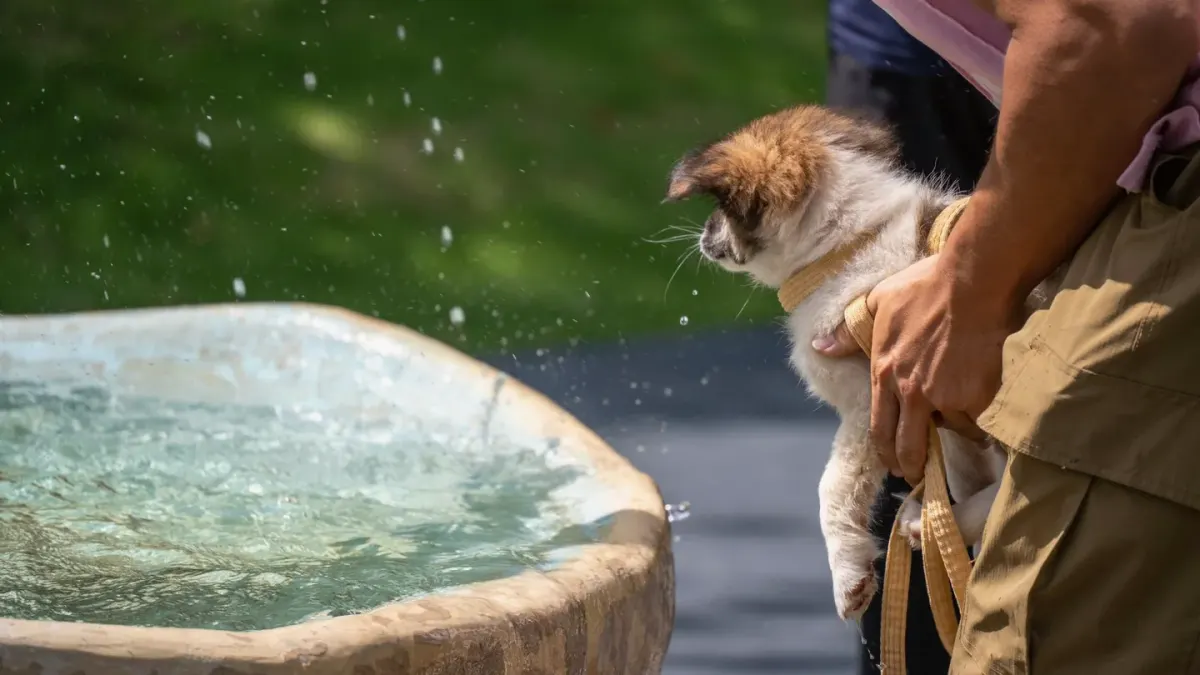
A fountain’s whole pitch is that moving water is more appealing to drink and, in theory, stays fresher longer because it’s constantly filtering and aerating. There’s real biology behind the appeal: standing water reads as stale to a lot of animals, and flowing water is one of the cues that tells a dog or cat it’s safe to drink. Research on cats specifically has looked at this directly — a study in Frontiers in Veterinary Science compared water intake and urine concentration across different water sources and found that source design does influence how much a cat drinks and how concentrated its urine becomes, which matters for anyone managing urinary or kidney concerns. Dogs aren’t cats, but the underlying idea — that presentation changes intake — carries over, and it’s the reason the American Kennel Club lists fountains as a legitimate option for dogs who are reluctant drinkers, seniors, or recovering from illness.
A fountain isn’t a maintenance shortcut, though. The pump, the filter, and every seam where water sits still need regular attention, or you’ve just built a more complicated bowl that’s just as capable of growing biofilm.
The dog in front of you, not the trend in the aisle
One of the dogs I think about most on this topic was a 10-year-old Cavalier King Charles Spaniel named Millie, about 16 pounds, who came in because her owner noticed she’d started skipping her water bowl most mornings and only drinking in short bursts after dinner. Nothing about her bloodwork raised a red flag yet, but the owner was right to be paying attention — older small dogs with early dental disease often drink less because cold, standing water is uncomfortable on sensitive teeth and gums. We switched her to a fountain with a slow, shallow flow, and within about two weeks the owner reported Millie was visiting the water station more often through the day instead of gulping once and walking away. That single case isn’t proof a fountain fixes reduced drinking — it’s one dog, one household — but it’s exactly the kind of change I want owners watching for: frequency of visits, not just whether the bowl empties.
The reverse happens too. I’ve seen large-breed dogs, Labradors especially, treat a fountain’s small reservoir as a toy, pawing at the stream until the whole thing tips or drains faster than it refills. For a dog like that, a heavy, wide stainless bowl refreshed twice a day is the more reliable setup, fountain or not.
Hygiene habits that matter more than the hardware
Neither option manages itself. Whichever you choose, the routine matters more than the label on the box:
- Wash a standard bowl daily with soap and hot water, not just a rinse.
- Break down and clean fountain pumps and reservoirs on the schedule the manufacturer lists — most need it weekly at minimum.
- Replace fountain filters on schedule; a spent filter can reintroduce what it was supposed to remove.
- Watch for a slimy film on either surface, which is the visible sign of the biofilm the Scientific Reports study measured directly.
- Pick material with your dog’s chewing and knocking-over habits in mind — a fountain that gets tipped is worse than a bowl that doesn’t.
If your dog is prone to lunging or dragging you toward the water bowl on walks, gear choices elsewhere in the house matter too — see our guide to bungee vs. fixed leashes for a lunging dog for a related fit problem. And for dogs who wander off before you can top off any water source, our breakdown of GPS trackers for an escape-prone dog covers a different kind of daily-use gear decision with the same “does it hold up in real life” test.
Where this fits with the rest of your gear
I try to evaluate hydration gear the same way I’d evaluate a harness or a long line: does it hold up to how this specific dog actually uses it, not how it’s supposed to work in a product photo. A fountain that a nervous dog won’t approach because of the pump noise isn’t doing its job, no matter how good the filtration is. A bowl that never gets scrubbed isn’t a safer default just because it’s simpler. If you’re also weighing material questions for other gear, the reasoning in our Biothane vs. Nylon vs. Leather Long Line piece — matching material to how the gear is actually used day to day — applies here too.
For dogs with a diagnosed medical reason to track intake closely, like calcium oxalate stone history or chronic kidney disease, talk to your vet about a specific hydration plan; a fountain alone isn’t treatment. For everyone else, this is a lower-stakes call than it might feel like standing in the pet aisle.
I keep coming back to a simple test with owners: watch how often your dog approaches the water, not just how much disappears from the bowl by evening. Increased visits, even in small sips, is usually the more honest signal.
Bottom line: a fountain is worth trying for a dog who under-drinks, is a senior, or has mild dental discomfort, provided you’ll actually keep the filter and pump clean on schedule — and a well-maintained standard bowl, washed daily, is a completely defensible choice for a dog who already drinks reliably.
Frequently asked questions
Do dogs really drink more from a fountain than a bowl?
Many dogs do drink more often from moving water, especially picky drinkers, seniors, and dogs with mild dental discomfort, though individual response varies and isn't guaranteed for every dog.
How often should I clean a pet water fountain?
Follow the manufacturer's schedule, but plan on a full pump and reservoir cleaning at least weekly, with filter changes on the interval the product specifies — a neglected filter can reintroduce the contamination it's meant to remove.
Is a stainless steel bowl better than plastic?
Research on bowl material and bacterial contamination suggests material and cleaning method both matter; stainless steel is generally easier to sanitize thoroughly than plastic, which can retain scratches that harbor bacteria.
Sources
- Pet feeding habits and the microbiological contamination of dog food bowls: effect of feed type, cleaning method and bowl material — Scientific Reports
- Effect of water source on intake and urine concentration in healthy cats — Frontiers in Veterinary Science
- Could Your Dog Benefit From Using a Pet Water Fountain? — American Kennel Club