On this page
The decision fork: what will your line actually touch?
Before you compare price tags, answer one question honestly: where does this line spend most of its life? Mud, creek crossings, and dew-soaked grass call for a different material than a dry suburban sidewalk loop. Get that answer first, then let the checklist below do the rest of the work.
Quick decision checklist:
- Train mostly in wet, muddy, or coastal terrain? Choose biothane — it’s non-porous, so water, mud, and bacteria can’t soak in.
- Need something light for short urban sessions and don’t mind occasional fraying? Nylon is the budget-friendly, widely available default.
- Want a line that softens and molds to your hand over years of daily use, and you’re willing to condition it? Leather is the classic choice, though it needs upkeep to avoid drying out or cracking.
- Training recall at 30–50 feet in open space? Prioritize a flat profile and a comfortable grip over material alone — the American Kennel Club: AKC recommends attaching a long line to a well-fitted back-clip harness, not the collar, so your dog doesn’t strain their neck.
- Worried about rope burn? Any of these three materials can burn skin if it slides through your hand fast — never wrap a long line around your wrist or fingers.
Biothane: the wipe-clean option
Biothane is a polyester webbing core sealed inside a waterproof coating, and that construction is the whole story. According to the manufacturer’s own BioThane Coated Webbing: Frequently Asked Questions about BioThane, the coating keeps water, dirt, and bacteria from ever reaching the fabric underneath, which is why the material doesn’t rot, crack from moisture, or hold onto smells the way a natural-fiber line does. In my practice I’ve recommended it most often for dogs who swim, work fields, or belong to owners who are tired of a leash that smells like a wet dog even when it isn’t wet anymore.
The tradeoff is feel. Biothane has a rubbery, plasticky hand compared to nylon or leather, and some owners find a 30-foot length less pleasant to gather in loops. It’s also stiffer in cold weather, though it doesn’t crack the way untreated leather can.
Nylon: light, cheap, and everywhere
Nylon is the material most owners already own, and there’s a reason it’s the default at every pet store: it’s inexpensive, comes in every color and length, and is genuinely light in the hand across 20 or 30 feet. The tradeoff shows up over time — nylon absorbs water and can hold odor after a muddy walk, and the woven edges are the first thing to fray with heavy use. For a dog who mostly train on dry ground and gets an occasional rinse-off, that tradeoff is a non-issue. For a dog who’s in the water or the mud every session, it adds up.
Leather: the material that ages with you
Leather is the material owners describe in almost sentimental terms, and there’s a practical reason for that beyond nostalgia: with regular conditioning, it gets softer and more pleasant to hold rather than wearing out. That same maintenance requirement is the catch — skip the conditioning and leather dries out, stiffens, and eventually cracks. It’s also the one material of the three that genuinely dislikes being left wet, which makes it a poor match for a dog who trains near water.
What I’ve watched happen with the wrong line for the terrain
I once worked with a twenty-two-pound cattle dog mix named Piper, about three years old, whose owner was doing recall work at a reservoir trailhead most weekend mornings. She’d started with a bargain nylon line, the kind sold in a bin near the register, and within six weeks the fibers at the clip end were visibly fraying from repeated soaking and drying in the truck bed between sessions. The owner noticed it because the line felt rougher against her palm during the Saturday-morning gather-and-release drills, and she was weighing whether to replace it again or switch materials entirely. We talked through the cost tradeoff — a biothane line costs more up front, but she wasn’t going to be buying a new one every season. She switched, and the difference she reported wasn’t dramatic; it was just that the line stopped smelling like the reservoir by Monday.
Where this fits with your broader training setup
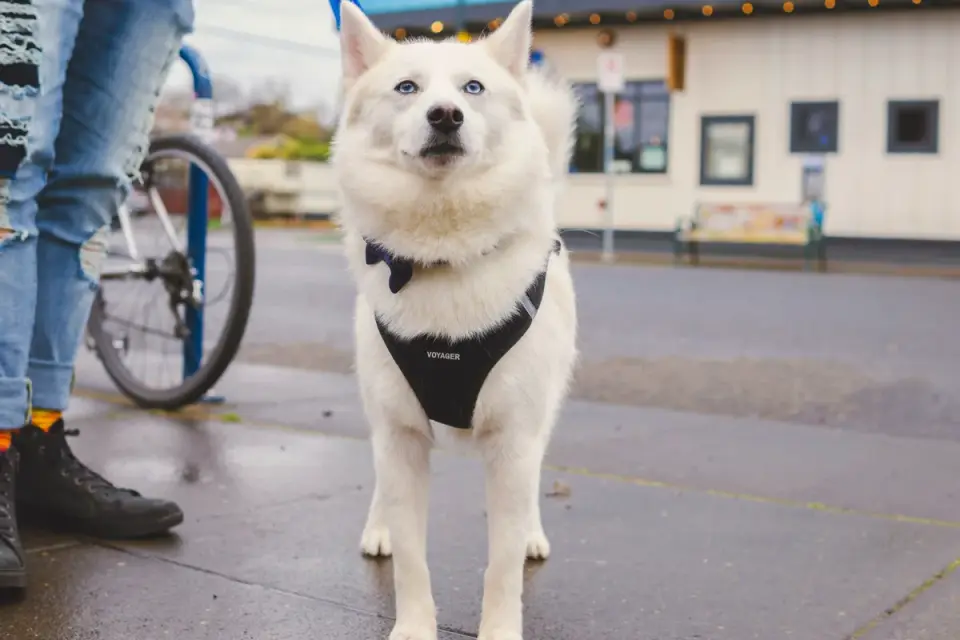
A long line is only one piece of the recall-training picture, and material choice matters less than how the rest of the setup supports it. The AKC is clear that the line should clip to a back-clip harness rather than a collar, since a bolting dog on a 30-foot line generates real force at the end of that run, and neck strain is a real risk regardless of what the line itself is made of. If you’re working with a dog who’s still learning boundaries at all, it’s also worth reading about what a double-ended leash is for — a different tool for a different stage of the same problem — and, separately, if recall training is part of a broader plan for a dog who tends to slip a fence or bolt at the trailhead, a GPS tracker is worth layering in as a backup, not a replacement for training.
For puppies specifically, long line work often overlaps with the same structured-routine thinking behind a puppy potty-training schedule that works — consistency in one area tends to make consistency in another easier to build.
The verdict, and how I’d actually choose
By the time an owner asks me this question, they’ve usually already ruled out one of the three without realizing it — they just haven’t said so out loud. If your dog is anywhere near water, mud, or heavy dew on a regular basis, biothane’s non-porous coating solves a problem the other two materials don’t: it won’t hold the smell, and it won’t need conditioning. If your training is dry-ground and occasional, nylon does the job for a fraction of the price, and fraying at 20 or 30 feet in from a bargain-bin nylon line is a cosmetic problem, not a safety one, as long as you inspect the clip end periodically. Leather earns its place for owners who want a line that improves with age and are genuinely willing to condition it — skip that step and it becomes the least durable of the three, not the most.
My own bias, for what it’s worth: I lean biothane for any dog who trains outdoors more than twice a week, because the maintenance is nearly zero and the material simply doesn’t degrade the way the other two can. That’s a preference built on watching lines wear out in real conditions, not a claim that nylon or leather are unsafe — they’re not, when matched to the right dog and the right terrain.
Next step: match the line to your actual training environment this week, not the one you wish you trained in — then check the clip and stitching every few sessions regardless of material.
Frequently asked questions
Is biothane safe for daily use like nylon or leather?
Yes. Biothane is designed to withstand regular outdoor use — the coating is what makes it resistant to water, mud, and odor buildup, according to the manufacturer's own FAQ on the material.
Do I need a back-clip harness for long line training?
The AKC recommends attaching a long line to a well-fitted back-clip harness rather than a collar, since a dog reaching the end of a 30-foot line generates enough force to strain the neck.
Which material is best for a dog who swims often?
Biothane is the strongest fit for water exposure specifically, since it's non-porous and won't hold odor or absorb moisture the way nylon and leather can.
Sources
- Dog Leashes 101: Choosing the Right Dog Leash for Your Dog — American Kennel Club
- Frequently Asked Questions about BioThane — BioThane Coated Webbing