On this page
Quick check: which leash for which dog
- Dog lunges occasionally, mostly startle-reactive (squirrels, bikes, sudden sounds): a bungee leash’s give can take the edge off the jolt on both ends of the line.
- Dog lunges chronically, or lunges at other dogs/people: a fixed leash paired with real training and, often, a front-clip harness gives you more actual stopping power.
- Walking near traffic, on a crowded sidewalk, or anywhere close control matters: fixed leash, full stop. A stretchy line adds inches of unpredictable travel exactly when you can’t afford them.
- Dog is under 15 lbs or already has a diagnosed neck/spine issue: the shock-absorbing case is strongest here — but so is the case for switching off a collar entirely.
- You’re mid-training-plan and using the leash as a management tool, not the fix itself: either can work as a bridge, but neither replaces the training.
I’ll walk through why I land where I do, because the honest answer is that most owners are asking the leash to do a job that belongs to training.
The dog in front of you, not the leash aisle
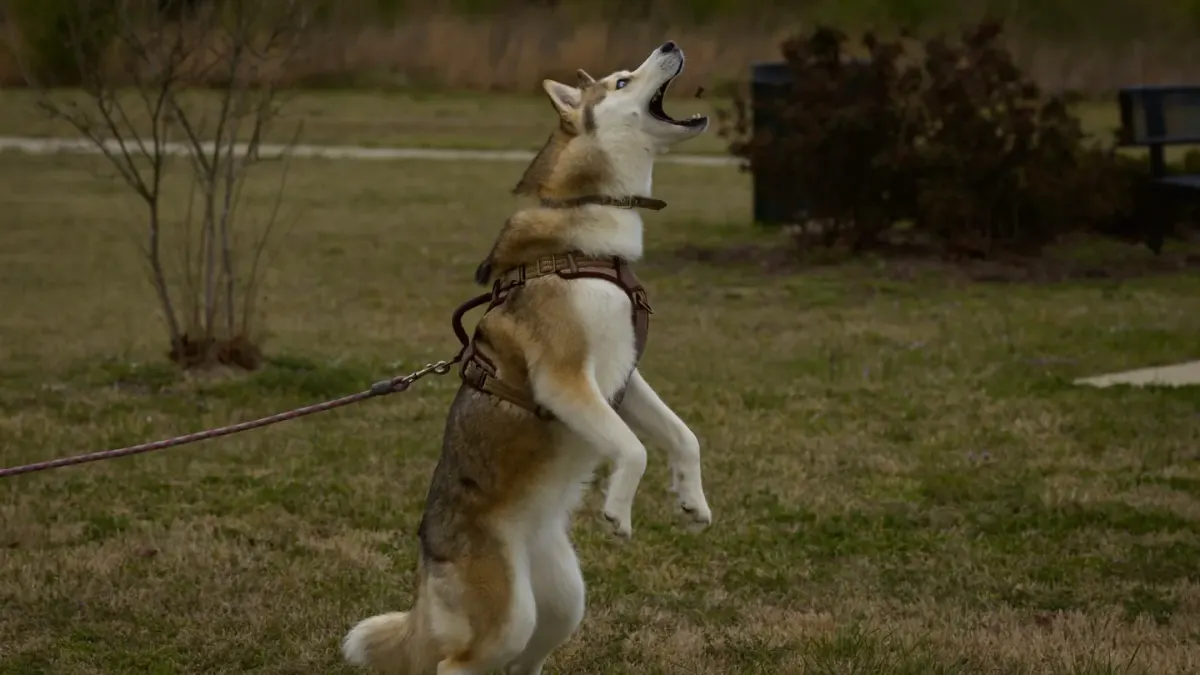
In my practice I saw a lot of dogs like Baxter, a five-year-old, 62-pound mixed-breed who lunged at every skateboard on his evening route. His owner had already tried three different leashes — a retractable, a standard six-foot fixed lead, and finally a bungee — before she came in asking whether her dog’s neck was “getting worse.” Baxter walked on a flat collar. Every lunge sent the full weight of his body through a collar sitting directly over his trachea and the top of his cervical spine. The bungee had made the walks more comfortable for her arm. It hadn’t changed what was happening to his neck, because the stretch in a bungee leash only softens the peak force by a fraction — it doesn’t remove it. We switched him to a front-clip harness and a fixed leash, and started him on a real desensitization plan around skateboards. The lunging didn’t vanish overnight, but the mechanism causing repeated neck strain did, immediately.
What a bungee leash is actually doing
A bungee leash has a stretch section, usually a few inches to a foot, that elongates under load before the leash reaches full length. When a dog hits the end of the leash hard, that stretch spreads the force out over a slightly longer time instead of delivering it as a single spike. That’s genuinely useful for the handler’s shoulder and wrist on a dog who startles occasionally rather than one who lunges as a matter of habit.
Chronic pulling and jerking on a flat collar is a documented welfare concern, not just an owner’s anecdotal worry. Companion Animal Psychology reviewed the evidence on flat-collar pulling and found associations between leash pressure at the neck and problems ranging from tracheal irritation to eye pressure changes in predisposed dogs — reinforcing why so many trainers push owners toward harnesses regardless of which leash style they choose.
Where fixed leashes win
A fixed leash gives you a known, unchanging length. That matters more than it sounds like it should. If your dog lunges toward a jogger and the leash has three extra inches of stretch built in, that’s three inches your dog gains before you feel resistance — three inches that matter on a narrow sidewalk or near a road. A fixed line also transmits feedback instantly, which is part of what makes it a better tool for active training: you can time a cue, a redirect, or a reward to the exact moment your dog notices a trigger, rather than through a half-second of elastic lag.
Short version: bungee leashes manage the fallout of a lunge. Fixed leashes, combined with training, are built to reduce how often the lunge happens.
The training piece nobody wants to hear
Leash choice is a management decision. It is not behavior modification, and no leash on the market changes why a dog lunges in the first place. The American Veterinary Society of Animal Behavior addresses this directly in its Position Statement on Humane Dog Training, which recommends reward-based methods over corrective ones — including leash jerks — because aversive handling carries welfare costs without a demonstrated advantage in effectiveness. That’s relevant here because a fixed leash used to deliver corrective jerks does real damage, and a bungee leash used as a substitute for training just delays the same conversation. Neither leash is a training plan by itself.
I’ve watched this play out with an eleven-month-old Vizsla named Penny, who lunged at every dog she saw from about forty feet out. Her owner had switched to a bungee leash hoping it would take some of the strain off Penny’s neck during the lunges, which it did, marginally. What actually moved the needle was distance management on a fixed leash: starting training sessions far enough from other dogs that Penny stayed under threshold, marking calm behavior, and gradually closing the gap over about six weeks. By the end of that stretch she could pass another dog at fifteen feet without hitting the end of the leash at all. The leash was never the intervention. It was the tool that let the real intervention happen safely.
If your dog is a runner as much as a lunger, the leash conversation often overlaps with containment — see What a Double-Ended Leash Is For if you’re managing a dog that needs hands-free control in two directions at once, or GPS Tracker for a Dog That Runs Off: What Actually Works if lunging sometimes ends in an actual bolt.
Fit and hardware checks that matter more than the material
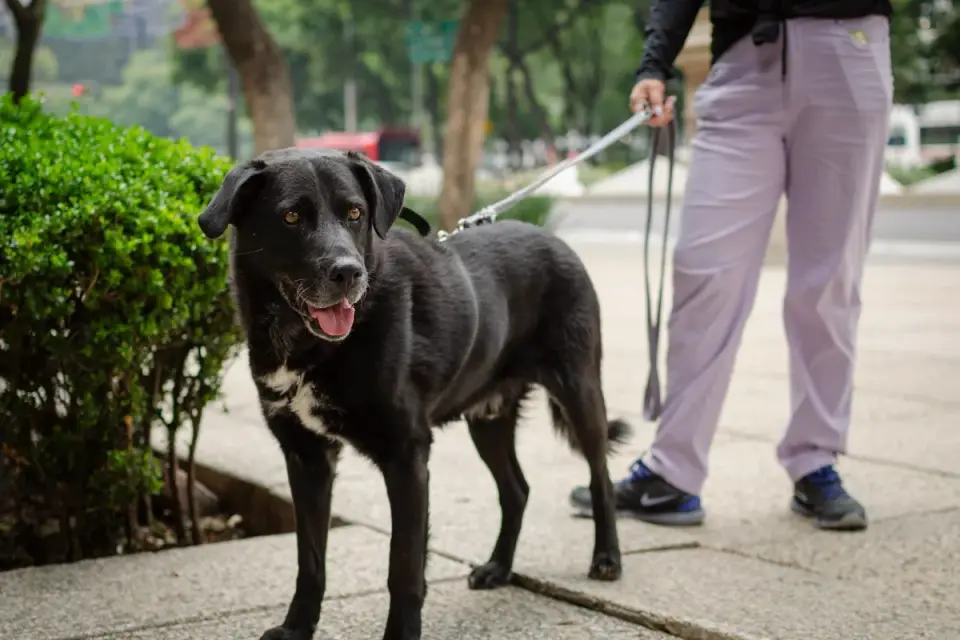
- Clip strength: check the bolt-snap rating against your dog’s weight and pulling force, not just their resting weight — a 40-lb dog lunging at full speed generates far more peak force than 40 lbs of static pull.
- Stitching at the stretch-to-webbing junction: this is the point where bungee leashes fail first. Inspect it monthly if your dog lunges regularly.
- Handle padding: matters for both styles, but more on a fixed leash, where you feel the full jolt without any elastic buffer.
- Length under full stretch: measure your bungee leash fully extended, not at rest, and treat that as its real working length near traffic or people.
- Attachment point on the dog: a front-clip harness reduces the leverage of any lunge regardless of which leash you pair it with, because it turns the dog sideways instead of letting them pull straight through their shoulders.
If you’re still deciding between a front-clip and back-clip setup before you even get to the leash question, that decision changes the leverage math more than bungee-vs-fixed does — worth sorting first.
The verdict
Neither leash fixes a lunging dog. A bungee leash is a reasonable, defensible choice for a dog with occasional startle-lunging and no diagnosed neck issue, where shaving the peak force off an infrequent jolt is worth the small loss of precise control. A fixed leash is the better default for dogs who lunge often, lunge at other dogs or people, or who are actively in a training plan, because the control and instant feedback matter more than the cushioning. Either way, pair the leash with a harness that doesn’t load the neck, and treat the leash as the management layer around training — never as the training itself.
Frequently asked questions
Is a bungee leash safer than a fixed leash for a dog that lunges?
It reduces the peak jolt on both ends of the leash, which can help with occasional startle-lunging, but it doesn't reduce lunging frequency and gives you slightly less precise control near traffic or crowds.
Can a bungee leash cause injury?
Yes, mainly at the stitching where the elastic section meets the webbing, which is a common failure point on dogs who lunge regularly. Inspect that seam often.
What leash length works best for a lunging dog?
A shorter, fixed-length leash (four to six feet) gives you the fastest, most predictable control, which matters most in the moments right before and during a lunge.
Sources
- Flat Collars Risk Damage to Dogs' Necks if They Pull or You Jerk the Leash — Companion Animal Psychology
- Position Statement on Humane Dog Training — American Veterinary Society of Animal Behavior (AVSAB)