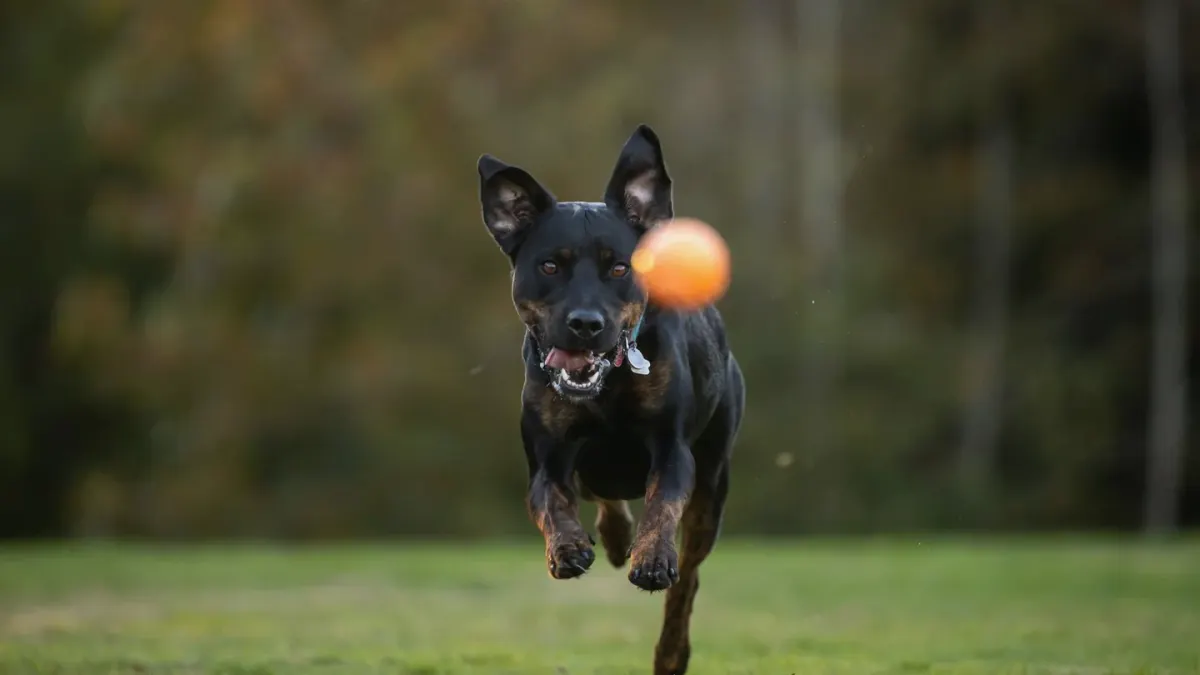
The best toys for multiple dogs in one house let every dog play without guarding, crowding, or fights. If you live with more than one dog, you already know sharing is not really the goal — comfortable side-by-side play is.
You have got a classic decision fork in the living room. Do you buy one exciting toy and hope they take turns, or do you set up the house so each dog gets a win at the same time? In my testing, the second approach wins almost every time. One high-value toy creates a contest. Duplicates, stations, and take-turns games create routine.
Last spring I worked through this with a household running a 68-pound three-year-old Lab mix and a 14-pound eight-month-old terrier puppy in a two-bedroom apartment. The Lab would body-slam the puppy off any fetch toy, then stand over it with a stiff tail while the puppy barked from six feet away. The owners were weighing one Chuckit-style fetch session for both dogs versus two parallel games. We switched to two identical medium rubber fetch balls, threw in opposite directions across a 40-foot hallway-to-kitchen lane, and gave the Lab a solid settle mat to return to. Within ten days the puppy’s chase returns went from zero to clean pickups because she finally had space to learn without getting flattened.
The problem isn’t sharing — it’s crowding
Dogs do not naturally take turns the way kids are taught to. When two dogs want the same squeaker in a small room, you get crowding, staring, and stiffening over the object. That is normal resource-related tension, not bad manners.
The American Veterinary Medical Association reminds owners to match toy size and durability to the dog and to supervise play, which matters double with mismatched sizes. A toy that is perfect for your 70-pound power chewer can be a choking risk for your 15-pound companion, and a plush that survives gentle mouthing will explode in minutes with a vigorous shredder. I score every option on the same rubric: fit for each mouth, durability under real chewing, comfort during calm play, and value if you need to buy two.
What helps most is thinking in duplicates and distance. Buy pairs of the same low-drama toy rather than one flashy toy. Give each dog six to eight feet of personal space during chew time. If you use food-stuffed toys, weigh what a supplement or extra food fill can realistically do for diet, mobility, and recovery — a little peanut butter or kibble inside a rubber toy may help support calm settling and light enrichment, but it does not replace balanced nutrition or rehab work for a stiff senior.
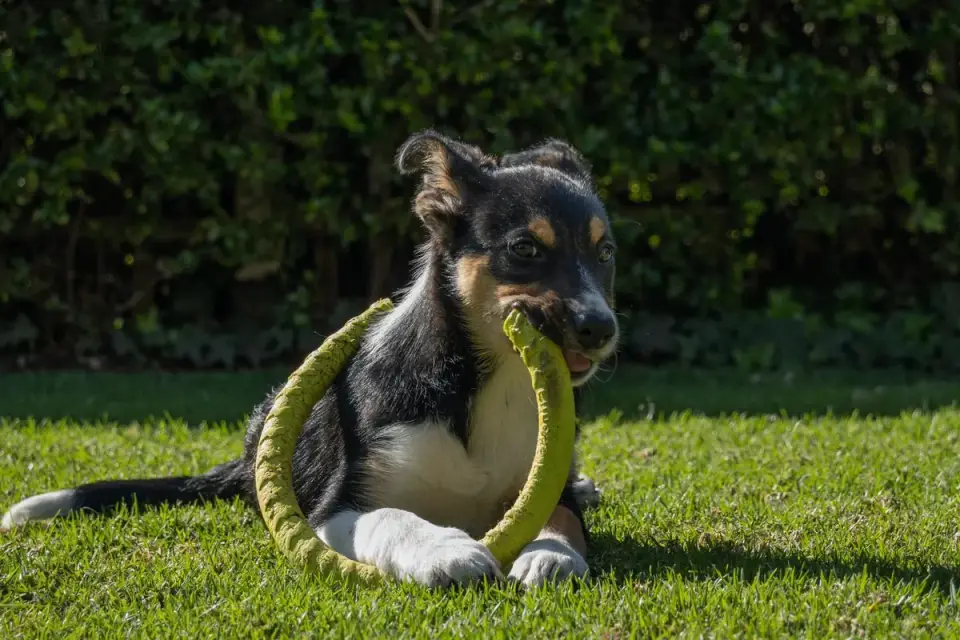
What holds up when two or three dogs play together
Parallel-play toys beat winner-takes-all toys. That means two identical rubber stuffables, two snuffle mats placed apart, or two rope tugs of the same length so no one has to wrestle for the good end. Independent puzzle feeders are also useful because each dog works at their own pace with their nose down instead of staring at each other.
Tug can work, but only with rules. I tried the single-rope approach with two young herding mixes who both loved to tug, thinking one long rope would let them play together while I held the middle. For four nights in a row the sessions ended the same way, with both dogs climbing up the rope toward my hands, shoulder-checking, then hard-staring when one “won” the toy and ran off to guard it under the table. The tradeoff was clear: shared tug built arousal faster than cooperation. We changed to two separate tugs for short human-with-each-dog turns, plus one drag toy for solo chase, and guarding dropped because there was nothing left to steal.
Keep squeakers, single balls, and high-bounce fetch for one-dog-at-a-time turns. If you want group fetch, throw two balls in different directions or use a flirt pole with one dog resting on a mat while the other works. You will find more ideas for splitting arousal levels in Interactive Toys vs. Chew Toys: When to Use Each.
When you split the toys instead of sharing them
Sometimes the kindest choice is not to share at all. If one dog freezes, hovers, lifts a lip, or carries toys from room to room to hide them, that dog is telling you joint play is too much. Separate chew stations behind baby gates, crate-adjacent mat work, or rotating who gets the living room for 15 minutes can lower the temperature fast. The American Society for the Prevention of Cruelty to Animals describes these early guarding signals and recommends managing space and high-value items rather than punishing the warning.
That bend-the-rules setup mattered for a home with a 12-year-old arthritic spaniel and a 10-month-old cattle-dog mix sharing a narrow ranch house. The usual advice says do more group play to tire the puppy, but the spaniel needed quiet and the puppy needed sprints. So the owners flipped it. The puppy got two 100-yard hallway fetch bursts with a soft ball while the senior napped behind a gate with a stuffed rubber toy, then they reunited for a slow five-minute snuffle-mat search side by side with mats eight feet apart. The senior actually chose to stay in the room again, tail soft, because together time no longer meant getting bumped.
Clean and rotate to keep the peace. Slobbery shared toys get possessive fast, so wash rubber and nylon options regularly and retire shredded plush before stuffing becomes a contest prize. Our routine for How to Clean and Disinfect Dog Toys keeps duplicates smelling neutral, which helps dogs care less about which one is “theirs.”
You do not need dogs who share nicely. You need a house where every dog gets to play fully without having to win it from the other.
Frequently asked questions
Should I let my dogs work it out over one toy?
No. Interrupt calmly, add space, and switch to duplicates or take turns. Repeated contests build guarding.
Are tug toys okay with two dogs?
They can be for brief human-led turns with matched dogs, but separate tugs and clear drop cues are safer than dog-on-dog tug over one rope.
Sources
- Selecting Safe Toys for Pets — American Veterinary Medical Association