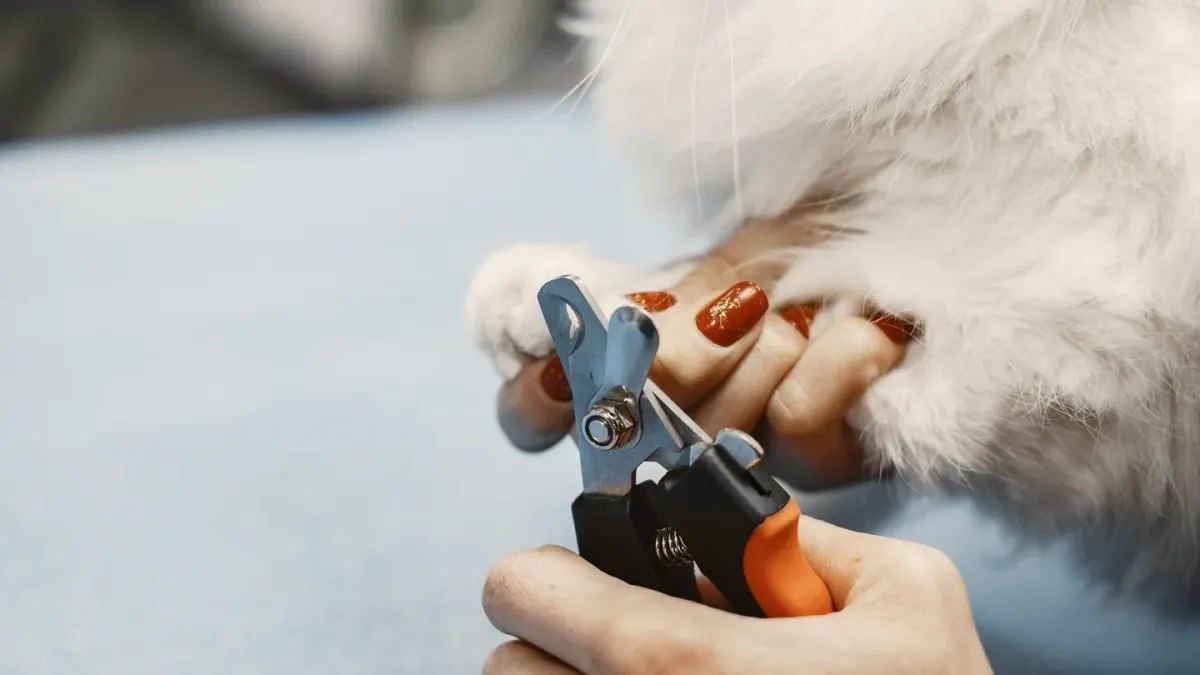
On this page
Here’s the fork most owners land on standing in the pet store aisle: a $12 pair of clippers that does the job in ninety seconds, or a $30 grinder that promises you’ll never nick the quick again. Both claims are basically true. Neither tool is right for every dog, and I’ve spent enough exam-room minutes coaching people through the wrong choice to have opinions about it.
In my practice, the dog who sticks with me is a twenty-two-pound cattle dog mix named Otis, brought in by his owner on a Tuesday afternoon in early spring because his back nails had started clicking on the kitchen tile loud enough to hear from the next room. She’d been putting off trims for months — every attempt with the clippers ended in a scuffle, one bad quick two years earlier, and neither of them trusted the process anymore. We switched her to a cordless grinder that afternoon, did two nails at a time over about a week, and by the second week she was doing all four paws in one sitting. The clicking stopped. Nothing dramatic happened; the dog just stopped being afraid of his own paws touching the floor, which is most of what nail care actually is.
What each tool is actually doing to the nail
A clipper is a single mechanical cut. You position the blade, squeeze, and the nail separates in one motion — fast, cheap, and quiet, which matters if your dog is already sound-sensitive. The tradeoff is that you can’t see inside the nail as you cut, so on dark nails especially, you’re estimating where the quick sits and committing to that estimate in a fraction of a second. A PMC: systematic review of nail clipping in UK primary-care dogs found nail problems, including quicking-related injury, common enough in general practice to rank among the more frequent minor procedures vets and technicians manage — which tells you this isn’t a rare mishap, it’s a routine risk built into the tool.
A rotary grinder — the dremel-style tool, whether it’s an actual Dremel or a purpose-built pet grinder — removes nail in thin layers instead of one cut. That gives you a stopping point you can watch for: the nail’s cross-section changes color as you approach the quick, so you can back off before you hit it. Whole Dog Journal’s comparison of grinders and clippers makes the same point I make to clients constantly — grinders trade speed for control, and for a nervous trimmer or a dog with black nails, that trade is usually worth it. The nail also comes out smooth rather than clipped-sharp, which matters for dogs that jump on people or share a bed.
What a grinder doesn’t fix is noise and vibration. Some dogs tolerate the buzz fine. Others find it worse than the clipper ever was, and no amount of technique training changes that — you just have a dog who needs the other tool.
Where owners actually get into trouble
Overgrown nails aren’t a cosmetic problem you can put off indefinitely. When nails stay too long to wear down naturally, they push the toe out of its normal angle every time the dog stands, which changes gait and loads the joints differently over months and years. Regular trims, whichever tool gets you there, are what keeps that from becoming the actual issue instead of the nail length itself.
That’s also where I see the most avoidable damage — not from either tool itself, but from owners choosing based on speed instead of fit. If you have a dog who bolts at the sound of a motor, forcing a grinder on them to avoid clipper anxiety just swaps one fear for another. If your dog has thick, dense nails that make clippers feel like you’re using pruning shears, a grinder does the same job with a fraction of the pressure — genuinely thick nails resist the clipper blade more, and that resistance is exactly what leads to a crushed, splintered cut instead of a clean one.
For dogs new to either tool, frequency matters more than the tool choice. Our guide on how often you should trim a dog’s nails covers the actual interval — for most dogs it’s closer to every three to four weeks than the “when they look long” approach most owners default to.
The scene that changed how I coach this
I think about a twelve-year-old beagle named Daisy more than almost any other case in my nail-trim column, honestly. Her owner brought her in because Daisy’s nails had gotten long enough over a slow winter that she’d started slipping on the hardwood going down the hallway to the water bowl — not falling, just a visible hesitation before each step, the kind of thing you only notice if you’re watching closely at ten at night when the house is quiet. Daisy hated the clipper sound from a bad grooming experience years back, but she also had arthritis in both front elbows, which meant long sessions of any kind weren’t realistic. We used a grinder in thirty-second bursts, one nail, treat, one nail, treat, across a few short sessions instead of one long ordeal. It took longer in calendar time. It cost nothing in stress. That’s usually the actual choice you’re making — not clipper versus grinder in the abstract, but which tool lets this particular dog tolerate the process at all.

Technique matters more than the tool you picked
Whichever tool you choose, the AKC’s guide to trimming nails at home and VCA Animal Hospitals’ nail-trimming overview both walk through the same fundamentals: trim small amounts, go slow on dark nails, and have styptic powder on hand for the day you misjudge it, because eventually you will. Neither source treats one tool as objectively superior — the emphasis is consistently on positioning, restraint, and reading the dog, not on brand or mechanism.
If your dog also needs a broader grooming routine built around this, our pieces on what actually matters in a nail grinder before you buy one and how often to bathe a dog cover the adjacent decisions worth making at the same time.
Where I land
Clippers are the right default for dogs who tolerate them and for owners who want a fast, cheap, low-fuss routine — most healthy adult dogs with light-colored nails do fine here. A grinder earns its extra cost and extra time for dark or thick nails, for owners who’ve had a bad quicking experience and lost confidence, and for dogs who need the process broken into small, controllable steps. I don’t think either tool is objectively better; I think most owners already know which one their dog would tolerate, and the honest advice is to stop optimizing for speed and pick the one you’ll actually use consistently, every three to four weeks, without dreading it.
Frequently asked questions
Is a dremel actually safer than clippers for dogs?
It reduces the risk of a sudden deep cut into the quick because you can watch the nail's cross-section change color as you grind, but it introduces noise and vibration some dogs find harder to tolerate — safer isn't the same as easier for every dog.
Can I switch from clippers to a grinder if my dog already has quicking anxiety?
Yes, and it's one of the more common reasons owners switch. Short sessions, high-value treats, and grinding one or two nails at a time tend to work better than trying to finish all four paws at once.
Sources
- Epidemiology and clinical management of nail clipping in dogs under UK primary veterinary care — PMC
- Grinders vs. Clippers: What's Best for your Dog's Nails? — Whole Dog Journal
- How to Trim Your Dog's Nails at Home — AKC
- How to Trim a Dog's Nails — VCA Animal Hospitals