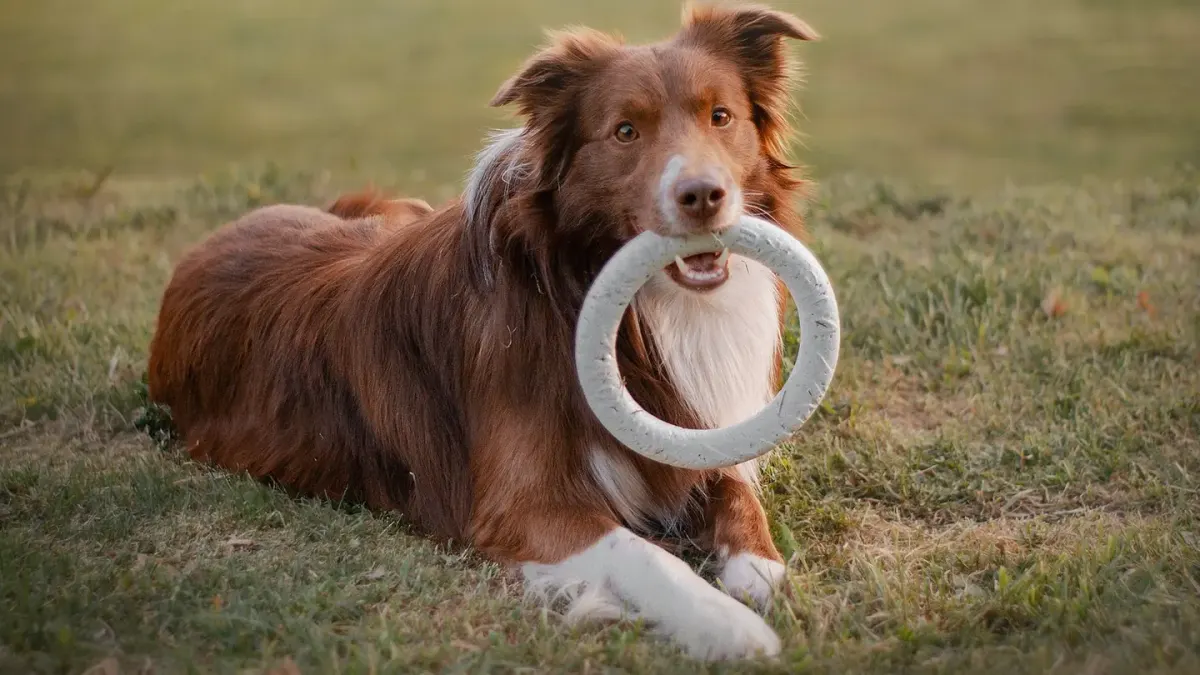
Leaving a frozen stuffed toy in the crate feels like the responsible move — enrichment, calories accounted for, teeth busy while you step out. For many dogs that calculation holds, but for some it fails quickly once freezing changes texture, motivation, and how hard a dog works the toy.
A 10-month-old, 48-pound retriever mix stands at the morning decision point his owner faces daily: crate with a frozen peanut-butter-and-kibble plug inside a hollow rubber toy, or crate with only bedding and water. At this age he still mouths the crate latch, paces for three weeks in a row when left with nothing, and settles for 40 minutes when licking something cold. His owner wants to know whether that frozen core makes separation easier or creates a chewing risk she cannot supervise. The answer turns on chew style, not enthusiasm.
Why freezing changes the chewing equation
Freezing does two things at once. Cold and a tight pack slow intake, so licking dominates early and the filling may help support satiety and calm behavior as part of a balanced diet. That is the mechanism owners are buying: prolonged oral activity with a measured portion rather than a bowl eaten in 90 seconds.
But hardness also changes mechanics. A rock-hard plug encourages bracing, prying with canines, and compressive chewing on the rubber walls, especially once the surface softens unevenly. The American Veterinary Medical Association emphasizes matching toy durability and size to chew intensity and supervising use, and frozen use raises the bar because the dog applies more force for longer.
Supervision matters most here because rubber failure is rarely gradual.
The dog decides more than the recipe
In clinic I weigh what any food-based strategy can realistically do for diet, mobility, and recovery, and a frozen toy is a feeding tool first and a durability test second. My position: leave a frozen stuffed toy unsupervised only with a proven licker who has repeatedly emptied the same recipe under observation without biting chunks from the toy. Everyone else gets it supervised only.
A 4-year-old, 22-pound terrier mix shows why history matters more than intent. Her owner froze plain yogurt and blueberries solid, thinking softer food meant softer chewing. Under watch she licked for 12 minutes, then by day 10 of this routine began grabbing the toy by the rim, shaking it, and shearing off a pea-sized rubber flap when the center would not release. The filling was appropriate; the strategy was not. She moved back to supervised use only, and the toy was retired once deformed. That tradeoff — longer engagement versus harder biting — is the central complication.
Gastrointestinal foreign material remains the core unsupervised risk, a point detailed in clinical references such as the Merck Veterinary Manual. Rubber pieces, large ice chunks, and dense plugs of cheese or peanut butter can all contribute to obstruction or pancreatitis risk in sensitive dogs when portion and chewing are uncontrolled.
When alone time can work — and when it should not
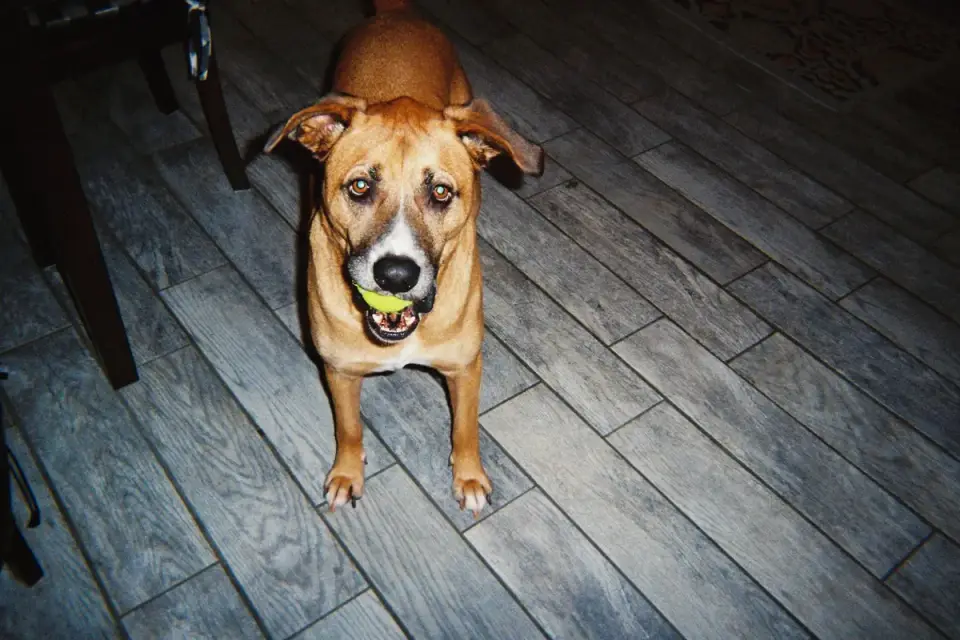
The safest unsupervised candidate is an adult dog with a known licking style, intact adult dentition, no resource guarding, and a hollow one-piece rubber toy sized up, inspected before every use. Fill with the dog’s regular kibble soaked in water, a thin smear of plain peanut butter without xylitol, and freeze only firm, not concrete-hard. A 6-year-old, 65-pound Labrador with mild early stiffness illustrates the edge case: he licks cleanly, but age-related dental slab fractures and a tendency to swallow large thawed kibble clumps mean even he only gets a loosely packed, overnight-frozen toy for absences under two hours, never a multi-day bone-broth ice block.
Dogs that should never get one alone include power chewers, puppies under six months with deciduous teeth, dogs with prior obstruction or aggressive chewing, brachycephalic dogs that gulp, and any dog with a toy already showing cracks, thinning walls, or missing chunks.
Quality control extends beyond texture. Supplement-style toppers, calming powders, and high-fat fillings are where label literacy matters, which is why frameworks from groups like the National Animal Supplement Council are useful for evaluating manufacturing standards even when the filling itself is food.
For broader context on material risk, compare Chew Toys vs. Edible Chews: What’s the Difference, Interactive Toys vs. Chew Toys: When to Use Each, and How to Clean and Disinfect Dog Toys.
The strongest counterargument is that constant supervision is unrealistic and deprivation causes more harm through anxiety and destructive behavior. That concern is valid. My answer still lands on supervised-first because anxiety is better addressed with training, exercise, and safer alone-time options — a snuffle mat, a correctly sized non-edible comfort toy for known non-destroyers, or an unfrozen lick mat used behind a camera — than with a frozen puzzle that can turn a licker into a chewer when no one is watching.
Test the same recipe five times while you watch. If licking stays licking, portions fit the daily ration, and the toy looks new, brief alone use is reasonable. If chewing escalates, retire it to supervised time.
Frequently asked questions
Can I leave a frozen Kong-type toy with my dog while I am at work?
Only if your dog is an adult, proven gentle licker with that exact recipe and toy, the toy is intact and oversized, and the filling fits the daily ration. Power chewers, puppies, gulpers, and dogs with prior obstruction should get frozen toys only under direct supervision.
What fillings are safest for freezing?
The dog's regular kibble soaked in water with a thin smear of xylitol-free peanut butter, plain pumpkin, or plain low-fat yogurt in small amounts. Avoid high-fat layers, cooked bones, xylitol-sweetened products, grapes, raisins, onion, and large hard broth blocks.
How do I know the toy is no longer safe?
Retire it if you see cracks, thinning walls, tooth gouges that catch a fingernail, missing chunks, or a loose rim that collapses when squeezed. Wash and inspect before every freeze.
Sources
- Selecting Pet Toys — American Veterinary Medical Association
- Gastrointestinal Foreign Bodies in Small Animals — Merck Veterinary Manual
- Quality Standards for Animal Supplements — National Animal Supplement Council