No indestructible dog toy exists, so match the toy to chewing style and retire damage early.

On this page
Tyler stands in the toy aisle with Draco, his 2-year-old neutered male Cane Corso from Olathe, Kansas, holding a shredded plush in one hand and a black rubber toy labeled for power chewers in the other. Draco has gutted two squeakers in nine days, and Tyler wants one purchase that ends the cycle. The decision fork is not which package says indestructible dog toy in the largest letters. The fork is whether Tyler buys for Draco’s actual chewing style — a young, heavy-jawed grab-and-shear chewer — or buys for the promise on the label and learns its limits during unsupervised chewing.
Start with the chewer you live with
Chewing style predicts toy survival better than marketing terms. In practice, vets often see three patterns: nibblers who mouth and carry, dissectors who work seams and ears until stuffing appears, and grinders who clamp and shear with molars. Draco is in that third group, and grinders generate the forces that split toys and crack teeth.
Size and fit come next. The American Veterinary Medical Association advises owners to choose toys sized to the individual dog and to remove toys that are damaged or have small parts that could be swallowed. That guidance sounds basic until it is applied hands-on: a toy Draco can fit entirely behind his canines becomes a choking and intestinal foreign-body risk, while a toy too heavy to carry discourages play and invites hard, frustrated gnawing in one spot.
Supervision is the safety device.
Why teeth break before tough rubber gives
Teeth load differently than toy materials. Canine enamel is hard and brittle over a living dentin core, and the carnassial and canine teeth concentrate force on a small contact point. When a dog bites a non-yielding object, that point load can exceed what enamel tolerates, especially with angled shear or a sudden slip. The result is a slab fracture of a molar or a fractured canine tip, both painful and expensive.
This is where hardness matters. The Veterinary Oral Health Council maintains an accepted-products program for dental claims, and its framework is a useful reminder that a chewing benefit must be weighed against tooth risk rather than assumed from toughness. As a nutritionist I weigh what a supplement can realistically do for diet, mobility, and recovery, and the same boundary applies here: a toy may help support daily activity and appropriate chewing behavior, but it does not strengthen teeth or clean them by force.
Enamel does not heal.
The U.S. Food and Drug Administration regulates pet food and treats through its animal-health work and tracks adverse events from ingestion hazards, which is why toy fragments deserve the same seriousness as bone splinters or swallowed treat chunks. If pieces can be torn off and swallowed, intestinal obstruction becomes the mechanism of harm, particularly in large, rapid ingesters like adolescent mastiff breeds.
Match material and shape to chewing style
Rubber, nylon, rope, and plush behave differently in the mouth, and none is chew-proof. Thick molded rubber deforms under load and then rebounds, which suits many grinders for short, supervised sessions, especially in a hollow shape that can be stuffed with food to slow chewing. Very hard nylon holds shape longer but concentrates force on teeth and develops sharp bristles and cracks when chewed aggressively, so it demands earlier retirement.
Rope and plush shift the risk from teeth to ingestion. Rope fibers shred into strings that dissectors love to pull, and swallowed strings can linearize in the gut. Plush seams invite evisceration and squeaker removal, which is rewarding for dissectors but dangerous if swallowed. Owners comparing textures can use the breakdown in rope versus plush for chewers and the hardness trade-off in rubber versus nylon to match the dog rather than the label.
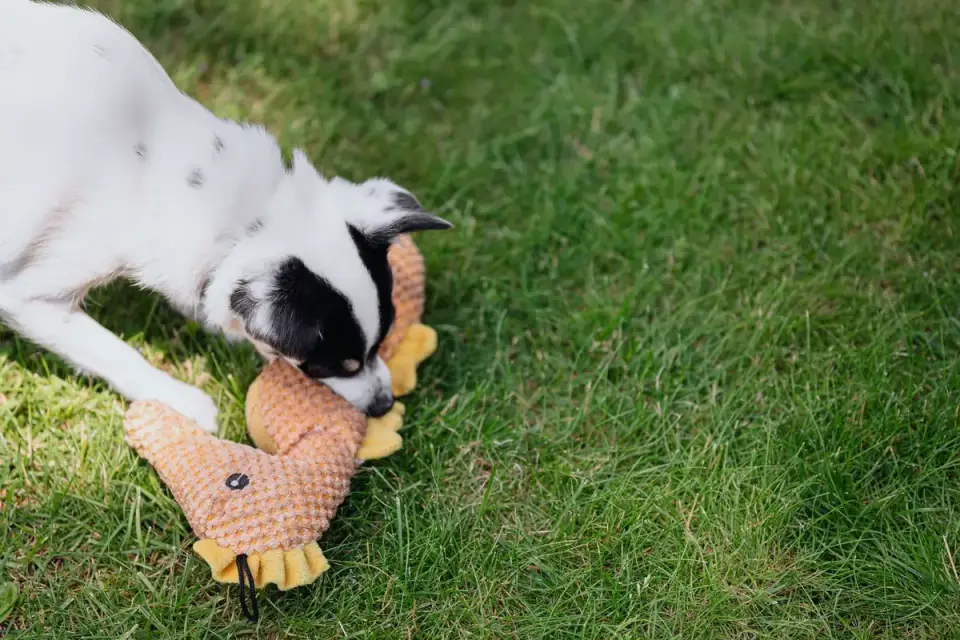
Shape changes how force is applied. A large ball or snowman-shaped rubber toy rolls and stays in front of the paws, encouraging licking and batting rather than sustained molar grinding. A long tug invites human interaction but also sustained pulling, so reserve it for interactive play and store it between sessions, as outlined in interactive versus chew toys. For Draco, that means a roomy rubber feeder toy for solo chewing under watch, plus a separate tug kept out of the crate, rather than one toy expected to do both jobs.
The inspection habit that keeps toys in service
A toy lifecycle should be chronological: fit, supervise, clean, inspect, retire. Wash rubber and nylon according to the maker, rinse thoroughly, and dry completely before the next session, following the approach in how to clean and disinfect dog toys. Cleaning is also inspection time. Run a fingertip over edges for cracks, bristles, missing chunks, exposed squeakers, or loosening rope strands.
Retire early. Remove a toy when a piece can be pinched off, when deformation no longer rebounds, when a hard surface shows fissures, or when any stuffing, string, or squeaker is exposed. For a power dissector that may mean days, not months. That short service life is not failure; it is the cost of protecting teeth and gut while still meeting the need to chew. What would change this recommendation is controlled evidence that a specific material resists fragmentation across defined jaw forces without increasing tooth fracture, and current marketing language does not provide that.
Tyler’s practical answer is two toys with two jobs and a trash can nearby. Supervise Draco with an oversized rubber feeder for ten to fifteen minutes, then trade, clean, and store it. Keep plush and rope for gentle carry or fetch only if Draco does not dissect them, and discard at first tear.
Frequently asked questions
Is any indestructible dog toy truly chew-proof?
No. Every material can be torn, cracked, or worn down by sustained chewing, so buy for chewing style, supervise, and retire toys at first damage.
How do I know when to throw a chew toy away?
Discard it when pieces can be torn off, hard surfaces crack or develop sharp edges, stuffing or squeakers show, or rope sheds strings.
Sources
- Pet Care Resources — American Veterinary Medical Association
- VOHC Home — Veterinary Oral Health Council
- Animal and Veterinary — U.S. Food and Drug Administration