Pick thick rubber sized past the back molars, and retire it at first fraying — origin alone never guarantees safety.
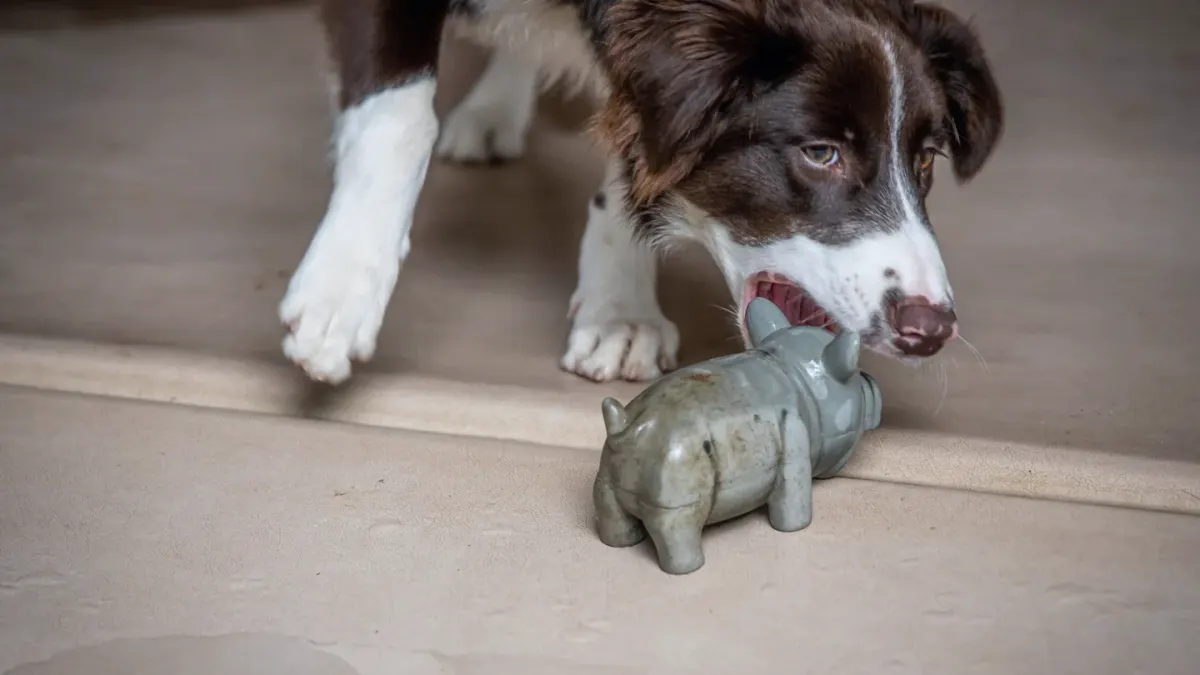
Gerald in McKinney learned this with Hooper, his 7-year-old neutered male Morkie mix, who could shred a plush squeaker in minutes but lost interest when a dense rubber food toy felt too hard and unfamiliar, much like owners who say my dog seems hesitant around her food toys, and I’m hoping her interest returns. No toy is truly indestructible, and a domestic address does not change tooth enamel or jaw force. Read the data closely before crowning anything, and compare candidates head-to-head on the evidence of construction and fit rather than flag appeal.
What a Made in USA Mark Actually Certifies
A Made in USA claim is about where manufacturing happened, not how long a toy lasts under chewing.
That helps with traceability and accountability, since you can often contact the maker for lot information and material disclosures. It does not test wall thickness, seam strength, squeaker attachment, or appropriateness for a 70-pound power chewer compared with a 10-pound nibbler. For chewing safety context, VCA Hospitals owner resources remind clinicians and owners that very hard chewing surfaces can risk tooth fracture, which is why size and give matter more than origin.
If you want support for everyday chewing habits, see How to Support Your Dog’s Healthy Toy Chewing and the distinction between toys meant for gnawing and products meant to be eaten in Chew Toys vs. Edible Chews: What’s the Difference.
Thickness, Size and Seams Predict Survival
Compare products on measurements you can verify at home.
Choose rubber or thermoplastic rubber with thick, uniform walls that deform slightly under a thumbnail press and rebound, rather than thin vinyl that creases white at stress points. Pick a size that sits well behind the canine teeth and cannot be compressed past the back molars in your dog’s mouth, then check seams, embedded ropes, squeaker pockets, and glued eyes or noses, because those junctions usually fail first.
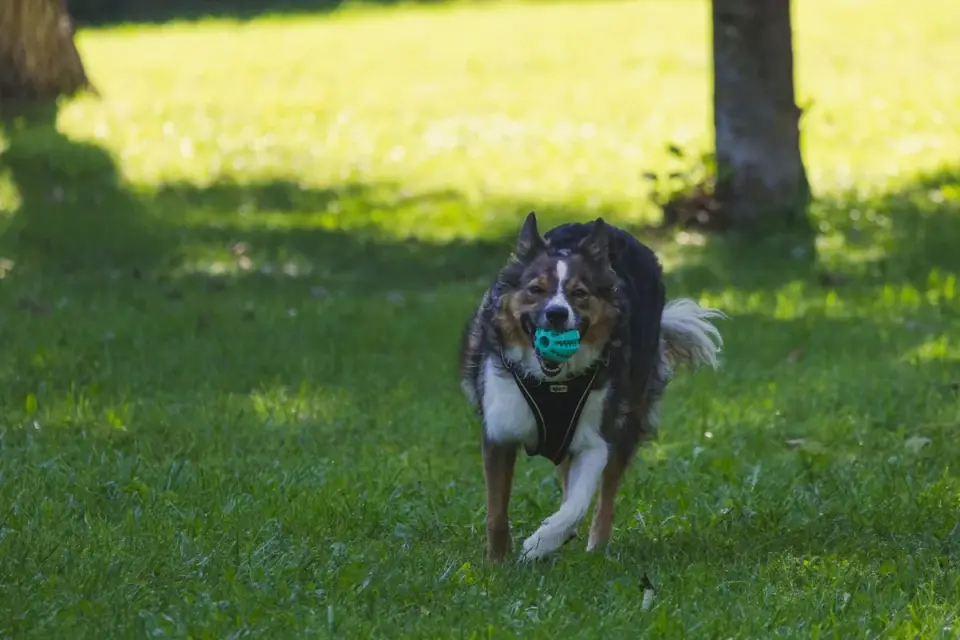
For dogs that dissect rather than gnaw, a single-mold design without sewn appendages often outlasts a complex shape, even when both carry the same origin label. Match the toy to play style using Interactive Toys vs. Chew Toys: When to Use Each and rotate textures to sustain interest, especially when a dog follows tossed toys outdoors but ignores them indoors.
How to Vet Transparency Before You Buy
Sourcing transparency is the practical advantage some domestic makers offer, so ask for it directly. Look for a stated material family, such as natural rubber or thermoplastic rubber, size guidance by weight range, cleaning instructions, and a clear replacement policy for damaged toys.
Vague terms like tough, extreme, or chew-proof without dimensions, hardness context, or care limits deserve skepticism. Washability matters for safety and sustained interest, so follow a routine like How to Clean and Disinfect Dog Toys and inspect after each session for thinning walls, cracks, missing chunks, exposed squeakers, or frayed rope strands that could be swallowed.
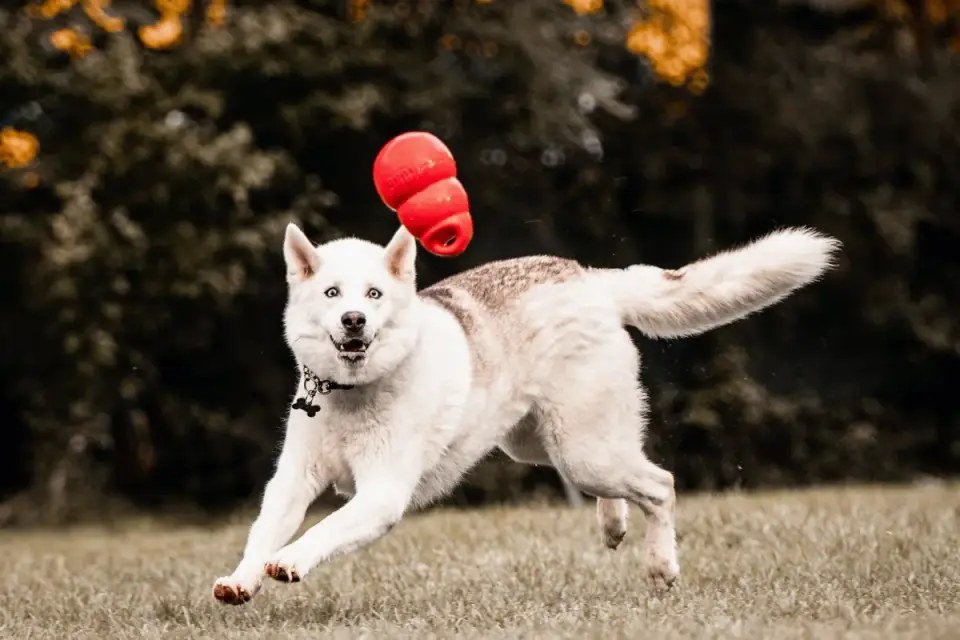
Retire a toy at first structural change rather than waiting for a piece to detach. No domestic label compensates for a poor size match or continued use after failure has started.
Frequently asked questions
Does Made in USA mean a dog toy is safer or indestructible?
No. It describes where manufacturing occurred, not chew resistance. Judge wall thickness, size relative to your dog's jaws, seam construction, and the maker's material disclosure.
What size tough toy should I buy?
Choose a single-piece rubber shape too large to wedge behind the canines and too bulky to compress past the back molars, then supervise and remove it if edges thin or crack.
Sources
- Fractured Teeth in Dogs — VCA Hospitals