No ball survives every power chewer, so buy a ball too large to swallow and supervise every fetch session.

No ball is truly indestructible for a determined dog, so size and supervision matter more than marketing language.
Jaw strength, chewing style, and repeated compression wear down rubber, vinyl, and hard plastic over time. That comparison of published guidance comes before any durability claim in this guide.
Rick in Fort Worth, Texas lives with Widget, a 5-year-old neutered male Border Terrier who dissects seams rather than chasing for long retrieves. The observable change was small crescent gouges along a smooth fetch ball after three evenings of chewing, not fetching. The choice Rick weighed was a larger solid rubber ball for supervised throws only, with the old ball retired to the trash.
Why no ball earns that label
Ball materials fail for predictable reasons. Hollow vinyl splits at the seam under molar pressure. Solid natural rubber dents, then tears once a dog can isolate an edge with canine teeth. Hard plastic resists dents but can crack into sharp fragments when chewed after fetch.
Tennis felt adds another problem. Abrasive felt plus saliva traps grit against enamel during carrying, while the thin rubber bladder underneath punctures quickly. For context on felt wear and bounce, see Tennis Balls vs. Rubber Balls for Fetch: Which One Should You Actually Throw?
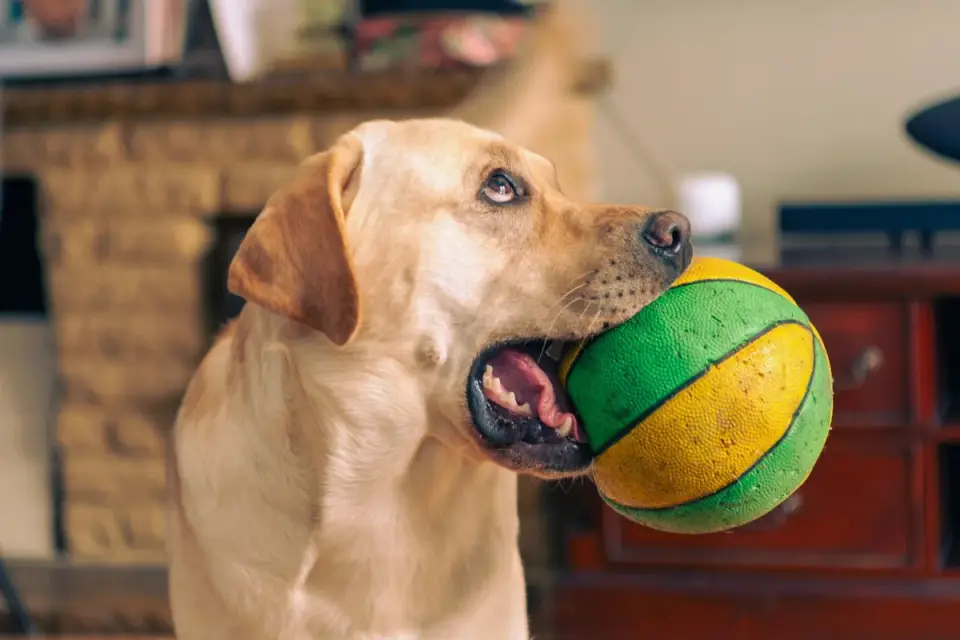
How size and supervision prevent emergencies
advises supervising play with balls and removing toys once pieces loosen or the size allows lodging behind the canine teeth.
Use this sizing check before buying:
- The ball should not fit entirely behind the front teeth when the mouth is relaxed.
- For medium terriers and larger power chewers, that often means a 2.5-inch diameter or larger, adjusted upward for broad-muzzled breeds.
- If the dog can compress the ball to half its diameter and hold it in one spot, retire it from chewing and reserve short retrieves only.
- Store balls between sessions. Free access converts a fetch toy into a chew toy.
General toy manufacturing guidance described by the U.S. Consumer Product Safety Commission was developed for children’s products, not pet products, which leaves pet toy durability claims less standardized. That gap is why label terms like tough, extreme, or indestructible cannot substitute for fit and monitoring. For chew-focused habits, see How to Support Your Dog’s Healthy Toy Chewing and Chew Toys vs. Edible Chews: What’s the Difference
What holds up longer without false promises
Read the data closely before crowning anything. Published evidence does not support ranking one rubber formula as universally chew-proof for normal gastrointestinal function or dental health. Compare products head-to-head on design features that support normal play behavior instead.
Features that tend to extend useful life under supervision:
- One-piece molded solid rubber without glued seams or squeaker holes
- Smooth surface without thin fins, feet, or fabric covers to peel
- Appropriate weight for clean throws without excessive bounce on hard floors
- Easy rinsing, since dirt embedded in seams accelerates chewing
Retire any ball with deep slices, missing chunks, sticky soft spots, or a whistle caused by an air leak. Cleaning extends inspection intervals but does not restore strength. Rinse with mild soap and air-dry fully as outlined in How to Clean and Disinfect Dog Toys

For power chewers, keep balls as interactive toys. Throw, retrieve, then trade for a treat and put the ball away. Offer a separate chew-appropriate outlet for quiet chewing time. That routine supports normal chewing behavior while lowering risk for teeth, stomach, and intestines.
Sources
- Toy Safety Business Guidance — U.S. Consumer Product Safety Commission