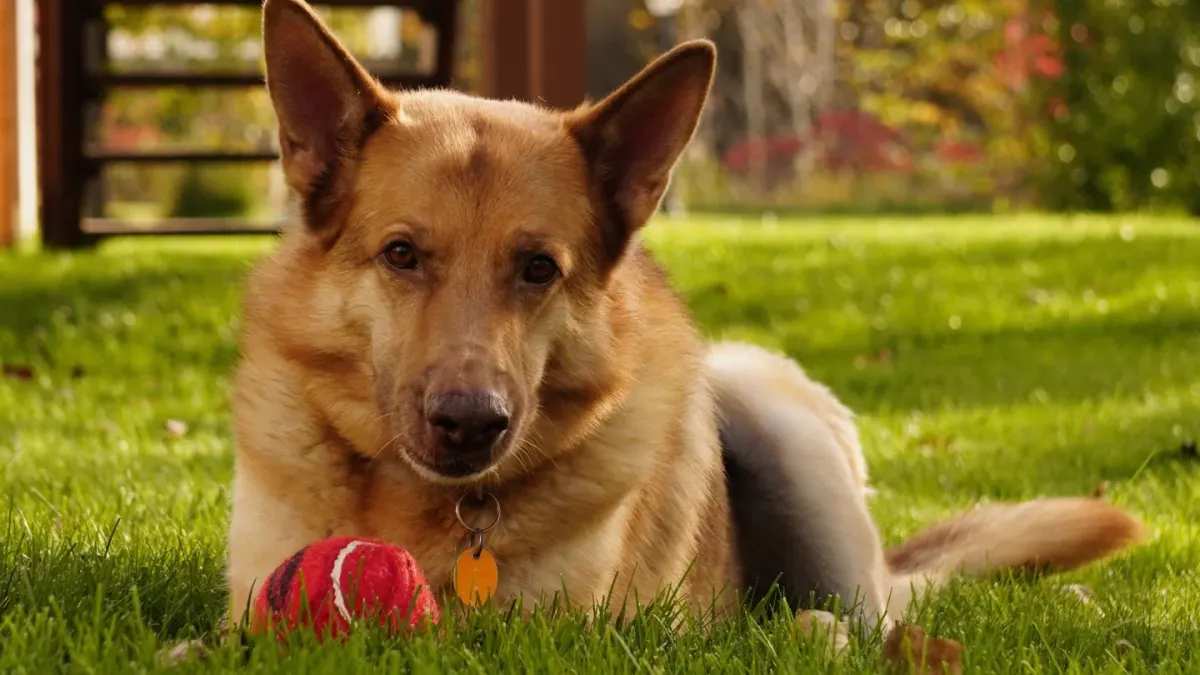
The kitchen tile is cold at 6 a.m., and the 14-year-old Beagle mix is flat on her side in the hallway, breathing deep and slow. Her owner needs to get her outside before medication time, and the old clap-and-call that worked at age six now earns a panicked scramble, hind feet sliding for three seconds before she orients. That moment — the choice between calling louder or approaching quietly — is the whole decision. For most senior dogs, hearing fades unevenly and the startle pathway stays intact, so a loud voice arrives as threat before meaning. A touch-first sequence respects that neurology.
Wake in the order the aging brain still trusts
Aging changes input before it changes temperament. High-frequency hearing loss comes first, then sound localization, while olfaction and learned vibration cues often remain functional longer.
So I wake from the nose outward, not from across the room. Walk into peripheral vision rather than looming overhead. Pause a foot away and let air movement and your scent announce you. Set a hand lightly on the shoulder or ribcage — never the face or paws — with steady pressure for two beats. Then add a low, familiar word at conversational volume. Supporting normal arousal this way is not treating neurologic disease; it is simply giving an intact pathway the first signal.
That order matters because startle is brainstem, not disobedience. A sudden shout bypasses cortical processing and drives a flexor flinch, scramble, or snap. Gentle pressure through large-diameter touch fibers recruits a calmer arousal circuit first, and the dog wakes with orientation rather than defense.
When being gentle backfires, check the setup
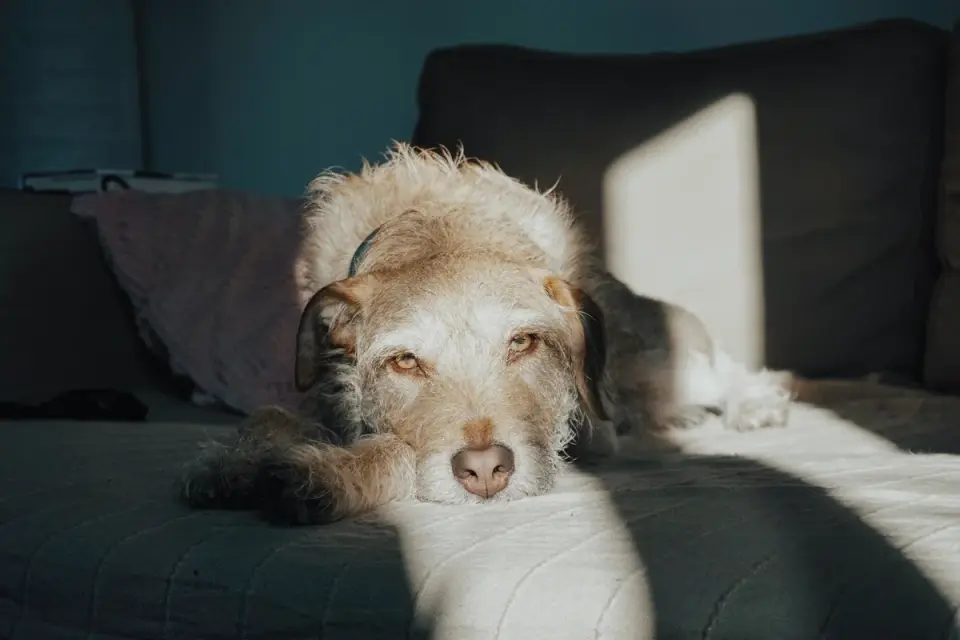
The second dog taught his family what not to repeat. He was a 68-pound Labrador, 12 years old, deaf in one ear and stiff in both hips, who slept hard after evening walks. For four nights his owner tried the well-meaning fix from a forum: kneel close, stroke his head, and say his name louder each time. On night five the hand on the head plus the loud voice produced exactly the wrong outcome — a 10-second panic, a bark, and a nip at a sleeve as he thrashed to stand on slick hardwood.
The tradeoff was mechanical as much as neurologic. Reaching over the head triggers a visual threat, head touch leaves no escape route, and slick footing prolongs the scramble that looks like confusion. We changed three variables and kept the gentleness: approach from the side at shoulder level, touch the shoulder instead of the crown, and slide a rug under his bed so his first two steps grip. He still woke slowly, but the scramble shortened from thrashing to a controlled sit. If your dog startles even with soft handling, read Why an Old Dog Startles at Sounds He Used to Ignore for the hearing side of the pathway.
I reject gadgets that promise to fix this with vibration collars set high or air puffs. They add another abrupt stimulus to a system already struggling with sensory integration. A hand, a rug, and light are more precise instruments.
The mornings when the rule has to bend
Some dogs do not follow the textbook. A small terrier type, adopted at an estimated 15 years and blind in dim light, slept so deeply by the back door that scent and a shoulder touch did nothing for a full minute. The owner worried about Dog Back Legs Giving Out: The Checklist to Run Before You Panic because once awake the dog would wobble for about 20 feet down the hallway before her gait normalized.
Here the usual advice — keep everything low and slow — had to bend toward structure. We added a consistent, slightly stronger cue: a soft foot tap on the floor 6 feet away to send vibration through the boards, then a treat held 4 inches from the nose once she lifted her head. Light on, same phrase, same shoulder touch, then time to stand before any leash pressure. For dogs with overnight stiffness or early cognitive change, that pause is diagnostic. The American Veterinary Medical Association overview of senior pet care notes disrupted sleep-wake cycles and disorientation in senior dogs, and a dog who routinely needs several minutes plus guidance to orient deserves a daytime exam rather than a louder morning routine.
For wobbly risers, a non-slip path to the door and a brief supported stand beat any supplement or wake-up trick. If hind-end weakness persists after waking, use Dog Hind Leg Weakness: The 48-Hour Split That Tells You What You’re Actually Dealing With to track timing before you call.
A calm wake-up will not restore hearing or reverse brain aging. It reveals what remains workable.
Frequently asked questions
Should I clap or call loudly to wake a deaf older dog?
No. Loud sound arrives as startle without meaning when hearing is reduced. Approach into peripheral vision, use steady shoulder touch, then a low familiar cue and time to orient.
What if my older dog snaps when woken?
Stop overhead reaching and head touches, give an escape route and non-slip footing, and keep mornings consistent. Repeated snapping, prolonged disorientation, or new wobbliness warrants a veterinary exam for pain, sensory loss, or cognitive change.
Sources
- Senior Pets — American Veterinary Medical Association