On this page
Most owners are told every adult dog needs an hour a day, and that number misleads in both directions. Some compact, easygoing adults stay lean and calm on 30 minutes of purposeful movement, while leggy sporting types fray without 90 minutes or more plus work for the nose and brain.
Start with the evening test, not the mileage chart
Forget the pedometer for one week and watch recovery instead. Can your dog settle in the evening without pacing, mouthing, or raiding the trash, maintain a visible waist and palpable ribs, and wake ready to go again? That outcome is the dose meter.
In practice, vets often see the same fork: Adam in Corpus Christi, Texas, was walking Barkley, his 5-year-old neutered male Boxer mix, 20 minutes around the block, then wondering why Barkley still ricocheted through the house at 9 p.m. When Adam split the day into a 30-minute brisk morning walk plus 15 minutes of fetch-and-sniff in the grass in the evening — 45 minutes total — Barkley started settling by 8 p.m. within 10 days.
The American Kennel Club frames adult needs the same way, scaling general guidance by breed group, age, and health rather than prescribing one mileage for all dogs, with high-energy sporting and herding breeds at the high end and brachycephalic and giant breeds needing shorter, cooler sessions.
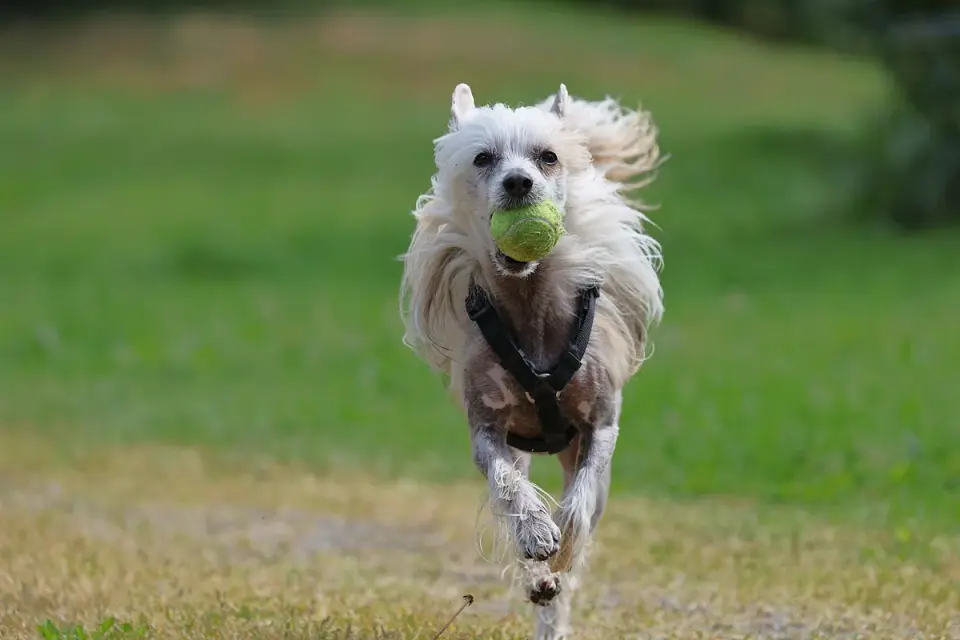
That split matters for gear, too. A harness that slips at the shoulder or a leash that saws the palm shortens walks before muscles tire.
Why conditioning fades before strength does
Skeletal muscle adapts to daily work through mitochondrial density, capillary supply, and oxidative enzyme activity — the machinery that lets fat and carbohydrate turn into steady ATP for a long walk without overheating. Detraining reverses that aerobic machinery in weeks, even when the dog still looks muscular.
Energy demand is the other ceiling. The National Academies Press nutrient requirements volume details how maintenance energy rises with activity and life stage, which is why a newly active adult often needs a measured food increase rather than an extra scoop by eye.
Dogs also cool themselves almost entirely by panting, not sweating. The Merck Veterinary Manual describes heat-related limits and exercise intolerance in dogs, and the practical point is direct: heavy panting that does not resolve within 10 to 15 minutes of rest, lagging, or seeking shade means the session was too long or too hot, regardless of what the plan said.
What 30 to 90 minutes looks like in practice
Use this as a starting prescription for a healthy adult at ideal body condition, then adjust by the evening test:
- Low-demand adults — senior-prone giants, brachycephalic breeds, true couch companions: 30 minutes of leash walking daily, broken into two 15-minute bouts when heat or joints limit.
- Middle-demand adults — most spaniels, retrievers, mixed breeds like Barkley: 45 to 60 minutes daily, with at least 20 minutes brisk enough that you cannot sing comfortably.
- High-demand adults — pointers, huskies, border collies, Belgian Malinois: 75 to 90+ minutes daily plus rotating mental work, such as scent games, retrieve with rules, or tug with a clean out cue.
Compare modalities honestly with Walking vs Running: Which Is Better for Your Dog before adding running miles, and weigh format with Off-Leash Play vs On-Leash Walks: Which Actually Exercises Your Dog Better.
Intensity beats distance.
Where diet and joint nutrition fit — and where they stop
Food therapy cannot create fitness, and no supplement can realistically do the work of progressive movement for diet, mobility, and recovery. What nutrition can do is may help support the tissues that carry the workload: adequate protein and balanced minerals for muscle repair, omega-3s from marine sources as part of an overall anti-inflammatory pattern, and joint-support ingredients that have been studied for mobility as one piece of a whole-patient plan.
That is an evidence-bounded position. I would change it if randomized, long-term trials in pet dogs showed a defined supplement dose improved validated mobility scores independent of weight loss and exercise — because that would separate ingredient effect from the two interventions we know work. The current evidence does not clear that bar; most joint data remain short-term, mixed-model, or extrapolated from other species.
For gear owners, the actionable order is unglamorous: fit the harness so two fingers slide under every strap, score wear points weekly for fray and buckle creep, choose a leash length that allows a loose J without dragging, and add load — a longer sniff walk, hills, or drag-free fetch — before adding miles. When a dog cannot train through injury or heat, use Mental and Physical Enrichment When Your Dog Can’t Exercise (Vet-Guided) to hold conditioning without losing manners.
So what would change if you added 15 minutes to the part of the day your dog actually enjoys moving?
Frequently asked questions
Is 30 minutes enough for an adult dog?
For many low-energy adults at a healthy weight, yes — if the walk is brisk, the dog holds condition, and evening restlessness stays low. Athletic breeds usually need 60 to 90 minutes plus mental work.
Should I walk my dog once or twice a day?
Two shorter bouts beat one long march for most adults, especially in heat or with stiff joints. Splitting 45 minutes into 30 plus 15 often improves settling and recovery.
How do I know we overdid it?
Lagging, heavy panting beyond 10 to 15 minutes after stopping, soreness the next morning, or reluctance to start are signals to shorten, cool the timing, and rebuild gradually.
Sources
- How Much Exercise Does a Dog Need? — American Kennel Club
- Nutrient Requirements of Dogs and Cats — National Academies Press
- Merck Veterinary Manual — Merck Veterinary Manual