On this page
- Start with the checklist, not the coat color
- Two breeds, one working heritage, different intensity settings
- The size and structure difference matters for more than looks
- What the health data actually says about German Shepherds
- Temperament and training: where the two breeds actually diverge
- A mid-career Malinois taught me what “job” really means
- Grooming, shedding, and everyday upkeep
- My recommendation
Start with the checklist, not the coat color
Before you fall for a photo of either breed mid-air on a bite sleeve, run through this:
- Daily work capacity: Can you realistically give 90+ minutes of structured physical and mental work, most days, for the dog’s whole life?
- Experience with drivey dogs: Have you handled a dog with high prey drive and low impulse control before?
- Household tolerance for intensity: Do you have small kids, cats, or a lot of foot traffic where a dog that reads motion fast could be a liability?
- Space and containment: Is your fencing and yard genuinely secure for a dog bred to clear obstacles?
- Budget for orthopedic and neurologic screening: Are you prepared for OFA hip/elbow certification and, ideally, degenerative myelopathy testing before or shortly after acquiring a German Shepherd?
- Long-game commitment: Are you choosing a breed, or are you choosing a working partnership that needs a job for 10+ years?
If you answered “not really” to more than one of these, that’s diagnostic information, not a failure. Below is why each item matters and where I land.
I still remember a family that came into my clinic with a seven-month-old Belgian Malinois they’d adopted after watching too many police-dog videos. The dog weighed about 45 pounds, had never been off-leash trained, and had started redirecting onto the family’s hands during play because nobody had given him an outlet for the drive he was born with. They’d assumed “smart dog” meant “easy dog.” What they’d actually taken home was a dog engineered over generations for continuous, purposeful work, dropped into a townhouse with a postage-stamp yard and two working parents. We spent that visit talking less about vaccines and more about structured exercise, because the behavior problem wasn’t medical. It was a mismatch between the dog’s genetics and the household’s bandwidth, and it’s the single most common story I hear with both of these breeds.
Two breeds, one working heritage, different intensity settings
The German Shepherd Dog and the Belgian Malinois both descend from European herding stock built for stamina, courage, and trainability, and both dominate modern working-dog roles — military, police, search-and-rescue, protection sport. But they are not interchangeable, and treating them as such is where a lot of owners go wrong.
According to the German Shepherd Dog Breed Information: American Kennel Club, the German Shepherd has “a distinct personality marked by direct and fearless, but not hostile, expression, self-confidence and a certain aloofness.” That’s a dog built to be a generalist: biddable, steady under pressure, and capable of bonding closely with a family while still working. Most Shepherds carry more body mass and a lower center of gravity than a Malinois, which shows up in how they move — powerful and ground-covering rather than explosive.
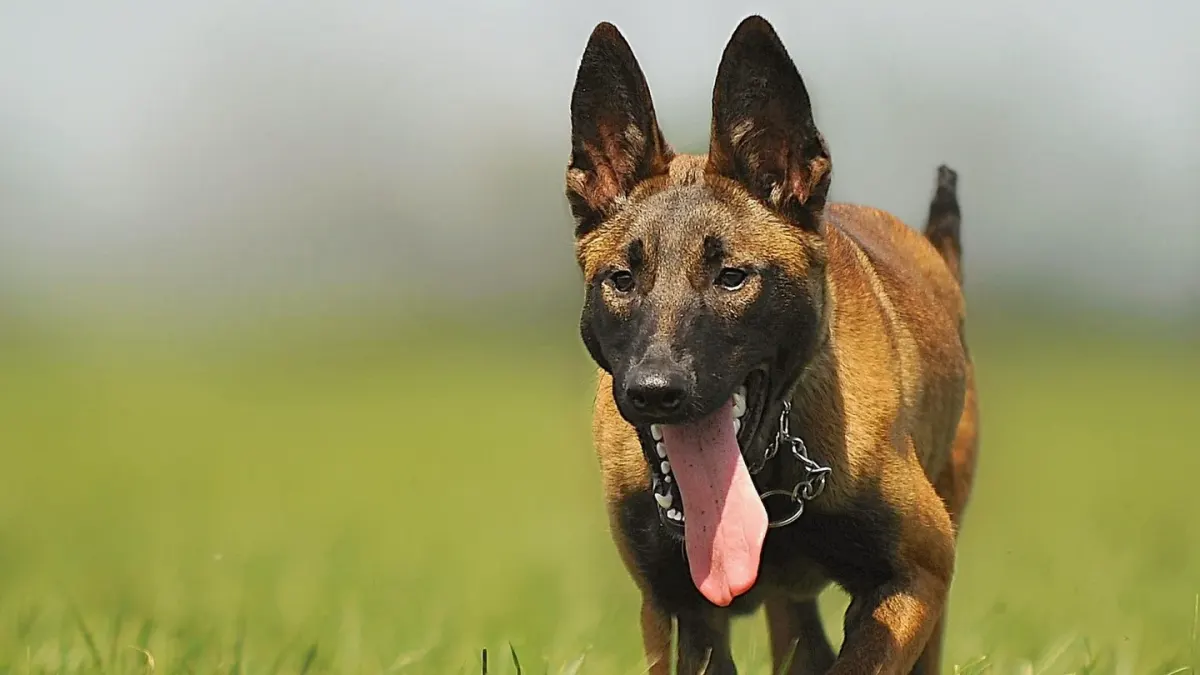
The Belgian Malinois runs hotter. The AKC’s Is the Belgian Malinois the Right Dog Breed for You?: profile on choosing a Belgian Malinois notes that their “high prey drive and boundless energy levels don’t make them a good choice for first-time dog owners,” and that the breed does best with experienced, active handlers who can provide consistent training and mental stimulation. Malinois are lighter-boned, quicker to react, and often described by working handlers as having less “off switch” than a Shepherd. That’s not a flaw — it’s exactly what makes them the current standard for elite military and police work — but it’s a lot of dog for a first-time owner to absorb.
The size and structure difference matters for more than looks
A male German Shepherd typically runs 65–90 pounds at a taller, heavier-boned frame, while a male Malinois is usually 60–80 pounds on a leaner, more angular build. That difference in mass and leverage changes what kind of physical work each dog tolerates well and what kind of injuries they’re prone to.
Shepherds, because of their longer topline and heavier rear structure, are the breed most associated with hip and spinal issues in general veterinary practice. Malinois, being lighter and more upright, tend to hold up better structurally into middle age, though they are not exempt from orthopedic problems — just statistically less burdened by them than Shepherds.
What the health data actually says about German Shepherds
This is where I get direct with clients, because “big dog, some hip issues” undersells the scope. Hip dysplasia is common enough in the breed that screening isn’t optional — it’s baseline care. Data compiled by the Orthopedic Foundation for Animals — summarized in a recent statistics compilation — found roughly 20.6% of German Shepherds evaluated showed hip dysplasia across more than 138,000 hip evaluations. That’s about one in five dogs in the breed’s own screened population, which is itself a self-selected group skewing toward more responsibly bred lines.
Degenerative myelopathy (DM) is the other condition I bring up early with Shepherd owners, because it’s often mistaken for “just getting old and stiff.” A molecular epidemiological survey published via PMC on German Shepherds found meaningful carrier and at-risk allele frequencies for the SOD1 mutation associated with DM, and DM’s early hind-limb weakness can look a lot like ordinary arthritis until it progresses. I ask owners of Shepherds over seven to watch specifically for scuffed rear toenails, difficulty rising after rest, and a subtle knuckling of a back paw — these are the tells that move DM up my differential list ahead of simple osteoarthritis.
If you’re set on a German Shepherd, ask the breeder for OFA hip and elbow certification on both parents, and ask whether DM DNA testing has been done. A dog that’s a carrier isn’t necessarily going to develop clinical disease, but it’s information worth having before you commit to a decade with the dog.
Temperament and training: where the two breeds actually diverge
Both breeds are highly trainable and thrive on structure, but they get there differently. In my experience, Shepherds tend to want to please a specific person and settle into a “job” mentality — obedience, protection work, or even just a consistent daily routine will satisfy a lot of them. Malinois are more independently driven; they often want to work the task itself, not just please the handler, which is part of why they excel in high-stakes detection and apprehension work but can be frustrating for an owner who wants a dog that simply calms down in the evening.
Neither breed does well with inconsistent boundaries or long stretches of confinement. If your daily reality is a 9-to-5 with a dog walker who does a 20-minute stroll, I’d steer you away from both breeds — not because they can’t be companion dogs, but because under-stimulated dogs from working lines are the ones most likely to develop destructive or reactive behavior. If you’re comparing lower-drive family options, the tradeoffs are similar in kind to what we cover in Labrador vs Golden Retriever: How to Choose — breeds selected for cooperative companionship rather than independent working drive.
A mid-career Malinois taught me what “job” really means
A client of mine ran a Belgian Malinois in agility and nose work, a five-year-old female around 55 pounds, after retiring her from a bite-sport program due to a minor shoulder strain. The owner assumed the dog would settle into being a pet once competition stopped. Within about six weeks, the dog had started pacing the fence line for hours and chewing through two leashes left within reach. Nothing was medically wrong. What had changed was the volume and structure of her job. We built a new schedule — scent work sessions, structured decompression walks, a flirt pole for controlled prey-drive outlets — and within a month the fence-pacing had stopped and her sleep at home had visibly normalized. The lesson I give every Malinois owner now: retirement from one job means you owe the dog a replacement job, not free time. Free time is where behavior problems move in.
Grooming, shedding, and everyday upkeep
Both breeds carry a double coat and shed heavily, with a seasonal blowout twice a year that will test any vacuum. Neither is low-maintenance in this regard, and neither is a fit for someone chasing a fur-free home — a concern that’s more relevant to Do Goldendoodles Shed? What the Coat Genetics Actually Predict, which covers coat genetics for owners prioritizing that tradeoff. Brushing two to three times weekly keeps shedding manageable for either breed; daily during coat blow.
Beyond coat care, both breeds need nail maintenance that accounts for their activity level, dental care given their working-line jaw strength, and — critically for Shepherds specifically — a baseline gait assessment at your annual exam so subtle hind-end changes get caught early rather than dismissed as “just getting older.”
My recommendation
If you want a versatile, biddable working partner that can also settle into family life with consistent structure, and you’re willing to commit to hip and DM screening as non-negotiable, a well-bred German Shepherd is the more forgiving choice for an experienced-but-not-elite handler. If you have real working-dog experience, a genuine daily job to give the dog, and you’re not deterred by a lower “off switch,” a Belgian Malinois will out-perform a Shepherd in almost every measure of drive and agility — but it is not a breed I’d place in a first-time working-dog household.
Neither breed is a casual pet. Both are, at their core, employees who happen to live in your house. Match the breed to the job you can actually offer, not the job you admire from a training video, and you’ll avoid most of the behavior problems I see walk through my exam room.

Frequently asked questions
Are Belgian Malinois more aggressive than German Shepherds?
Not inherently. Malinois have higher prey drive and faster reactivity, which can look like aggression if the dog is under-exercised or under-trained, but neither breed standard calls for aggression toward people. Both need consistent socialization and structure.
Which breed is better for a first-time owner?
Generally neither is ideal for a first-time owner, but if forced to choose, a German Shepherd from health-tested working or show lines tends to be more forgiving for a committed but less experienced handler than a Belgian Malinois.
Do German Shepherds or Belgian Malinois have more health problems?
German Shepherds carry a well-documented, higher burden of hip dysplasia and degenerative myelopathy based on OFA data. Malinois are generally considered structurally sturdier, though individual lines vary and screening still matters for both.
Sources
- German Shepherd Dog Breed Information — American Kennel Club
- Is the Belgian Malinois the Right Dog Breed for You? — American Kennel Club
- Orthopedic Foundation for Animals — OFA
- Molecular Epidemiological Survey for Degenerative Myelopathy in German Shepherd Dogs in Japan — PMC (National Library of Medicine)