On this page
- The Decision Fork: Which Clip Solves Your Dog’s Actual Problem
- Getting Started: Introducing Either Harness the Right Way
- The Adolescent Puller: Why Front-Clip Wins This Stage
- The Steady Walker: When Back-Clip Is the Better Everyday Choice
- What the Biomechanics Research Says About the Chest Attachment
- Fit Checks That Matter More Than the Clip Position
- The Verdict
Start with the dog in front of you, not the harness aisle. If your dog leans into the leash and tows you down the sidewalk, the clip position is the first thing to fix. If your dog already walks with a loose leash, the clip position matters far less than fit does.
I worked with a young Labrador mix named Cooper, about fourteen months old and pushing seventy pounds, whose owner had tried three different back-clip harnesses before we met. Every one of them let him put his whole shoulder into the leash the moment a squirrel crossed the yard, and by the time she called me, her wrist had a standing ache from the walks. What she’d first noticed was small: Cooper cutting corners on turns, dragging her off the sidewalk toward every mailbox. Over about six weeks of walks with a front-clip harness and consistent redirection cues, the tug pattern changed — not gone, but no longer strong enough to pull her off her feet. That case is one dog’s experience, not a guarantee, but it’s the pattern I see most often in adolescent, high-drive breeds still learning leash manners.
The Decision Fork: Which Clip Solves Your Dog’s Actual Problem
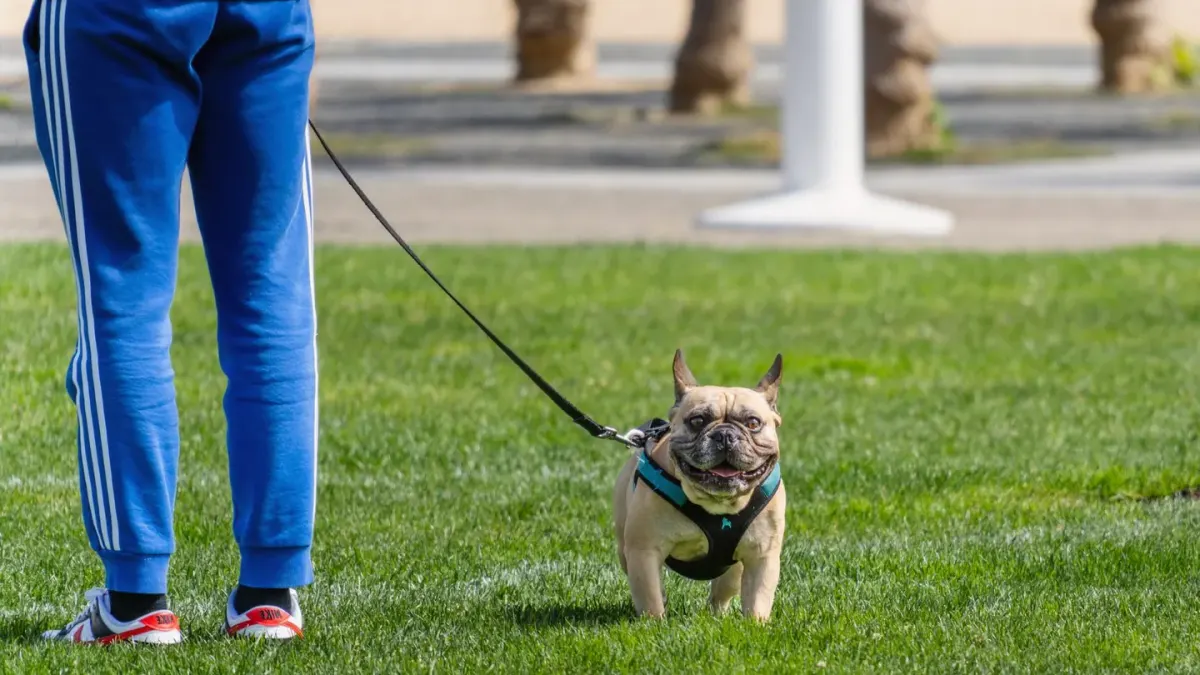
Ask one question before you buy anything: does my dog pull hard enough to move me, or does my dog already walk politely most of the time? A front-clip harness attaches the leash at the center of the chest. When a dog surges forward, the leash tension redirects the dog’s body sideways rather than letting it drive straight ahead, which makes it mechanically harder to put full body weight into the pull. A back-clip harness attaches between the shoulder blades, letting the dog pull in a straight line the way a sled dog does — comfortable and low-friction for a dog who already walks well, but it does nothing to discourage a hard puller.
Neither design is universally “better.” A front-clip harness is a training tool for a specific behavior problem. A back-clip harness is an everyday-comfort tool for a dog that doesn’t have that problem.
Getting Started: Introducing Either Harness the Right Way
Let the dog sniff and wear the harness loose in the house before the first real walk. Reward calm acceptance with treats, not just praise — a harness that gets associated with something unpleasant in the first five minutes often gets fought every time afterward. Buckle it, walk a few steps indoors, then clip the leash and step outside for a short, low-distraction loop. Save the busy street corner or dog park for week two.

For a young dog still building leash manners, pair the harness with a structured routine — the same walk times, the same starting cue — the way you’d build a puppy potty-training schedule that works. Consistency does more of the training work than the hardware does.
The Adolescent Puller: Why Front-Clip Wins This Stage
Dogs between roughly six months and two years old are the group I see straining hardest against a back-clip harness — adolescent energy paired with incomplete leash training. A front-clip design gives the handler mechanical leverage during this window: when the dog pulls, the front attachment pulls the dog’s shoulders sideways instead of letting the chest drive forward, which interrupts the pull before it becomes a habit loop. It’s not a permanent fix. It buys the owner time and control while actual leash training — loose-leash walking, engagement cues, rewarding position at the handler’s side — does the long-term work.
If your dog is also an escape risk during those high-drive walks, a front-clip harness is worth pairing with a reliable ID and tracking setup; see our guide to GPS trackers for a dog that runs off for what actually holds up outdoors.
The Steady Walker: When Back-Clip Is the Better Everyday Choice
A dog who already walks at heel most of the time doesn’t need mechanical redirection — they need a harness that lets their front end move the way it’s built to move. This is where I lean on the nutritional-evidence habit that shapes a lot of what I recommend: just as I’d weigh what a joint supplement can realistically do for a dog’s mobility before adding it to a diet, I weigh what a harness can realistically do for gait before recommending one long-term, and for a well-mannered walker, an unrestricted back-clip design usually asks less of the shoulder than a front-clip does.
Senior dogs and dogs recovering from orthopedic surgery generally do better in a back-clip or Y-front harness that doesn’t cross the front of the shoulder joint, since that area is where chest straps tend to concentrate pressure during a stride.
What the Biomechanics Research Says About the Chest Attachment
The research on this is smaller than owners might expect, and it doesn’t crown one design outright. A gait-analysis pilot study published in PLOS ONE tracked four dogs with 3D motion capture across several harness designs and found that shoulder range of motion was significantly affected by wearing a harness in virtually every trial — including some non-restrictive designs that, counterintuitively, altered shoulder movement as much as restrictive ones. The researchers’ conclusion was blunt: there’s no single harness design that comes out ahead for every dog. Individual anatomy, stride length, and how snugly the harness sits all changed the result.
That finding matters more than the marketing on either side of this debate. A front-clip harness that’s cut too high can dig into the shoulder joint on every stride. A back-clip harness with a chest strap sitting too far forward can restrict the same motion a Y-front design is supposed to avoid. The clip position is one variable. Fit is the bigger one.
Fit Checks That Matter More Than the Clip Position
Run these checks regardless of which clip you choose:
- Two fingers should slide flat under any strap at rest — no more, no less.
- The chest strap should sit below the point of the shoulder, not across it, so the front leg swings forward unobstructed.
- Watch the first few strides after you clip the leash on. If the dog’s gait looks choppy or short-strided compared to off-leash movement, the harness is sitting wrong.
- Recheck fit every few months in a growing puppy, and after any significant weight change in an adult dog.

If you’re also securing gear for car rides, the same fit-first logic applies — see how we test securing a dog crate in the car so it actually stays put on the road.
The Verdict
I think about this the same way I think about a supplement label: the ingredient list matters less than whether it’s doing the specific job your dog needs done. A front-clip harness is the right call for a dog still learning not to pull — it’s a training aid with a shelf life, not a permanent fix. A back-clip or Y-front harness is the right call for a dog that already walks well, an older dog, or a dog recovering from a shoulder or forelimb injury, because it asks less of the joint on every stride. I’ve had owners bring me both a straining fourteen-month-old and a seven-year-old with early shoulder stiffness in the same week, and I’ve never recommended the same harness for both. The clip position should answer to the dog’s behavior and body, not to whichever one is easier to find at the pet store.
Buy for the dog you have now. Refit as that dog changes.
Frequently asked questions
Is a front-clip harness bad for a dog's shoulders?
Not inherently, but a poorly fitted one can be. Research in PLOS ONE found that harness wear significantly affects shoulder range of motion regardless of design, so fit and placement matter more than whether the clip sits at the front or back.
Can I switch a dog from front-clip to back-clip once they stop pulling?
Yes. Many owners use a front-clip harness during active leash training and move to a back-clip or Y-front design once the dog walks reliably on a loose leash.
Do front-clip harnesses work for every dog that pulls?
They help most dogs by making it harder to lean full body weight into the leash, but they don't replace training. A dog that pulls from anxiety or reactivity usually needs behavior work alongside the gear change.