
On this page
Quick decision checklist before you buy anything:
- Crash-tested, not just “car-approved” — look for independent sled-test data, not a marketing label.
- Short tether (6 inches or less) if you’re using a harness clipped to a seatbelt buckle; longer tethers let a dog build up dangerous momentum.
- Crate secured to an anchor point, not just wedged into the trunk — an unsecured crate becomes a projectile.
- Back seat only — never the front, and never on a lap, because airbags deployed at a dog’s head height can kill.
- Size-matched fit, checked with a hand-width test at the neck and girth, re-checked every few months as weight shifts.
- Barriers are for distraction control, not crash protection — don’t mistake one for the other.
I’ve had this conversation more times than I can count, usually in an exam room with a dog who just got a clean bill of health after a fender-bender that could have gone very differently. One was a 40-pound heeler mix named Scout, riding loose in the cargo area of a hatchback when the owner braked hard for a deer on a county road at dusk. Scout slammed into the back of the front seats, ended up with a bruised sternum and a very sore neck, and the owner spent the next two days convinced she’d done something wrong just by having a dog in the car at all. She hadn’t done anything unusual — most people don’t restrain their dogs, because most of us grew up riding with a dog draped across the back seat. But that’s exactly the gap this article is trying to close.
The decision fork: crash protection or containment?
Before comparing products, decide what you actually need. A harness or a crash-tested crate is built to protect your dog in a collision. A barrier is built to keep your dog from climbing into your lap or the front footwell — it manages behavior, not physics. Conflating the two is where most car-safety setups go wrong, and it’s the single biggest thing I correct when owners describe their current setup to me.
The American Veterinary Medical Association is blunt about the baseline: it is unsafe for pets to be loose inside a moving vehicle, and the safest position for any dog is the back seat, properly restrained. That guidance also flags something owners often miss — keep dogs out of the front passenger seat entirely if the car has airbags, because deployment force can seriously injure or kill a pet even if it’s wearing a harness.
What a crash-tested harness actually buys you
Not all harnesses marketed for cars have been tested the same way, and the differences are not cosmetic. The 2013 Harness Study Results: Center for Pet Safety ran a 2013 harness crashworthiness study with MGA Research Corporation, an independent NHTSA-contracted lab, using crash-test dog dummies at 25, 45, and 75 pounds to simulate a 30 mph impact. Of the eleven harnesses evaluated, only one met every top-performer criterion: no catastrophic hardware or stitching failure, consistent performance across sizes, the dog staying on the seat through the full crash pulse, and a tether short enough — six inches or less — to limit forward travel. The other harnesses in that round showed stitching or hardware problems under load.
That’s the practical filter I use with clients: don’t buy a harness because the packaging says “car safety,” buy one because you can point to independent sled-test data behind it. A related comparison of crash-tested versus standard car harnesses walks through what separates the two categories in more detail if you want the deeper mechanical breakdown.
Fit matters as much as the hardware. A loose harness lets a dog rotate or slip partway out during a sudden stop; a properly fitted one distributes force across the chest and shoulders rather than the neck. Re-check the fit seasonally, especially for dogs whose weight fluctuates with age or activity level.
Crates: the other crash-tested option
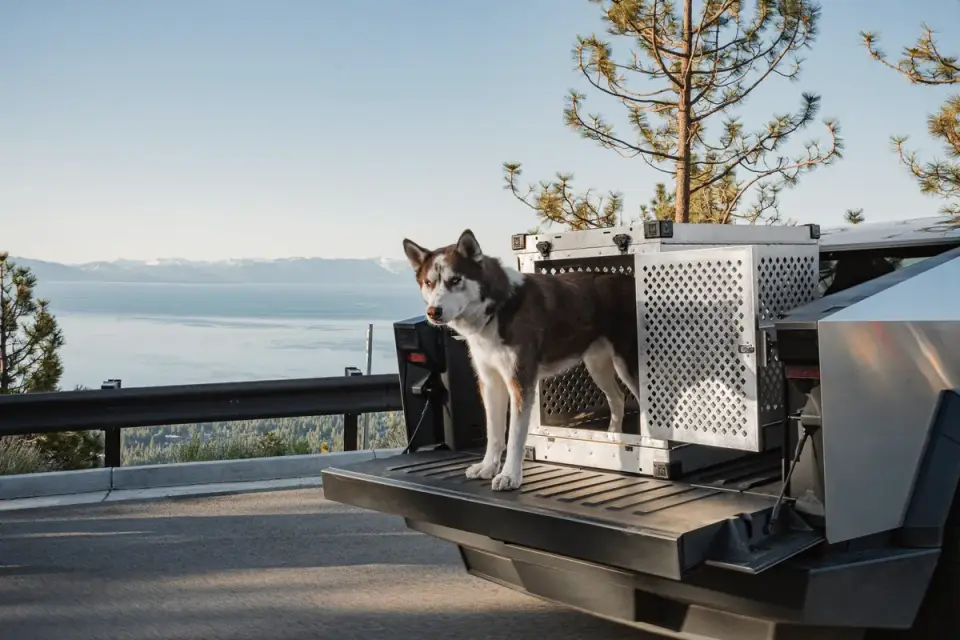
A secured crate acts as a rigid physical barrier, which is a different safety mechanism than a harness but can be just as protective when it’s the right crate, correctly anchored. The Pet Carrier & Crate Crash Test Research: Center for Pet Safety also ran carrier and crate crashworthiness studies alongside its harness work, sponsored in part by Subaru, and the throughline is the same: performance varies a lot by brand and construction, so “it’s a crate” isn’t itself a safety claim.
The failure mode I see most often isn’t a bad crate — it’s a good crate that isn’t actually secured. Wedging a crate into a trunk without a strap or anchor turns it into unrestrained cargo, which defeats the point. If you go this route, pair it with our guide to securing a dog crate in the car so the crate itself isn’t the weak link.
Crates tend to suit dogs who chew straps, dogs who need containment for anxiety reasons, or households already using a crate at home. Harnesses tend to suit dogs who ride better with visibility and freedom of head movement. Neither is universally “better” — the right one is the one that’s actually crash-tested and actually gets used correctly on every trip.
Where barriers and travel seats fall short
Barriers — the mesh or metal dividers that section off the cargo area — are genuinely useful for keeping a dog from lunging into the front seat or climbing onto a driver’s lap, which is a real distraction and control problem. What they don’t do is protect a dog from being thrown forward on impact; an unrestrained dog behind a barrier can still hit the barrier itself, or the seatbacks, at speed. Travel seats and boosters have a similar gap: they can reduce in-cabin distraction, but pilot testing on pet travel seats has generally found they don’t offer meaningful crash protection.
I think of barriers and booster seats as a comfort-and-focus layer, not a safety system on their own. If a client already owns one, I don’t tell them to throw it out — I tell them to add a crash-tested harness or crate underneath it.
A morning I still think about
A few years into practice, I saw a Labrador retriever named Otis come in for a wellness visit, and his owner mentioned almost as an aside that he’d started riding with a harness clipped in after a near-miss on the highway — another car had cut across three lanes and she’d braked so hard her coffee ended up on the dashboard. Otis, an 80-pound seven-year-old, had been standing on the back seat at the time and slid into the door with enough force to yelp. Nothing was broken, but she described watching him brace himself with his front legs against the window in the half-second before impact, and that image stuck with her long enough to change her routine permanently. What struck me wasn’t the near-miss itself — it’s how common that story is. Almost every owner I ask about car restraint has some version of a scare that prompted the switch, and almost none of them made the change beforehand, on the merits alone. I’d rather they didn’t need the scare first.
Sizing and fit checks that matter more than the marketing
Whichever option you choose, run these checks before your first trip and every few months after:
- Slide two fingers under the harness strap at the chest — snug but not restrictive.
- Confirm the tether length allows the dog to sit or lie down but not reach the front seats.
- With a crate, confirm it’s rated for your dog’s weight and that the door latch can’t be nudged open from inside.
- Re-check fit after any weight change of five pounds or more, up or down.
The bottom line
For most dogs, a crash-tested harness with a short tether or a crash-tested, properly anchored crate is the safest way to restrain a dog in the car — supported by independent sled testing, not marketing copy. Barriers and travel seats have a real job to do, but it’s distraction management, not crash protection, so don’t let one substitute for the other. If your dog already rides in a barrier setup, the fastest safety upgrade you can make is adding a tested harness or crate underneath it, not replacing what you have.
If you’re also managing a dog who lunges or pulls on leash outside the car, the same restraint logic carries over — our comparison of bungee versus fixed leashes for a lunging dog covers the on-leash side of that equation.
Frequently asked questions
Is a harness or a crate safer for a dog in the car?
Both can be safe if they're independently crash-tested and used correctly — a harness relies on a short tether and snug fit, while a crate relies on being properly anchored, not just placed in the trunk.
Are dog car barriers crash-tested?
Most barriers are designed to prevent distraction and keep a dog out of the front seat, not to protect against crash forces, so they shouldn't be relied on as the sole restraint.
Can a dog ride in the front seat with a harness on?
It's not recommended in vehicles with airbags — deployment force can seriously injure or kill a dog even while restrained, so the back seat is the safer position.
Sources
- Safe non-commercial transport of pets in motor vehicles — American Veterinary Medical Association
- 2013 Harness Study Results — Center for Pet Safety
- Pet Carrier & Crate Crash Test Research — Center for Pet Safety