On this page
I still remember the first time an owner brought in a three-year-old dachshund named Biscuit because his breath had gone from “typical dog” to something that made the whole exam room smell different the moment he walked in. His owner had already tried two different flavored toothpastes from the pet store, brushing maybe once a week when she remembered. What we found under the gumline wasn’t fixable with a new flavor. It was tartar, built up along the upper premolars, with early gum recession starting on the canines. Biscuit was young for that. But the timeline made sense once we talked it through: sporadic brushing, dry kibble alone, and a toothpaste chosen for its bacon smell rather than what it actually did once it hit his teeth. We started over, chose a toothpaste with real evidence behind it, and set a daily schedule instead of a “when I remember” one. Four months later his breath was manageable and the gum line had stopped its slow retreat.
That case is the whole argument for this guide. Bad breath in dogs is almost never a toothpaste-flavor problem. It’s a plaque-and-bacteria problem, and the toothpaste you pick either supports the fix or just perfumes over it for a few hours.
Start with what breath actually tells you
Persistent bad breath in an otherwise healthy dog is usually a sign of bacterial buildup in the mouth, not a smell that a mint flavor can solve on its own. According to the Dwight Veterinary Clinic: American Veterinary Dental College, more than 80% of dogs show signs of periodontal disease by age three, and that disease process is what produces the sulfur-smelling compounds owners notice as “dog breath.” A toothpaste that’s actually working on plaque should make breath better as a downstream effect, not as its main trick. If a dog’s breath is sudden, sharply different, or paired with drooling, pawing at the mouth, or reluctance to eat, that’s a vet visit, not a shopping trip.
Look for the VOHC Seal before anything else
The single most useful filter when comparing toothpastes is whether the product carries the Veterinary Oral Health Council’s Seal of Acceptance. The Veterinary Oral Health Council only grants that seal to products that have submitted clinical data proving they measurably reduce plaque or tartar accumulation when used as directed — it isn’t a marketing badge, it’s a review process. Toothpastes without the seal aren’t automatically bad, but a VOHC seal is the fastest way to separate a toothpaste doing real chemical or mechanical work from one that’s mostly flavoring. I check for the seal before I look at anything else on the label, including price.
Understand what enzymatic actually means
Most dog toothpastes marketed as “enzymatic” rely on an enzyme system, often built around glucose oxidase and lactoperoxidase, that helps suppress plaque-forming bacteria in the mouth as the dog chews and the saliva mixes with the paste. It’s worth being direct about the limits here: enzymatic toothpaste slows plaque formation and supports a cleaner mouth between brushings, but it does not dissolve tartar that has already hardened onto the tooth surface. Once tartar is present, only a professional dental cleaning removes it. I tell owners to think of enzymatic toothpaste as maintenance, not a rescue tool for a mouth that’s already in trouble.
Never reach for human toothpaste
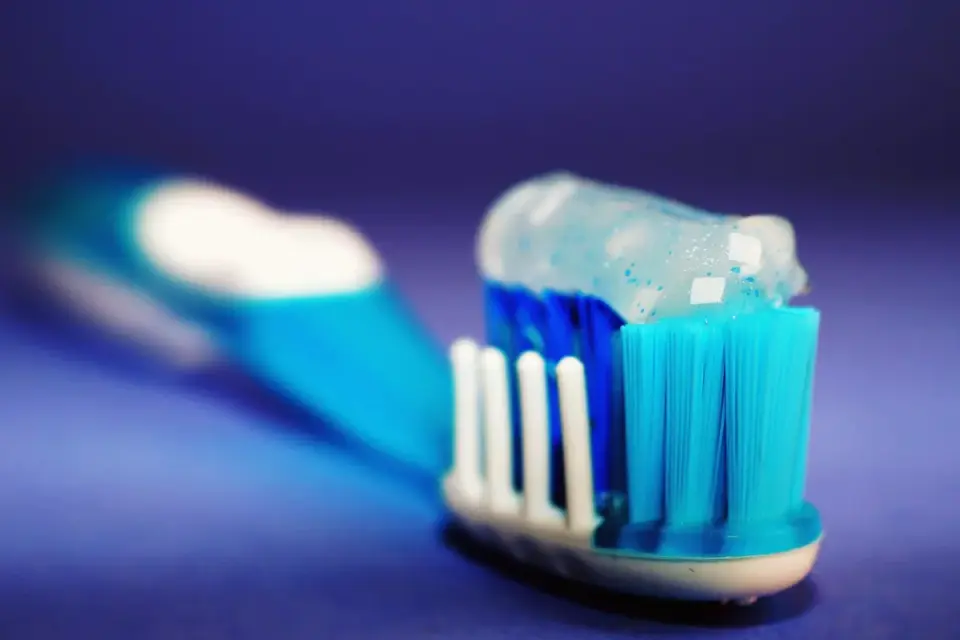
This is the one absolute rule in this whole guide. Xylitol, a sweetener common in human toothpaste and sugar-free gum, is highly toxic to dogs — a typical human toothpaste can contain enough to cause a dangerous drop in blood sugar within 10 to 15 minutes of ingestion. The FDA has warned specifically about xylitol’s danger to dogs, and human toothpaste also typically contains fluoride at levels formulated for spitting, not swallowing, which is a problem since dogs swallow toothpaste as a matter of course. Every toothpaste made for dogs is formulated to be safely swallowed and free of xylitol. If you’ve ever grabbed the tube on the sink out of habit, that’s the moment to stop and check the label.
Build the habit, then pick the flavor
By the time an owner is standing in front of a shelf of poultry, mint, and peanut-butter-flavored toothpastes, the ingredient question is mostly settled — what matters next is whether the dog will tolerate the brushing itself. I usually tell owners to pick a flavor their dog actually likes over one that sounds appealing to a person, because a toothpaste that gets refused after day three does nothing for plaque control regardless of its formula. Daily brushing is the target; three to four times a week is a realistic minimum that still moves the needle on plaque. Start with short sessions, let the dog lick the paste off a finger before the brush ever shows up, and build from there. This is also where a lot of owners quietly give up, and it’s fair to be honest about that: brushing is the single most effective home tool for plaque control, but it only works if it actually happens.
That dachshund case has stuck with me for a specific reason — it wasn’t a special case, it was a common one wearing an unusual coat color. I see the same pattern across breeds and ages: an owner who’s diligent about food and exercise but treats toothbrushing as optional, because unlike a limp or a skipped meal, a dirty mouth doesn’t interrupt daily life until it’s advanced. By the time breath becomes noticeable enough to search for a fix, plaque has often had months to work. The toothpaste matters, but the habit around it matters more, and I’d rather see an owner use a decent VOHC-sealed paste every day than a premium one twice a month.
Know when a toothpaste isn’t the answer anymore
If a dog’s breath doesn’t improve after a few weeks of consistent brushing with a legitimate product, or if you can see brown-yellow buildup along the gumline that a toothbrush doesn’t budge, that’s tartar, and tartar is a professional-cleaning problem, not a home-care one. Persistent bad breath alongside red or bleeding gums, loose teeth, or reluctance to chew is worth a dental exam regardless of what toothpaste is in the cabinet. For dogs whose coat and grooming routine also plays into overall home care, it helps to think of dental care as one piece of a broader routine — see how it fits alongside grooming needs by size and general bathing frequency.
Where this leaves you
Pick a toothpaste with the VOHC seal when you can find one, confirm it’s genuinely formulated for dogs and free of xylitol, and then treat brushing as a daily habit rather than a product decision. A mediocre toothpaste used every day beats an excellent one used occasionally. What would actually change if you brushed tonight instead of waiting for a “better” product to show up?
Frequently asked questions
How often should I brush my dog's teeth for fresher breath?
Daily brushing is ideal for plaque control; three to four times a week is a realistic minimum that still helps.
Can enzymatic toothpaste remove tartar that's already built up?
No. Enzymatic toothpaste slows new plaque formation, but hardened tartar requires a professional dental cleaning to remove.
Is human toothpaste ever okay for dogs in a pinch?
No. Human toothpaste can contain xylitol, which is toxic to dogs, and fluoride levels meant to be spit out, not swallowed.
Sources
- News & Publications | Veterinary Oral Health Council — Veterinary Oral Health Council
- Best Toothpastes for Dogs and Cats | Safe & Effective Options — Dwight Veterinary Clinic
- Paws Off Xylitol; It's Dangerous for Dogs — FDA