On this page
Here’s what to expect during a Labrador puppy’s first year, from rapid weight gain to vaccines and adult teeth. The short version: growth, immunity, teething, and behavior each run on their own clock, and none of them line up neatly with a birthday or a single vet visit.
Growth: fast, then flattening
A Labrador puppy’s growth curve is not linear. Most of the relative growth happens early. A healthy Lab puppy can more than double its birth weight in the first few weeks and keep climbing steeply through roughly 8 to 20 weeks of age. After that, the rate slows, and weight gain becomes a longer, gentler climb rather than a sprint. Frame size (height, bone length) usually finishes filling out well before the dog reaches full adult body condition, which is one reason a 9-month-old Lab can look tall but still lean.
Bone growth happens at the growth plates, cartilage-rich zones near the ends of the long bones that gradually convert to solid bone. In a large breed like the Labrador, that conversion is not complete early. This is a mechanical, not cosmetic, fact: until the plates mature, the growing bone at that site is structurally weaker than the bone shaft around it, so it is the point most likely to be stressed by repetitive high-impact loading, such as hard jumping onto pavement. Most veterinarians advise keeping impact exercise moderate through the first year and letting the dog’s own energy set the pace rather than pushing distance or jumping drills.
Core vaccines: a series, not a single shot
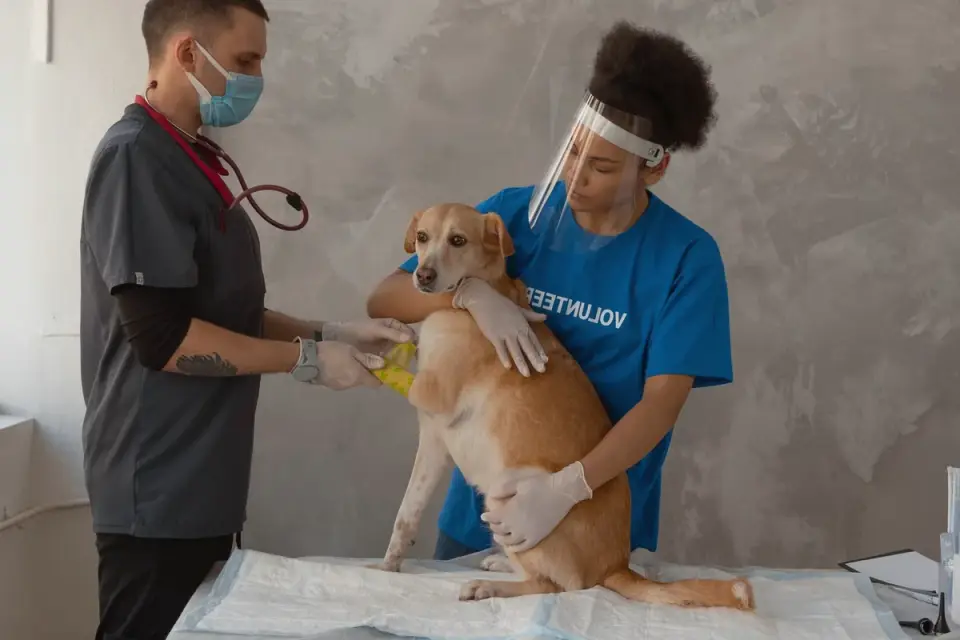
Immunity in a young puppy is a moving target. Maternal antibodies absorbed from colostrum protect a puppy early on, but they also block a vaccine from doing its job, and nobody can predict exactly when that maternal protection fades in an individual puppy. That is the entire reason the core series is given in stages rather than as one dose. According to the American Veterinary Medical Association, puppies typically receive a first round of core vaccines at 6 to 8 weeks, with boosters roughly every 3 to 4 weeks until 16 weeks or older, so that at least one dose lands after maternal antibody has cleared. The AAHA 2022 canine vaccination guidelines and the WSAVA 2024 guidelines both frame distemper, parvovirus, adenovirus, and rabies as core, recommended for essentially every dog regardless of lifestyle, because exposure risk and disease severity are both high.
Rabies is generally added near the end of the puppy series, timed to local law. A puppy is not considered fully protected until after the final core dose, which is exactly why the next section matters.
The socialization window closes early, before vaccines finish
Here is where owners often get the sequencing backward. A dog’s window for building comfort with new people, environments, sounds, and other animals is narrowest early in life. Multiple behavior sources place the close of that critical socialization period between 12 and 16 weeks, squarely inside the vaccine series, not after it. dvm360 reporting on the American Veterinary Society of Animal Behavior’s position states that puppies should ideally begin structured socialization, such as a well-run puppy class, as early as 7 to 8 weeks, after at least one round of vaccines and deworming and while staying current on the remaining series, rather than waiting for the full series to complete.
That is a real trade-off, not a free pass. Controlled exposure, such as a friend’s healthy vaccinated dog, a clean puppy class, or a carried walk through a new environment, carries a manageable level of infection risk that most veterinary behaviorists judge as smaller than the behavioral risk of under-socializing during this narrow window. Talk to your veterinarian about what is reasonable for your specific puppy and local disease pressure.
Teething: a five-month process, not an event
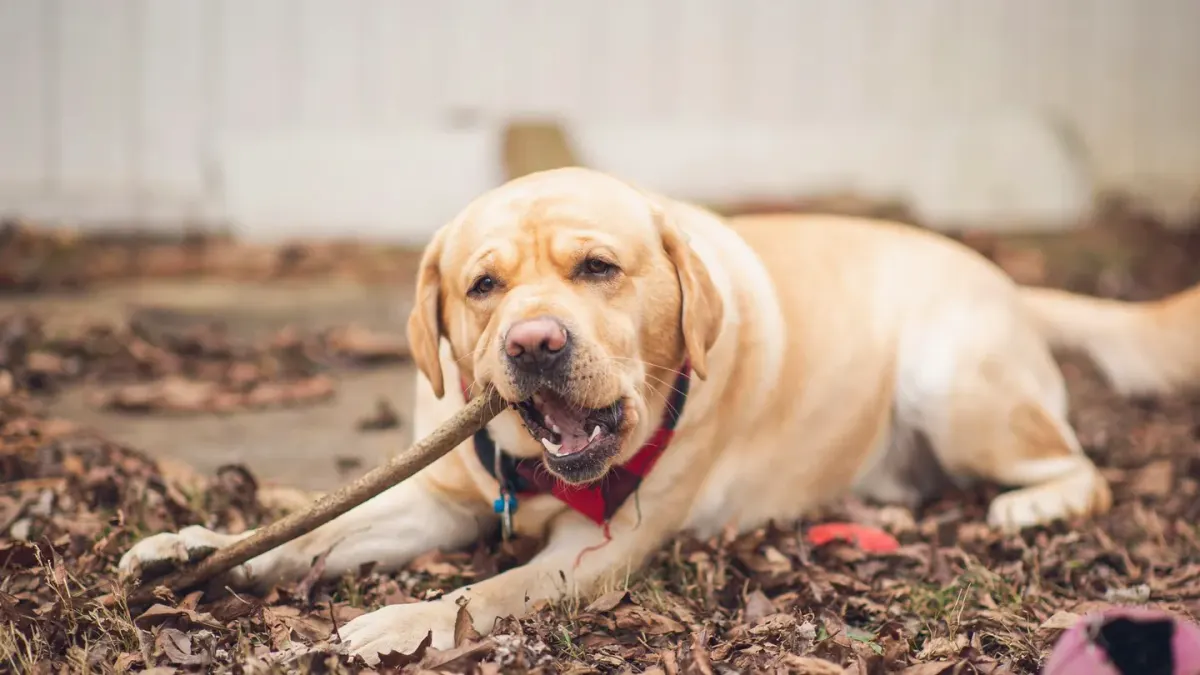
Labrador puppies are typically born without visible teeth. Deciduous, or baby, teeth erupt starting around 3 to 4 weeks and are usually all in by 6 to 8 weeks. The switch to permanent teeth is a longer process. It generally starts around 3 to 4 months and wraps up by roughly 6 to 7 months, with the back molars often the last to arrive. Heavy chewing during this stretch is normal jaw and dental development, not a training failure. Offering appropriately sized chew items and rotating them regularly tends to work better than punishing the behavior, since the drive to chew is physiological, not purely behavioral.
Weight, coat, and the pieces that come later
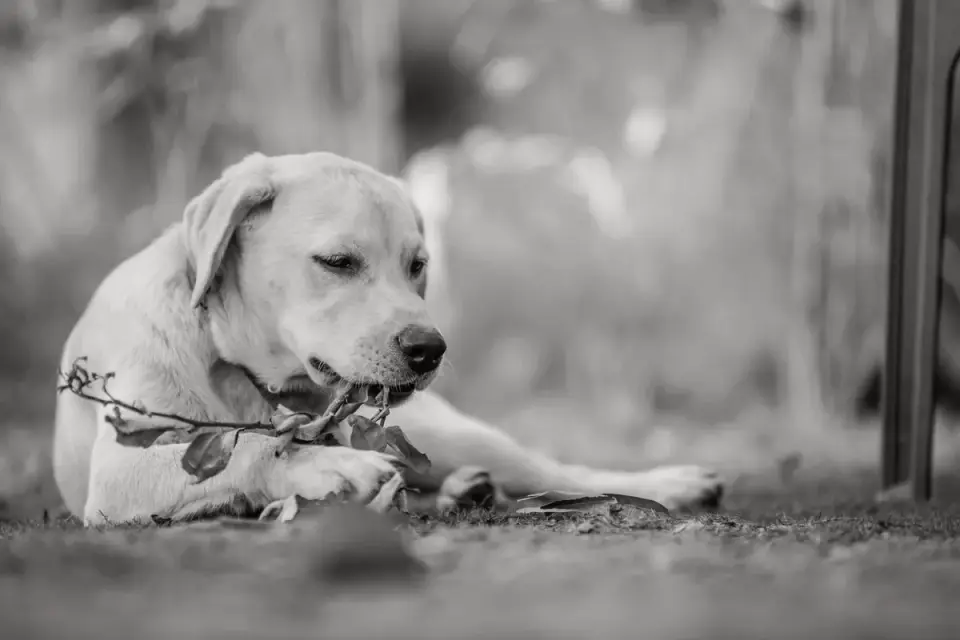
A few changes show up on a slower timeline. Coat texture shifts from a soft puppy coat to the coarser double coat of an adult Labrador, usually somewhere in the second half of the first year. Body condition, meaning muscle fill and adult proportions, keeps developing after the frame has essentially reached height, which is why many Labs still look a little gangly at 8 or 9 months even though they are nearly full height. None of that is cause for concern on its own. It is simply a reminder that reaching full size is not one milestone but several, arriving at different times.
What should prompt a call to the veterinarian: a puppy that stalls or loses weight for more than a few days, limping that does not resolve with rest, a retained baby tooth still present alongside its adult replacement, or any behavior regression after a missed vaccine dose. Most of the first year is uneventful. Knowing which timeline each change belongs to, growth, immunity, teeth, or behavior, makes it much easier to tell a normal week from one worth a phone call.
What would you want to track first if you brought a Labrador puppy home tomorrow: the weight curve, the vaccine calendar, or the socialization clock?
Frequently asked questions
When is a Labrador puppy considered fully vaccinated?
Generally after the final core vaccine dose in the series, which most veterinarians schedule at 15 to 16 weeks or later, per the American Veterinary Medical Association and AAHA guidelines. Your vet may adjust timing based on your puppy's individual risk.
Can a Labrador puppy start socializing before the vaccine series is finished?
Behavior organizations generally support starting controlled socialization, such as a clean puppy class, around 7 to 8 weeks, after an initial vaccine dose and deworming, because the socialization window closes earlier than the vaccine series ends. Weigh this with your veterinarian against local disease risk.
When do a Labrador puppy's growth plates close?
Large-breed dogs like Labradors generally take longer than small breeds to reach full skeletal maturity, which is why many veterinarians recommend keeping high-impact exercise moderate through most of the first year rather than pushing distance or jumping early.
How long does teething last in a Labrador puppy?
Baby teeth typically erupt by 6 to 8 weeks, and the switch to permanent teeth generally runs from about 3 to 4 months through 6 to 7 months of age.
Sources
- Vaccinating Your Pet — American Veterinary Medical Association
- 2022 AAHA Canine Vaccination Guidelines — AAHA
- WSAVA Vaccination Guidelines 2024 — WSAVA
- AVSAB Position: Puppy Socialization Should Start Before Vaccinations — dvm360