On this page
Here’s the fork, and it’s simpler than the gear aisle makes it look: are you managing dry cold, or wet-and-windy cold? A sweater is a layer. A coat is a barrier. Mixing those two jobs up is the single most common gear mistake I see walking into winter.
In my practice, this question shows up every November like clockwork. I remember a 9-pound Chihuahua mix named Biscuit whose owner brought him in shivering after a 15-minute walk in 38°F drizzle — he was wearing a cute cotton-blend sweater, soaked through at the belly. Biscuit wasn’t cold because he lacked a layer; he was cold because that layer had nothing to stop the wet from reaching his skin, and wet fur pulls heat out of a small dog fast. Compare that to a 6-year-old Whippet I see regularly, built lean with almost no body fat and a coat you can see through in good light — for her, a simple knit sweater under a light jacket on dry, breezy days is usually enough, because her problem is insulation, not moisture. Same season, same city, two completely different gear answers. That’s the pattern owners need to learn to read, not just the temperature on their phone.
The Decision Fork: Dry-Cold vs Wet-and-Windy
If it’s dry, calm, and just chilly — a driveway walk at 40°F, say — a sweater is often plenty for a dog who runs cold. If there’s wind, rain, snow, or slush involved, you need a coat, and ideally one with some water resistance. The American Veterinary Medical Association notes that dogs and cats are susceptible to frostbite and hypothermia despite having fur, and that no pet should be left outside for long periods in below-freezing weather — which is really a proxy for saying that fur alone, and often a sweater alone, isn’t a cold-weather system.
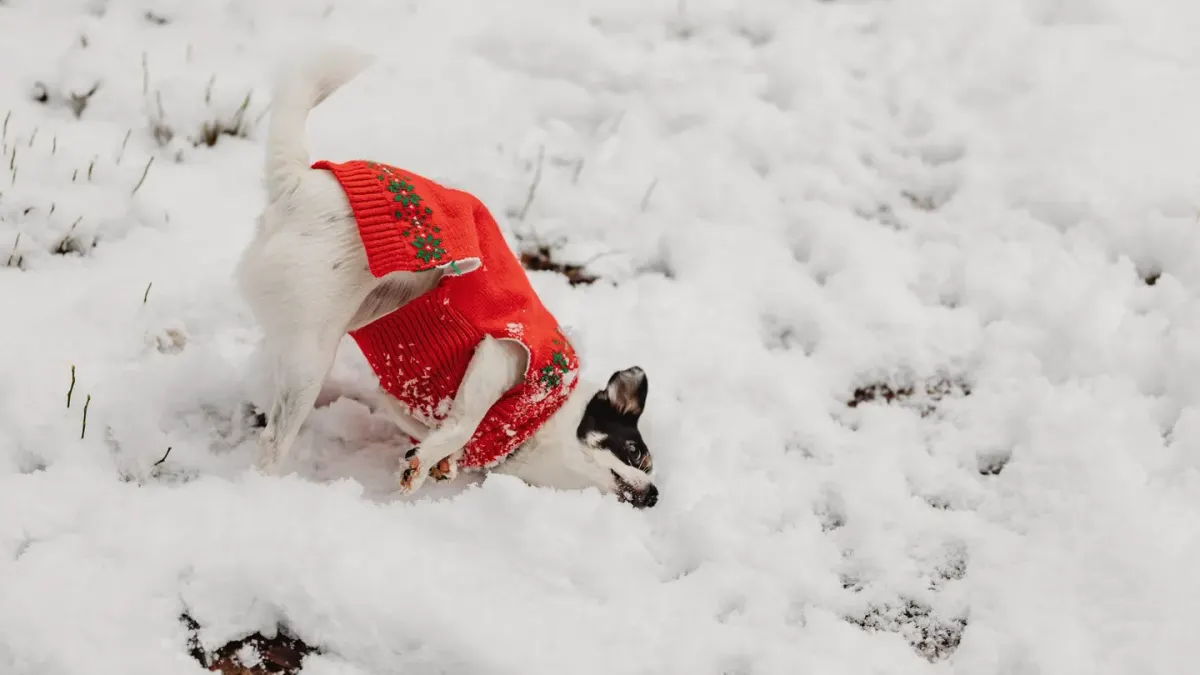
A sweater’s job is simple: trap a layer of warm air close to the skin. That’s genuinely useful for thin-coated or low-body-fat dogs on dry days, but a knit or fleece sweater does nothing against wind chill and actively works against you once it’s wet — wet knit fabric holds moisture against the skin instead of shedding it. A coat is built to do the job a sweater can’t: a shell layer, sometimes with insulation underneath, that blocks wind and sheds water. According to the American Kennel Club, the three common categories are insulated coats for genuinely cold, windy, or snowy conditions, rain jackets for wet weather, and sweaters for a lighter layer — and the AKC’s general guidance is that dogs with little fur or body fat should be dressed for temperatures in the mid-40s Fahrenheit and below.
Which Dogs Need Which — and Which Need Neither
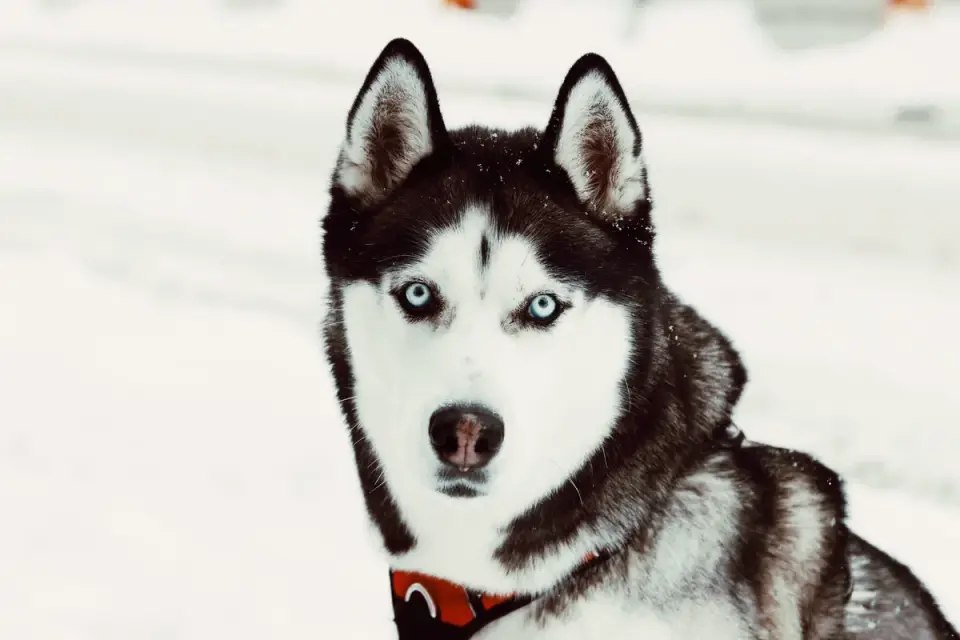
This is where I get blunt with owners, because the breed matters more than the marketing. Toy breeds, whippets and other lean sighthounds, and hairless breeds like the Xoloitzcuintli or Chinese Crested run cold quickly and usually benefit from a layer well before a double-coated dog would. On the other end, breeds developed for cold climates — Siberian Huskies, Alaskan Malamutes, Newfoundlands, Bernese Mountain Dogs, Saint Bernards — carry an undercoat built for exactly this weather, and layering them up can trap heat and make it harder for them to self-regulate, per the AKC’s breed guidance.
Age and health status shift the math too. A senior dog, a dog recovering from illness, or a very young puppy loses heat faster than a healthy adult of the same breed, so I’ll often recommend a light layer for those dogs even within a breed that “shouldn’t need one.” This is a case where I’m honest with clients about how thin the formal evidence is on exact temperature cutoffs — there isn’t a single validated chart that tells you precisely when a 12-year-old Lab needs a coat versus a sweater. What we have is breed physiology, body condition, and clinical experience, and I lean on all three rather than pretending there’s a universal number.
Fit and Layering: Where Owners Actually Go Wrong
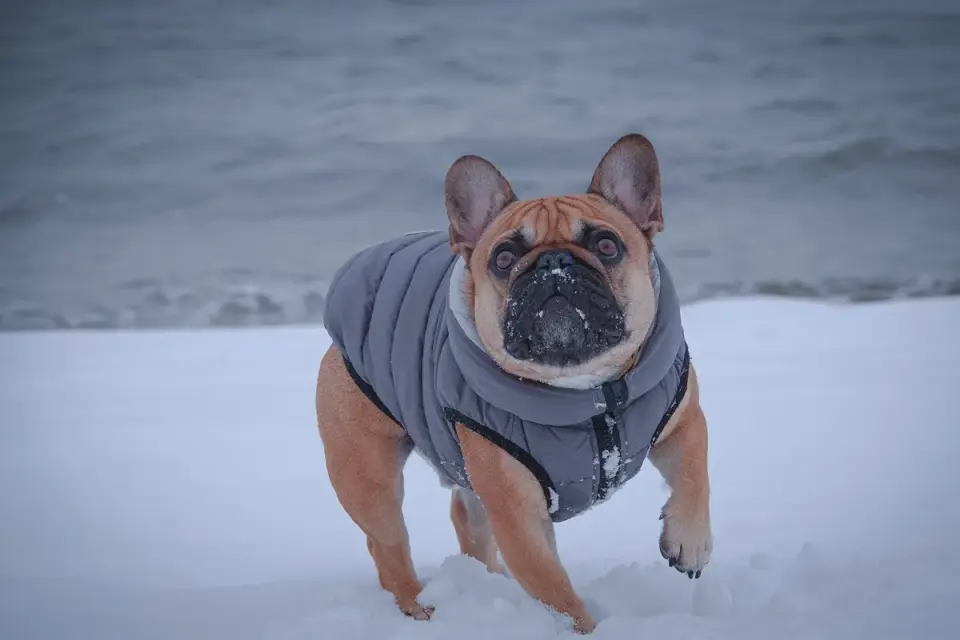
A sweater or coat that’s too tight across the shoulders restricts a normal walking gait; one that’s too loose lets cold air in at the neck and belly, defeating the purpose. Measure from the base of the neck to the base of the tail, and check the girth at the widest part of the chest before you buy — not after a return has already shipped. For dogs who need real cold protection, layering a sweater under a wind- and water-resistant coat gives you both jobs at once: insulation from the sweater, a barrier from the coat.
Walking conditions matter as much as the garment. VCA Animal Hospitals recommends keeping walks brief and frequent once temperatures drop, rather than one long outing, and wiping down paws, legs, and belly afterward to remove de-icing chemicals and road salt that a coat won’t protect against. If you’re walking a dog prone to bolting on an icy sidewalk, that’s also a good moment to double-check your leash setup — our guide to Bungee vs Fixed Leash for a Lunging Dog covers which style actually holds up when a dog spooks on slick footing, and if you’re loading a layered-up dog into the car for a winter trip, Crash-Tested vs Standard Car Harness is worth a look before the first snow trip, not after.
Reading the Dog, Not Just the Label
Gear only works if you’re also watching the dog wearing it. Shivering, tucking the tail, lifting paws off the ground repeatedly, or trying to turn back toward the house are all signs a dog is cold regardless of what they’re wearing — the AVMA lists whining, slowing down, seeking warm places, and muscle stiffness among the signs owners should act on immediately by bringing the dog inside.
One thing I say to almost every owner in this conversation: a coat or sweater is not a substitute for judgment about time outside. I had a client with a senior Dachshund, overweight and arthritic, who assumed a heavy insulated coat meant she could take her usual 40-minute loop through the neighborhood at 25°F. It didn’t work that way — the dog’s joints stiffened at the 20-minute mark regardless of what she was wearing, and they turned around early two walks in a row before the owner adjusted the routine to shorter, more frequent outings instead. The coat helped with warmth; it didn’t change how her body handled the cold and the distance. That’s the gap between “dressed for it” and “built for it,” and it’s worth remembering before you extend a walk just because the gear looks warm enough.
If your household is also managing the opposite problem later in the year, the same layering logic — matching the gear to the actual environmental stressor rather than defaulting to one product — carries over to summer heat; see our breakdown of Cooling Vest vs Cooling Mat for how that plays out on the hot side of the calendar.
The Bottom Line
For a dry, mildly cold day and a thin-coated or small dog, a sweater is a reasonable, low-cost layer. For wind, rain, snow, or genuinely cold temperatures, you need a coat — ideally water-resistant, ideally sized to allow a full range of motion. Double-coated cold-climate breeds usually need neither. And no garment replaces watching the dog in front of you: shortened walks, frequent paw checks, and a willingness to turn back early are still doing most of the real protective work.
Frequently asked questions
At what temperature does a dog need a sweater or coat?
The American Kennel Club generally advises dressing thin-coated, small, or low-body-fat dogs once temperatures drop into the mid-40s Fahrenheit, though individual tolerance varies with age, health, and coat type.
Can a sweater replace a coat in snowy or rainy weather?
No. A sweater adds warmth but has no wind or water resistance, so it can actually make a dog colder once it gets wet; a coat is the better choice in wind, rain, or snow.
Do double-coated breeds like Huskies need a coat?
Usually not. Breeds with a dense double coat are built to insulate themselves in cold weather, and adding a layer can interfere with their natural temperature regulation.
Sources
- Cold weather animal safety — American Veterinary Medical Association
- Does Your Dog Need a Sweater? Why Some Dogs Benefit From Sweaters — American Kennel Club
- Preparing Your Pets for Winter — VCA Animal Hospitals